

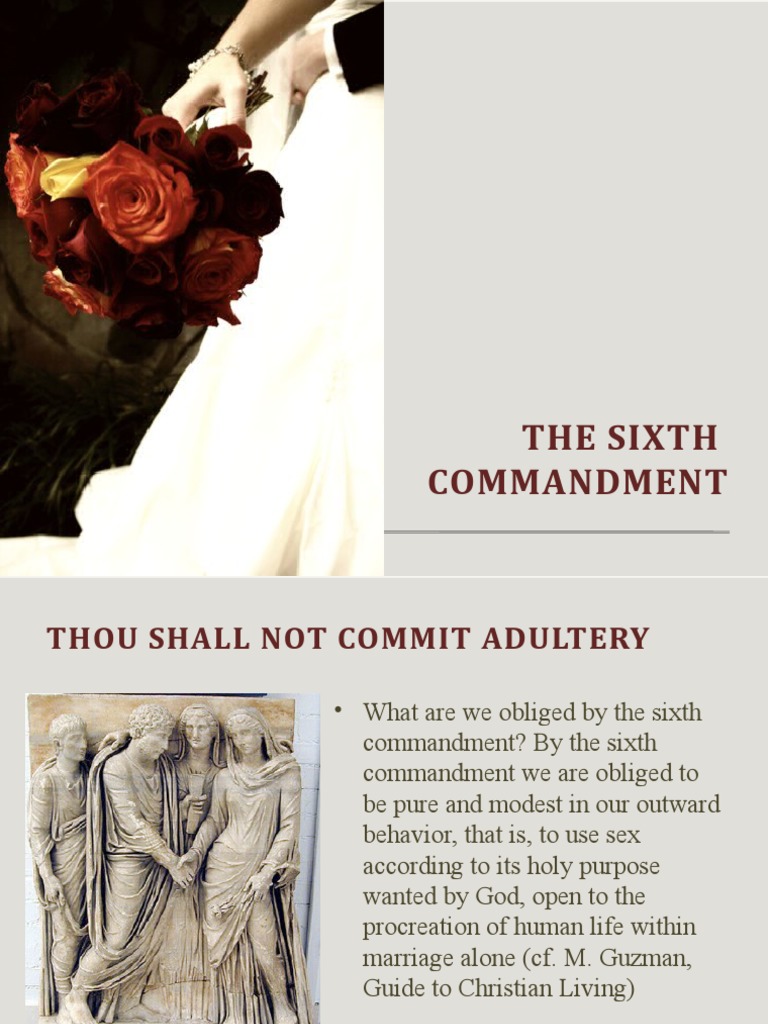
The Sixth Commandment, as found in the Bible, is a profound moral injunction that resonates deeply with the human experience. It states succinctly, “You shall not murder.” This seemingly straightforward admonition harbors layers of complexity that merit exploration, considering its implications and the cultural contexts that shape its interpretation.
At its core, the command forbids the unlawful taking of human life, thereby establishing a fundamental respect for the sanctity of life. This notion of sanctity goes beyond mere existence; it encapsulates the intrinsic value of every individual as created in the image of God, according to Judeo-Christian belief. This command is not merely a prohibition; it serves as a beacon guiding ethical conduct and interpersonal relations.
One of the primary observations surrounding the Sixth Commandment is its universality. Across diverse cultures and religions, the principle of valuing human life holds significant weight. Anthropological studies reveal that nearly all societies have codified rules against murder, reflecting a shared commitment to preserving life. However, the differentiation occurs in how these societies interpret what constitutes justifiable versus unjustifiable killing. This variance fosters deep philosophical inquiries about morality, justice, and the circumstances that might excuse a life taken.
Moreover, the command confronts the human propensity towards violence and aggression. In an era where conflicts erupt over ideological differences, territorial disputes, and economic inequalities, the call to refrain from murder underscores a critical examination of our impulses. Psychologists often point to the duality of human nature: we are capable of both profound compassion and heinous acts. This command invites contemplation of our moral compass and the societal structures that either nurture our better angels or exacerbate our baser instincts.
Furthermore, the Sixth Commandment serves as a reminder of the broader implications of our actions. In contemporary discussions, it expands beyond the act of murder itself to encompass issues such as war, capital punishment, and euthanasia. The ethics surrounding these topics are fraught with emotional and moral dilemmas, challenging individuals to reconcile their beliefs with real-world applications. The command thus encourages a holistic view of life and death, prompting discussions on the morality of choices that lead to loss of life, whether direct or indirect.
Historical interpretations of the Sixth Commandment further illuminate its significance. During medieval times, theological scholars such as Augustine and Aquinas engaged in rigorous debates about the nuances of intent and the morality of self-defense. These discussions laid the groundwork for contemporary legal and ethical frameworks where the justification of taking life is frequently contested. The command has continued to evolve, presenting moral quandaries in the face of technological advancements like euthanasia and assisted suicide, underscoring the need for ongoing dialogue in a rapidly changing world.
In essence, the Sixth Commandment embodies a timeless moral directive that calls us to wrestle with the gravity of our actions and choices. It challenges societies to create environments where life is cherished and protected against the tide of violence and hatred. In a world that often feels tumultuous, this command resonates with an enduring truth: that every life holds immeasurable worth.
The fascination with the Sixth Commandment lies not solely in its straightforward admonition but in the depths of moral inquiry it engenders. It invites both believers and non-believers alike to reflect upon the ethics of life and death, and the larger questions of human existence that transcend culture and time. Thus, contemplating the wisdom of this command reveals the intricate tapestry of moral responsibility that unites us all.

