

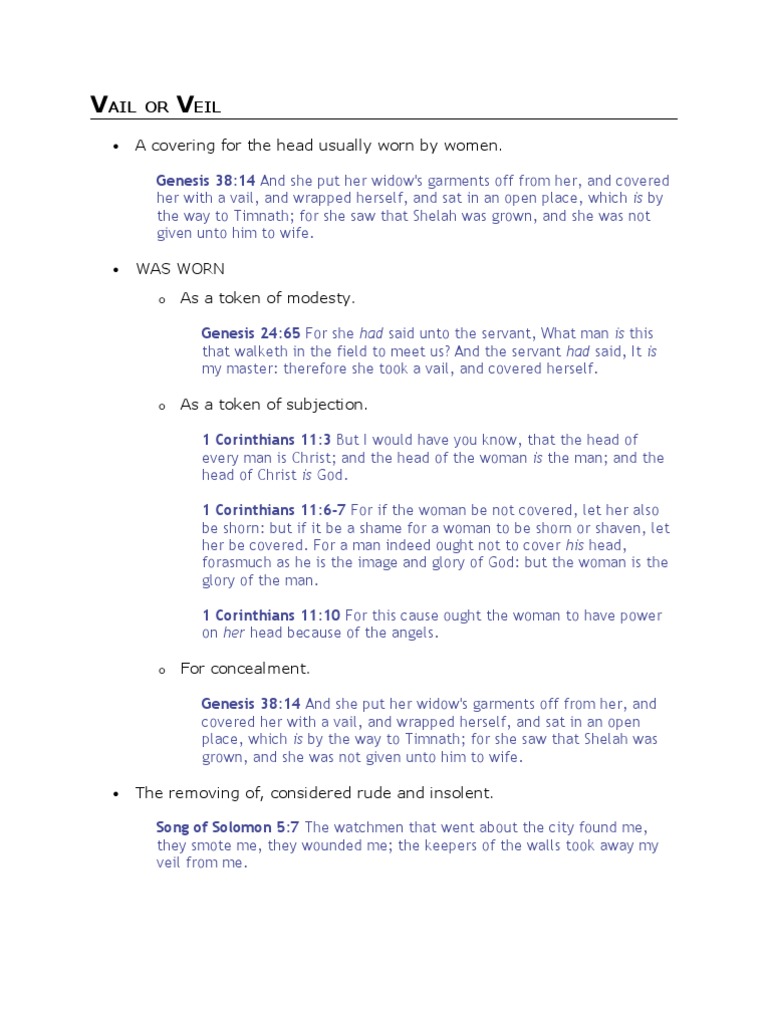
The veil in the Bible is a richly textured symbol that permeates the sacred texts, raising profound questions about spirituality and the human experience. Have you ever pondered the significance of the veil? Is it merely a piece of fabric, or does it encapsulate deeper meaning, shaping our understanding of the divine? To unravel this mystery, we must delve into its multifaceted role throughout biblical history.
At its core, the veil serves as a delineator between the sacred and the profane. One of the most notable instances is found in the design of the Tabernacle, as ordained in the book of Exodus. The veil separated the Holy of Holies—where the presence of God dwelled—from the outer sanctuaries accessible to the priests. This separation underscores a principal theme: the tension between humanity’s desire for communion with the divine and the barrier that sin erects. The intricate fabric, adorned with cherubim and colored in azure, purple, and scarlet, invites contemplation about the opulence of divine grace yet simultaneously illustrates the gravity of divine holiness.
Moreover, the veil holds considerable significance in the Gospels. Upon Jesus’s crucifixion, the Gospel of Matthew recounts a moment of cataclysm: the veil of the temple was torn in two. This dramatic event is replete with theological implications. What does this tearing symbolize? It suggests a radical shift in the relationship between God and humanity. The separation that once defined access to divine communion has been obliterated, extending an invitation to all believers to approach God with confidence— a notion that may seem liberating yet demands introspection about our response to such grace.
Theological discourse around the veil has also spurred debate regarding its representation of feminine virtues. Judaic tradition often associates women with notions of modesty, with veils symbolizing humility and protection. This interpretation raises challenging questions about gender and spirituality. Where do modern interpretations of these ancient symbols lie? Do they still resonate within contemporary faith communities, or do they have a place solely in historical contexts?
As we navigate further into the New Testament, the veil is reimagined in metaphorical terms. The Apostle Paul speaks of the veil that lies over the hearts of those who do not see the glory of God in Christ. This spiritual veil signifies ignorance or a lack of understanding, reinforcing the necessity for enlightenment through faith. The journey from obscurity to clarity is one fraught with personal challenges. Have you ever experienced a personal ‘veil’ in your life? What might it be obscuring from your understanding?
In addition, the veil speaks to the paradox of revelation and concealment in divine encounters. While it provides a barrier, it simultaneously serves as an invitation to seek deeper truths. Its layered meanings compel believers to approach the mysteries of faith with awe and reverence while embracing the pursuit of knowledge. This inherent challenge prompts an exploration into the various interpretations of the veil throughout history, leading to a rich tapestry of discussions across cultures and eras.
Ultimately, the veil in the Bible is an extraordinary complex symbol urging believers to confront the divine continuum. Reflecting on its significance may lead you to profound insights about your own spiritual journey. As you contemplate the veil, consider the ways it challenges you to reconcile your desires for understanding and intimacy in your relationship with the divine. What does embracing this challenge reveal about your own faith and existence?

