

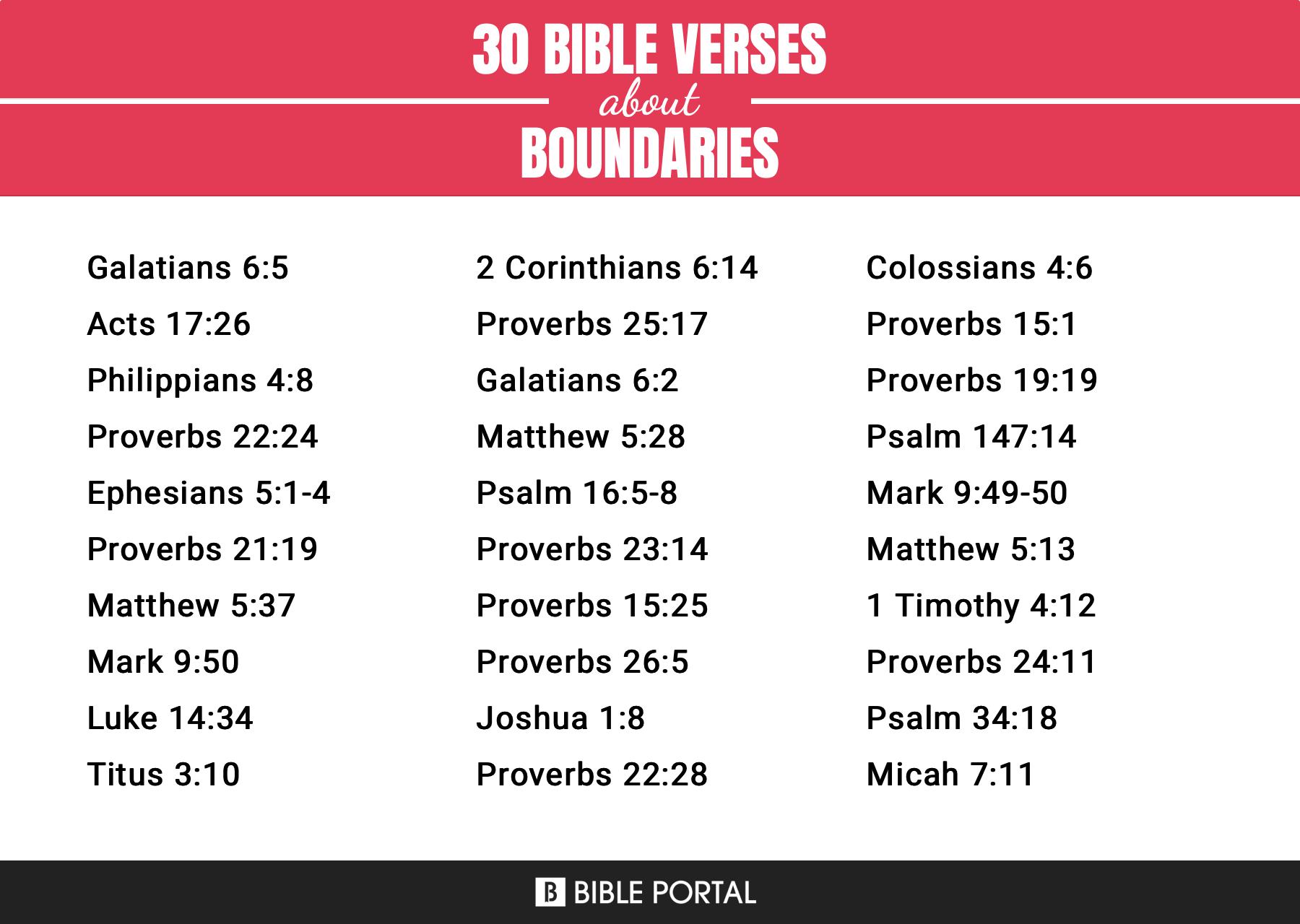
Have you ever pondered the idea of setting personal boundaries? It’s a thought-provoking question, and while establishing limits can often seem daunting, the Bible provides profound insight into the importance of boundaries in our lives. These sacred texts not only advocate for personal protection but also emphasize the necessity of fostering healthy relationships with others. Boundaries, as delineated in scripture, serve as both a shield and a guide, ensuring that we navigate the complexities of life with clarity and grace.
In the realm of interpersonal dynamics, boundaries are crucial. They help define the space between individuals, allowing for mutual respect and understanding. Scripture often illustrates the importance of respecting oneself and others. One compelling biblical perspective comes from Proverbs 25:17, which states, “Seldom set foot in your neighbor’s house—too much of you, and they will hate you.” This verse underscores the idea that overstepping boundaries can lead to resentment, suggesting that moderation and respect for others’ space are essential for harmonious relationships.
Moreover, biblical figures exemplify boundary-setting in their lives. Take, for instance, the story of Jesus, who often withdrew from the crowd to pray and recharge. His practice serves as a powerful example of the need for personal space and time for reflection. Mark 1:35 recounts, “Very early in the morning, while it was still dark, Jesus got up, left the house and went off to a solitary place, where he prayed.” This retreat was not merely a physical withdrawal; it represented a deeper, spiritual necessity for rejuvenation. In today’s fast-paced world, how often do we allow ourselves time to rest and reconnect with our inner selves? The challenge lies in recognizing when to say “no” and prioritizing our own mental and spiritual well-being.
Establishing boundaries, however, is not solely about personal space; it extends into our emotional landscapes as well. Scriptures like Ephesians 4:15 encourage us to speak the truth in love. This highlights the delicate balance of being honest while also maintaining kindness. Setting emotional boundaries means being forthright about your feelings and limitations, thus fostering authentic relationships anchored in mutual respect. Yet, it also invites the reader to reflect: Are we, at times, afraid of honesty due to fear of conflict or potential relational rifts? Navigating this truth can be tricky, yet it is essential for personal and relational growth.
Equally significant is the impact of boundaries on our spiritual lives. Galatians 6:5 states, “For each will have to bear his own load.” This scripture elucidates the principle of personal responsibility. A healthy boundary means recognizing that we cannot and should not carry the burdens of others indefinitely. While it is commendable to offer support, it becomes counterproductive and unhealthy when our own spiritual and emotional health is jeopardized. Herein lies the challenge: How do we support our loved ones without losing ourselves in the process?
Ultimately, the notion of boundaries is intricately woven into the fabric of biblical teachings. They are not merely protective walls but are also pathways to deeper, more meaningful connections with ourselves and others. The wisdom found in the scriptures encourages us to navigate our lives with careful consideration of our limits, fostering a balance that honors our own needs while also cherishing those around us. As you reflect on this profound principle, consider what boundaries you might need to establish in your own life. Will you accept the challenge of intentionality in setting these limits? The journey toward healthy boundaries opens the door to enhanced relationships, self-respect, and spiritual fulfillment.

