

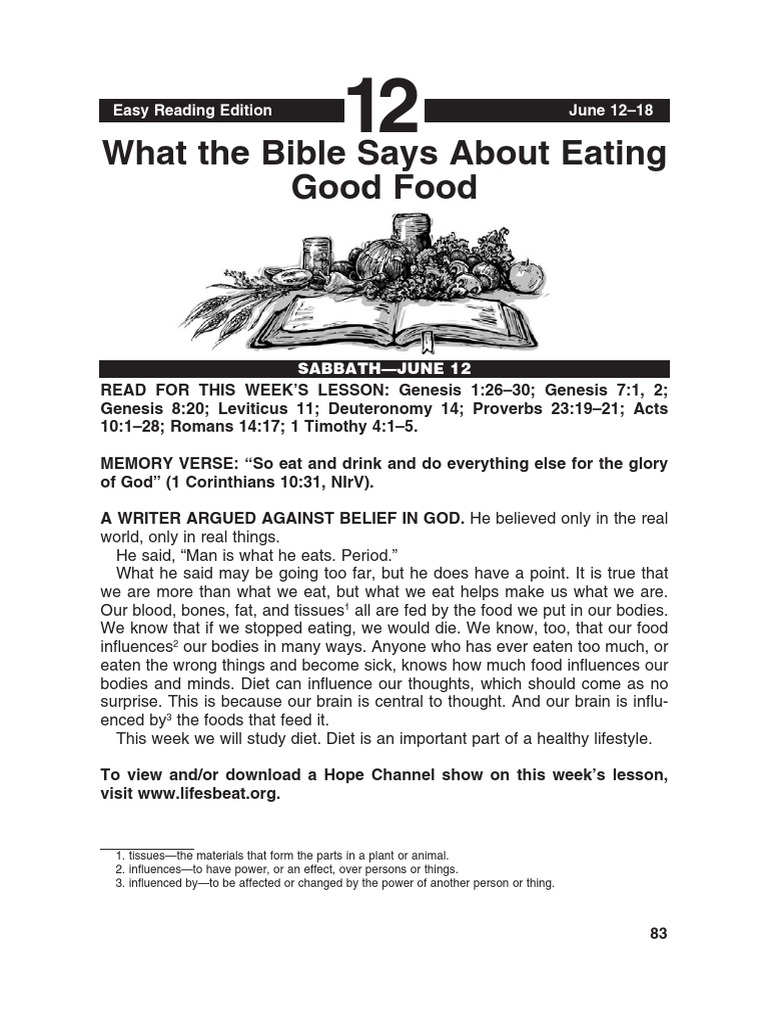
The relationship between food and faith is a profound and intricate subject found within the pages of the Bible. Amongst various teachings, the Scriptures impart remarkable insights into dietary practices, nourishing choices, and our broader connection to creation. Have you ever pondered whether your meal choices resonate with deeper spiritual philosophies? This exploration into biblical perspectives on food may challenge your culinary habits in unexpected ways.
In the book of Genesis, we find the foundation of dietary philosophy, where God delivers to humanity a divine mandate regarding what is appropriate for consumption. “Behold, I have given you every herb bearing seed, which is upon the face of all the earth, and every tree, in the which is the fruit of a tree yielding seed; to you it shall be for meat” (Genesis 1:29, KJV). This initial directive places an accent on plant-based sustenance, advocating for the virtues of vegetarianism long before the modern diet was conceived. While contemporary society often grapples with concepts of vegetarianism and veganism, the seeds of such practices are deeply ensconced in biblical doctrine.
As readers delve into Leviticus, a more complex landscape of dietary laws emerges. Here, we encounter the delineation of clean and unclean animals, which introduces further nuances to the concept of sanctified eating. The Israelites were instructed to consume animals that both chewed the cud and had split hooves, such as cows and sheep, while avoiding others like pigs and camels. These regulations were more than mere dietary preferences; they symbolized the community’s identity, spiritual discipline, and covenant relationship with God. Have you considered how your food choices might influence not just your health, but also your spiritual identity?
The New Testament brings forth a significant evolution in culinary teachings. In Acts 10, a powerful vision leads Peter to understand that the divisions of clean and unclean are transcended by Christ’s grace. The metaphor of food, once a boundary marker, becomes an opportunity for inclusion and divine acceptance. “What God has made clean, do not call common” (Acts 10:15, ESV) is a rallying cry for believers to embrace a more unifying perspective on nourishment, encouraging them to forge connections through shared meals rather than remain segregated by dietary customs.
Moreover, Jesus’ ministry showcases food as a central theme in his parables and miracles. From the multiplication of loaves and fishes to the Last Supper, meals become sacred moments of fellowship, teaching, and transformation. The act of breaking bread compels us to consider food not merely as sustenance but as a medium for social connection and spiritual communion. When sharing a meal, can we take a moment to reflect on the deeper implications of this intimate act?
Finally, the Bible extols the virtues of moderation and mindfulness in consumption. Proverbs 25:16 cautions, “Have you found honey? Eat only what you need, lest you have your fill of it and vomit.” This sentiment reverberates through modern nutritional advice, urging individuals to adopt a balanced approach to eating. The challenge, then, is to find the equilibrium amidst life’s culinary wonders. How can you harness biblical wisdom to cultivate a healthy relationship with food?
In conclusion, the exploration of food within the biblical context is rich with layers of meaning. Each passage offers a distinct perspective on how our nourishment practices can reflect our spiritual walk. Whether embracing plant-based choices, adhering to dietary laws, or reconsidering the role of meals as acts of community, the Bible illuminates pathways to a holistic understanding of our relationship with food. Are you ready to embark on a journey of culinary reflection that blends nutrition with personal faith?

