

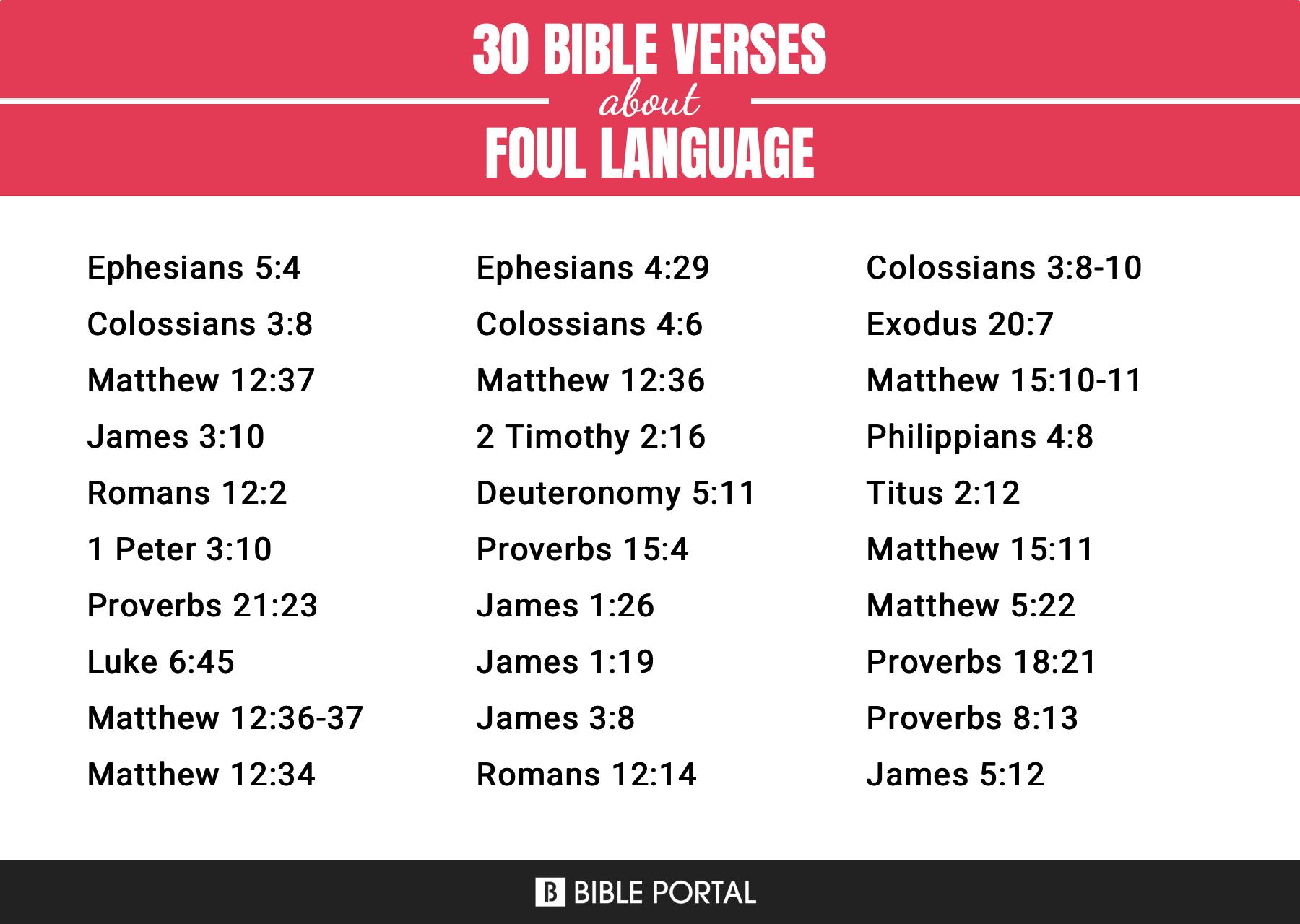
The issue of foul language has permeated human interaction for centuries. It is an intriguing phenomenon. One might wonder what drives individuals to employ profanity. Despite the veneer of casualness, foul language often signifies profound emotional currents and societal norms. Strikingly, this subject is not absent from the pages of the Bible, which provides not only moral guidance but also insights into the human condition.
The biblical perspective on language is multifaceted, intertwining ethics with the very essence of communication. Numerous passages elucidate the significance of words, revealing that they possess a form of power. Proverbs 18:21 asserts, “The tongue has the power of life and death, and those who love it will eat its fruit.” This verse encapsulates the dual nature of language: it can uplift or degrade, heal or harm. The stark reality here is that words, including foul ones, can bear weighty consequences.
At the crux of foul language lies its capacity to reflect inner turmoil. James 3:10-12 draws a poignant distinction, stating, “Out of the same mouth come praise and cursing. My brothers and sisters, this should not be.” This passage underscores the paradox of human expression. It unveils an internal conflict; those who profess righteousness may still succumb to unwholesome language. It hints at a deeper inquiry into the nature of sincerity and hypocrisy.
Moreover, the Bible is replete with admonitions against corrosive speech. Ephesians 4:29 commands, “Do not let any unwholesome talk come out of your mouths, but only what is helpful for building others up according to their needs.” Such guidance implores individuals to evaluate the intent and impact of their dialogue. Foul language, often dismissed as mere embellishment, can fortify divisiveness and societal fragmentation.
Yet, the fascination with foul language persists. It serves as a form of resistance, a rebellion against societal norms. This allure can simultaneously evoke camaraderie among peers while showcasing a departure from conventional decorum. In contemporary culture, profane utterances are often trivialized; they may even be perceived as markers of authenticity or boldness. Thus, they occupy a unique space between acceptance and condemnation.
Interestingly, the Bible also emphasizes the transformative potential of language. Colossians 3:8 counsels believers to “rid yourselves of all such things as these: anger, rage, malice, slander, and filthy language from your lips.” Here, the act of renunciation becomes a pathway to growth and maturation. The exhortation is clear: eschewing foul language not only refines one’s character but also fosters a more peaceful community.
Furthermore, the prevalence of foul language demands introspection about its societal implications. Language shapes culture; the normalization of profanity can result in an erosion of civility. As the fabric of respectful discourse frays, the risk of misunderstanding and conflict escalates. If communication falters, so too does community cohesion. Thus, the question arises: is foul language merely a personal choice, or does it resonate with broader societal values?
In sum, the Bible’s reflections on foul language reveal complex layers of human behavior and moral accountability. Words possess transformative power, capable of forging connections or creating rifts. To embrace language that uplifts not only enhances individual dignity but also cultivates a more harmonious society. Understanding foul language through this lens offers a more profound appreciation of the spoken word’s impact in our lives.

