

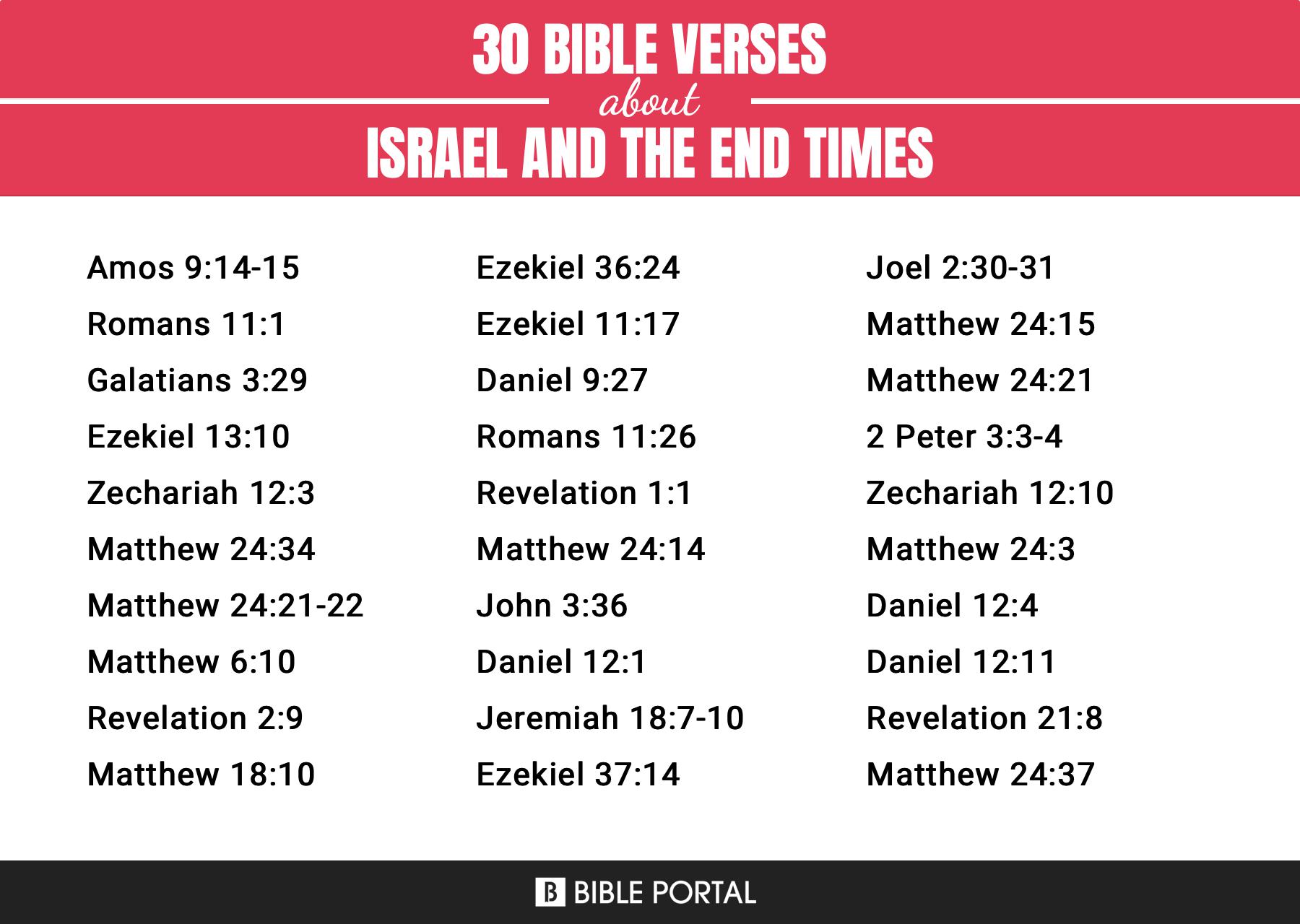
At the intersection of faith and prophecy lies a compelling narrative surrounding Israel and its pivotal role in the End Times. The Biblical texts offer a rich tapestry of promises and warnings, drawing believers and scholars alike into a profound exploration of eschatology. To grasp what the Bible conveys, one must delve into the prophetic scriptures that illuminate Israel as a focal point in the divine plan for humanity.
Israel’s significance is often underscored by its historical covenant with God—a covenant that has endured through trials and tribulations. In the Book of Genesis, God irrevocably promises the land to Abraham and his descendants, an assurance that lingers in the consciousness of the Jewish people and resonates through millennia. Genesis 12:1-3 outlines this covenant, establishing not only territorial rights but also a divine blessing upon those who bless Israel and a curse upon those who would curse it. This principle underscores the enduring connection between the destiny of Israel and global events.
As we progress through the prophetic timeline, we find ourselves in the prophetic book of Ezekiel, which offers startling visions of restoration. Ezekiel 37 depicts the Valley of Dry Bones, symbolizing Israel’s revival. The imagery evokes a sense of hope—where desolation begets life once more. In the context of the End Times, this revival is interpreted as a sign of Israel’s place in God’s grand narrative. The resurrection of a nation is both a literal and metaphorical awakening—a prelude to that which is to come.
Moreover, Israel’s role expands further into apocalyptic literature. The prophets foretell tumultuous events and global upheaval leading to a climactic confrontation—often portrayed in the imagery of a final battle, referred to as Armageddon. Notably, the Book of Revelation elucidates a spiritual conflict where nations converge upon Jerusalem, embodying the struggle between good and evil. This dire forecast piques curiosity about the broader ramifications for humanity beyond the nation of Israel itself.
What adds layers of complexity to this narrative is the recognition that Israel’s endurance is often matched by a call for spiritual introspection. The biblical texts urge both Israelites and Gentiles toward repentance and alignment with divine principles. Zechariah 12:10 prophesies a moment of profound mourning in Jerusalem, marking a turning point where the nation seeks healing and reconciliation. This pivotal moment encapsulates the essence of transformative hope—a shift from conflict to communion amid chaos.
Furthermore, the New Testament amplifies the discourse surrounding Israel in the End Times. The teachings of Jesus emphasize the importance of vigilance and readiness. In Matthew 24, the Olivet Discourse reverberates through time, urging believers to observe the signs and seasons while nurturing steadfast faith amid uncertainty. The parables reveal an endearing truth; the faithful must embody both awareness and action as they navigate a world teetering on the brink of monumental change.
In reflection, Israel’s place in the tapestry of the End Times invites a profound examination of faith, prophecy, and humanity’s role in divine design. It beckons each individual to explore their convictions, prompting an awakening of hearts and minds. The scriptures serve as both a warning and a promise, inviting believers to anticipate a future steeped in hope—a future where Israel not only survives but thrives as a beacon of steadfast faith amid tumultuous times. The call to engage with this ancient wisdom resonates today, as the shadows of prophecy loom ever closer.

