

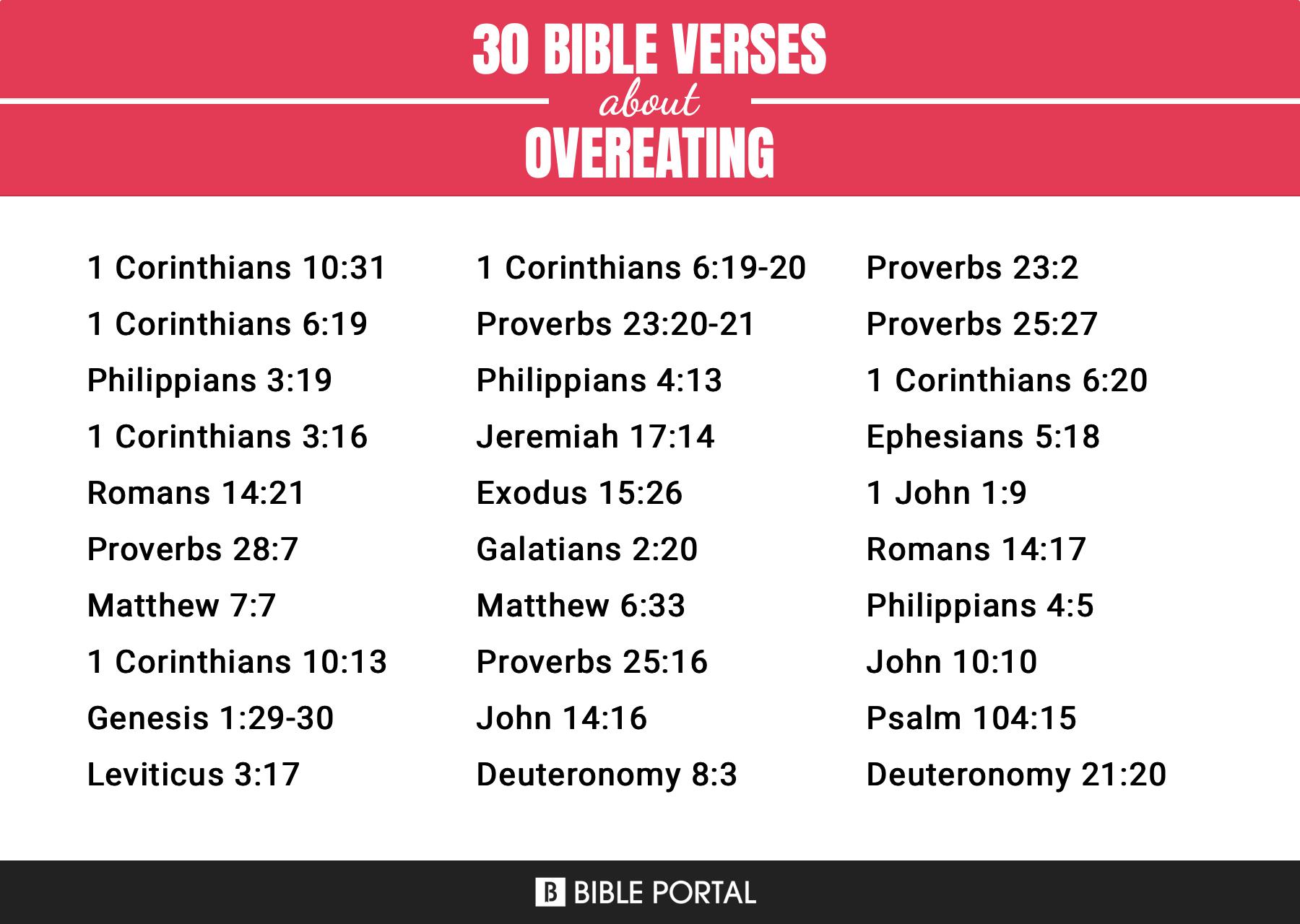
In the vast tapestry of scripture, the notion of overeating emerges not merely as a physical indulgence but as a profound metaphor for a deeper spiritual quandary. The Bible illuminates this predicament, revealing that excess can sprout from the same root as scarcity—a yearning for contentment and fulfillment. In this exploration, we delve into the biblical narrative surrounding overeating, unearthing rich insights that resonate with both ancient wisdom and contemporary dilemmas.
To commence, consider the story of the Israelites in the wilderness, where they pleaded for sustenance. Their cravings culminated in the divine provision of manna, yet this miraculous bread was often met with insatiable desires. This episode encapsulates much of human experience: the desire to overindulge speaks not merely to hunger but to a profound spiritual emptiness. When one is beset by longing, the tendency is to seek solace in countless bites, yet those very actions may lead to a cyclic chain of guilt and emotional desolation.
Scriptures such as Proverbs 23:20-21 serve as stern reminders, cautioning against the allure of feasting: “Do not join those who drink too much wine or gorge themselves on meat, for drunkards and gluttons become poor, and drowsiness clothes them in rags.” The passage draws a striking parallel between physical and spiritual impoverishment. What results from the glutton’s table is not only a loss of wealth but also a depletion of vibrancy in one’s spiritual life.
Intriguingly, the Bible elevates the act of eating to a communal celebration, yet it simultaneously admonishes excess. The Last Supper stands as a poignant illustration of this duality—an event rich with meaning and imbued with the solemnity of shared purpose. It teaches that while sustenance is crucial, the essence lies not solely in consumption but in the relationships fostered around the table. When feasting becomes an isolating endeavor, the joy of fellowship dissipates, transforming manna into mere materialism.
In Galatians 5:22-23, the fruit of the Spirit is listed, where self-control emerges as a vital attribute. The battle against overeating remains not just a dietary struggle but a spiritual undertaking. Grappling with cravings requires an infusion of discipline, an acknowledgment that mastery over one’s appetites leads to true freedom. To overeat is to forfeit the delicate balance of harmony between body and spirit—a travesty that the scriptures vehemently urge us to avoid.
Moreover, Ecclesiastes poignantly asserts, “There is a time for everything” (Ecclesiastes 3:1), emphasizing the necessity of moderation. This concept ebbs and flows throughout the biblical narrative, encouraging a lifestyle where one recognizes the time and place for feasting and the importance of temperance. Each morsel consumed should bear significance, offering nourishment for the body and the spirit rather than mere indulgence that culminates in remorse.
Ultimately, this dialogue on overeating serves as a reminder of the ever-present struggle between physical and spiritual excess. The Bible calls for a discerning approach to our appetites, urging believers to engage with food as a sacred gift rather than a mere commodity. A thoughtful reflection on this topic sheds light on a broader understanding of how fulfillment can be found not in excess but in moderation and community.
In embracing these principles, one cultivates a lifestyle marked by both gratitude and thoughtful consumption. By bridging the metaphysical with the corporeal, we learn to intertwine our physical needs with spiritual well-being. Thus, the message resonates across ages: the heart of the matter lies not merely in what we consume but in the wisdom of how we choose to consume it. In a world ripe for abundance, let moderation reign, guiding the faithful on a steadfast path toward holistic wellness.

