

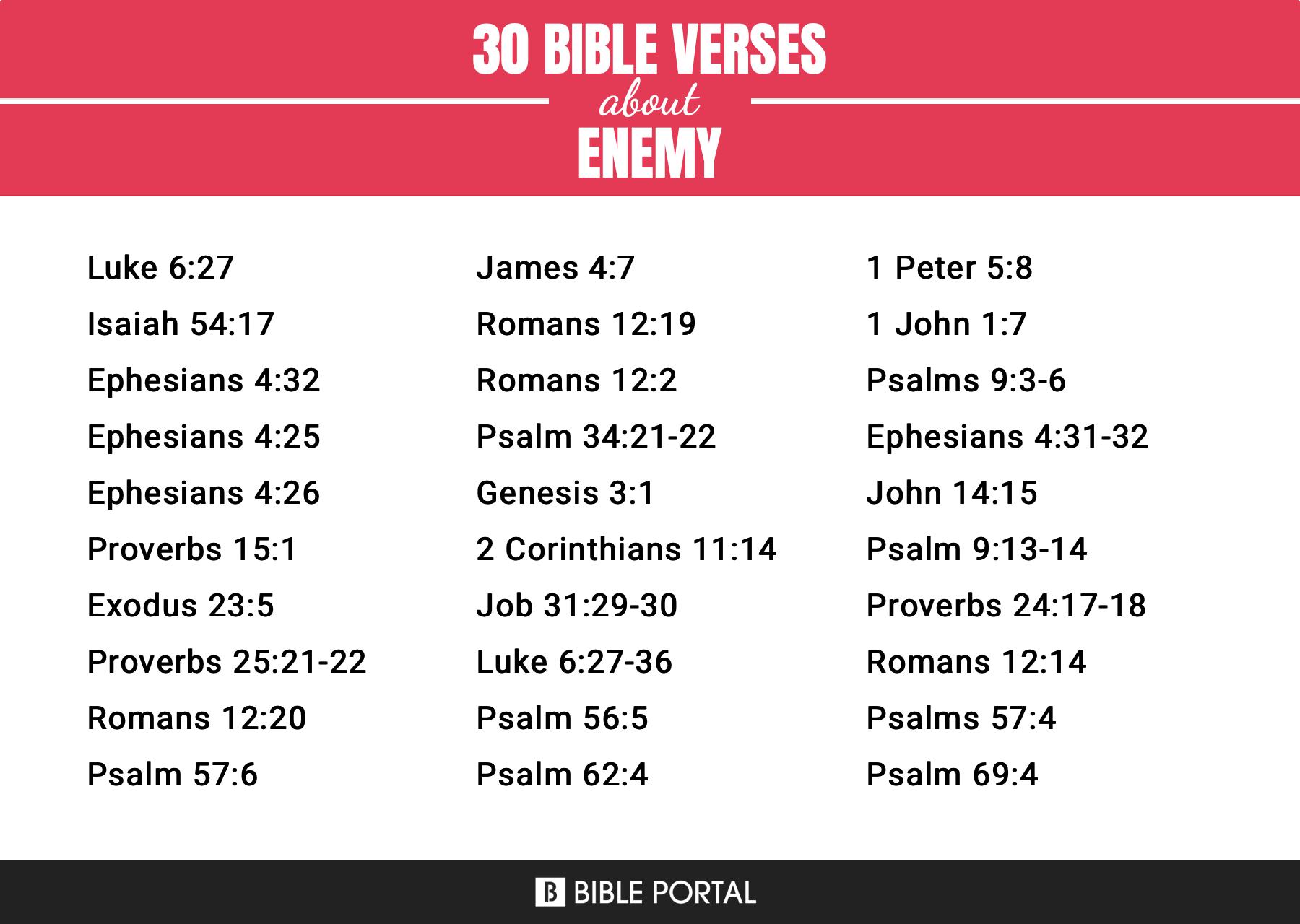
What does it truly mean to have an enemy? In an age where conflict is often externalized, the notion of an “enemy” transcends mere interpersonal discord. The Bible delves into the essence of adversarial relationships, shedding light on the spiritual and moral dimensions of what it means to face an opponent. As we explore this sacred text, a challenge emerges: how might our understanding of enmity transform how we perceive and engage with those we consider foes?
Throughout the Bible, the concept of enemies is not merely a characterization of individuals who oppose us; instead, it evokes a deeper inquiry into the struggle between good and evil. In the Sermon on the Mount, Jesus posits a radical approach to these relationships, urging followers to love their enemies and pray for those who persecute them (Matthew 5:44). Such a call to action presents a formidable challenge: can we truly extend compassion to those who wish us harm?
The biblical narrative does not shy away from the reality of conflict. In the Old Testament, adversaries are depicted as more than mere nuisances; they represent larger themes of oppression and moral decay. The Israelites’ journey through the wilderness was fraught with enemies, both external, such as the Philistines, and internal, as exemplified by betrayal among the ranks (Exodus 17:8-16). Thus, the Scriptures implore us to confront the turmoil within and around us, as enemies can mirror our own imperfections and struggles.
Moreover, biblical texts reflect on the nature of hatred and animosity. Proverbs asserts that harboring hatred is insidious, likening it to a hidden poison (Proverbs 10:12). Individuals are encouraged to seek reconciliation and understanding rather than allowing enmity to fester. The revelation here is profound: the adversarial role of others often acts as a catalyst for personal introspection and growth. If we consider our enemies as teachers, what lessons can they impart to us about our own character?
Turning to the New Testament, the depiction of the ultimate enemy—Satan—invites further contemplation. In 1 Peter 5:8, we are cautioned to be vigilant against a “roaring lion” seeking to devour. This metaphor encompasses not only external adversaries but also the internal battles each person faces. The biblical perspective invites us to recognize the multifaceted nature of enmity; it is not exclusively about human confrontation but rather the perpetual struggle between righteousness and temptation.
Furthermore, the Bible portrays God as a formidable ally against our enemies. In Psalm 23, the symbolism of the shepherd offers comfort, highlighting divine protection in the face of adversaries. This promise instills hope and strength; we are not unaided in our battles. Thus, when confronted by those who oppose us, we can draw upon this divine assurance to confront our fears with resilience and grace.
Ultimately, the Bible’s exploration of enemies leads to a transformational understanding of relationships and conflicts. The question lingers: can we reframe our view of adversaries not as demonic forces but as souls grappling with their own strife? If we extend our understanding of enmity to include empathy, perhaps we can deconstruct the very barriers that divide us. By cultivating love, patience, and understanding, we may not only disarm hostility but also find the seeds of unity in unexpected places. Embracing this challenge could pave the way for personal salvation and collective harmony—a task both daunting and essential in our world today.

