

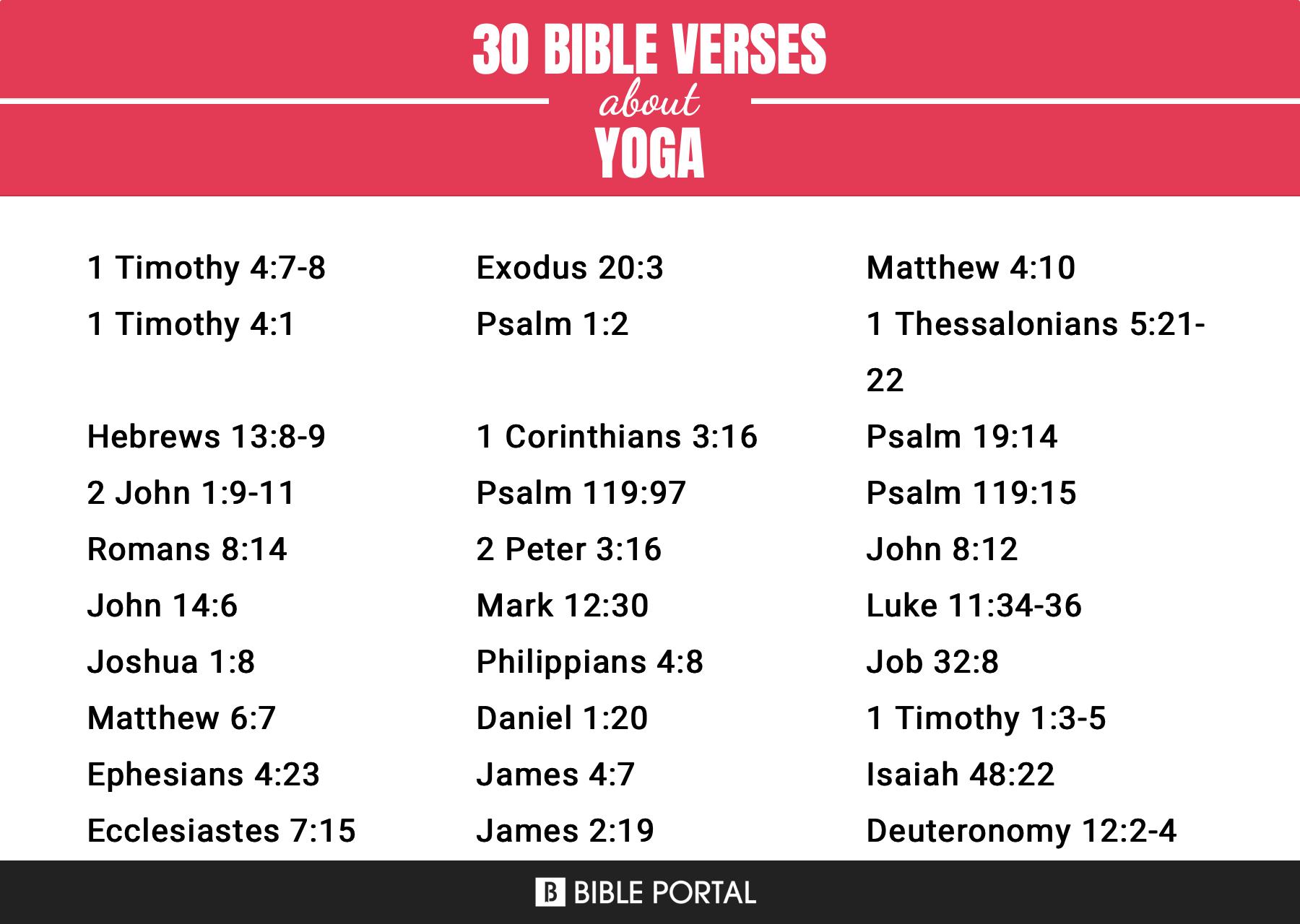
Yoga, an ancient discipline originating from India, elegantly intertwines the physical and spiritual realms, inviting practitioners to cultivate not only strength and flexibility but also inner peace and mindfulness. This holistic approach finds its echo in the enduring wisdom of the Bible, prompting contemplation on the alignment—or potential misalignment—between yogic practices and biblical teachings.
At the crux of yoga lies the concept of unity, a harmonious merger of body, mind, and spirit. This notion resonates in the Scriptures, particularly in the call to love God with all one’s heart, soul, and mind (Matthew 22:37). It urges individuals to embrace wholeness, fostering an awareness that transcends mere physicality. Just as yoga enthusiasts seek to balance asanas, the Bible encourages believers to pursue a balanced life of faith and action—each aspect fortifying the other.
However, as practitioners roll out their mats, a pressing question emerges: Does the practice of yoga, often associated with Eastern spirituality, align with the teachings of Christianity? At the heart of this inquiry lies the concept of intention. In the New Testament, Paul instructs believers to examine their motives in all things (1 Corinthians 10:31). This exhortation serves as a beacon, guiding one’s journey through the spiritual labyrinth of yoga. Engaging in yoga for the sake of physical health or stress relief can coexist with one’s faith. Yet, when the practice veers toward idolizing its spiritual components outside biblical context, caution is warranted.
Moreover, the physicality of yoga—the postures, breathing exercises, and meditation—can be likened to the metaphor of a sculptor chiseling away at a block of marble. Each session acts as a stroke of the hammer, revealing the divine likeness within oneself. This process of self-discovery, reminiscent of the biblical injunction to become more like Christ (Romans 8:29), underscores the transformative potential of mindful movement and meditation. Furthermore, the profound stillness cultivated during yoga can facilitate a communion with God, echoing the quietude found in solitary prayer.
Embracing the art of stillness often leads to introspection. As one holds a pose, there lies an opportunity for reflection—an invitation to meditate on scripture. Psalm 46:10 beckons, “Be still, and know that I am God,” highlighting the intrinsic value of quieting the tumult of life. In this space, practitioners can invite divine wisdom, enhancing biblical mindfulness through the synergy of breath and scripture.
It is essential to address the cultural connotations often associated with yoga. Some view its roots in Hinduism as conflicting with Christian beliefs. Yet, the act of engaging mindfully in movement, prioritizing love, compassion, and community—central tenets in both traditions—creates a dialogue between the two practices. Recognizing yoga as a form of physical exercise, devoid of its spiritual associations, allows believers to reap the benefits of flexibility and strength while remaining anchored in their faith.
Ultimately, the decision to integrate yoga into one’s spiritual journey is deeply personal. Like the parable of the talents (Matthew 25:14-30), it invites individuals to discern how best to utilize their unique gifts to glorify God. In this light, the practice of yoga can transcend mere physicality, transforming into a canvas where faith and practice unite harmoniously.
In conclusion, the intersection of yoga and biblical principles is rich with potential for growth, exploration, and understanding. As one navigates this path, let intention, mindfulness, and love serve as guiding stars, illuminating the way toward a deeper connection with self and the Divine.

