

The Abyss, a term that resonates with mystery and enigma, appears multiple times within the biblical texts, beckoning believers and scholars alike to delve deeper into its significance. Yet, what exactly is the Abyss? A mere void? A place of torment? Or something altogether different? This inquiry invites exploration into its multifaceted representation and the theological implications it carries.
As we embark on this expedition, it is essential to acknowledge that the term “Abyss” translates from the Greek word “abyssos,” conveying the idea of an immeasurable depth or an unfathomable expanse. Such connotations evoke images of vast, shadowy waters or deep subterranean realms—places often associated with chaos and darkness. Throughout scripture, the Abyss serves various purposes, appearing not only in apocalyptic literature but also in the synoptic gospels and even the Old Testament.
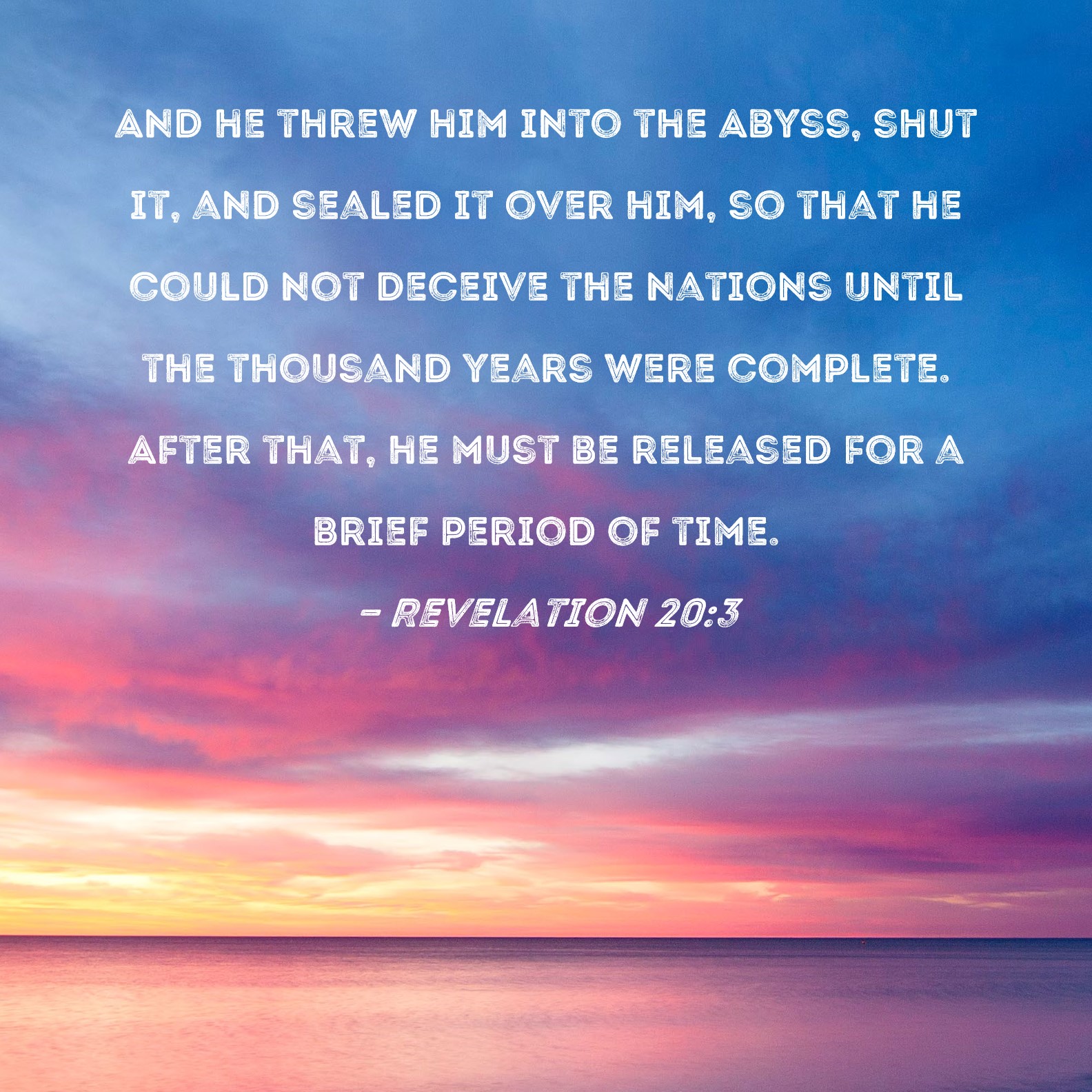
The Abyss first prominently surfaces in the Book of Revelation, playing a central role in the eschatological narrative. Revelation 20:1-3 depicts an angel descending from heaven, holding the key to the Abyss. This angel seizes Satan and casts him into this cosmic prison for a thousand years. The symbolic weight of this act is profound: it signifies the ultimate defeat of evil and the restoration of divine order. It challenges readers to ponder upon the nature of evil and its ultimate subjugation, inviting a reflective stance on good and evil in their own lives.
In contrast, a notable mention of the Abyss can be found in the Gospel of Luke, where it is described as a place from which demons may emerge. When Jesus encounters a man possessed by numerous demons, they plead with Him not to be sent into the Abyss. This evokes a different facet of the Abyss: a confined space of punishment or oblivion for malevolent spirits. Here, the Abyss becomes a metaphorical battleground reflecting the struggle between the benign and the malevolent. Are we, too, wrestling with our inner demons? The text compels readers to confront their fears and internal conflicts.
The imagery of the Abyss overlaps with motifs found in the Old Testament, particularly in the prophetic books. The chaos and unformed state described in Genesis 1:2—“the earth was without form, and void”—evokes a similar concept. The Abyss embodies a primordial chaos, a space that the Creator must bring order to. This establishes a theological underpinning: God not only creates but also has authority over chaos. Would it not be wise for us to seek that same authority in our chaotic modern lives?
The interplay between the Abyss and themes of judgment and mercy adds another layer of complexity. The Revelation texts depict a future where the Abyss is not just a prison but a precursor to divine justice. In this light, the Abyss symbolizes the transient nature of evil, hinting at a time when God’s justice prevails. This raises a playful question: What if, amidst our worldly tribulations, we perceived the Abyss not merely as a chasm of despair but rather as a catalyst for transformation and redemption?
To comprehend the Abyss in its entirety, one must also acknowledge its implications for redemption. In various interpretations, the Abyss can signify a space of purification or a stage in the journey toward restoration. This notion reverberates through the ages, challenging believers to contemplate their spiritual journeys and the cleansing processes they must undergo. Are we not all, at times, called to confront our personal Abysses?
In conclusion, the Abyss in the Bible is a rich tapestry of meanings—from confinement to liberation, chaos to order, judgment to mercy. It stands as an invitation to introspect on one’s inner landscape. With each reading, it encourages us to challenge our perceptions of darkness and uncover the potential for light and hope hidden within the shadows. In wrestling with the concept of the Abyss, we may very well unearth the keys to our own liberation.

