

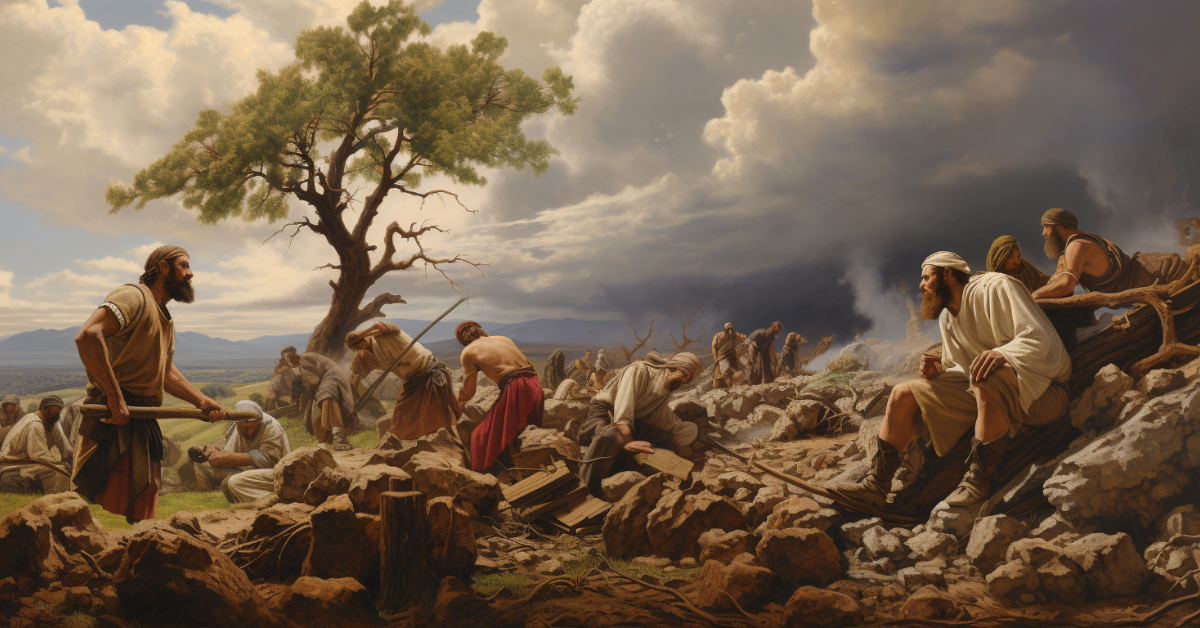
In a world often marked by brokenness—whether it involves personal hardships, societal disintegration, or ecological devastation—the concept of restoration emerges not just as a theological discourse but as a beacon of hope. The Bible, replete with promises and archetypes reflecting restoration, vividly illustrates a God who coaxes life from desolation and fosters renewal in myriad forms. This exploration delves into scriptural affirmations surrounding restoration, presenting a transformative perspective on despair and the divine invitation to renewal.
The Genesis of Restoration
In the beginning, the narrative of creation itself can be viewed through the lens of restoration. Genesis unveils a world formed from chaos; God breathed life into the void, mirroring restoration’s essential purpose. When humanity diverged from the Creator, disarray permeated existence. However, God’s commitment to restoration is evident—they sought to mend the breach through covenants and prophetic promises that foretold renewal. Throughout the biblical text, the theme of restoration is intertwined with the understanding that brokenness is not the end but a precursor to re-creation.
God’s Promises of Restoration
The prophetic books of the Old Testament underscore the endurance of God’s promises of restoration. Isaiah, a pivotal figure, articulated profound hope amid despair. He proclaimed, “I will restore the years that the locust has eaten” (Joel 2:25), a resounding affirmation that God can redeem lost time and vitality. This profound assertion invites reflection on personal experiences—how often do we feel the weight of regret, the burden of squandered opportunities? Yet, the biblical narrative insists that restoration is possible—even for the most desolate situations. The imagery of vineyards and abundant harvests symbolizes a comprehensive rejuvenation, prompting us to reconsider our perspectives on loss and redemption. Through God’s eyes, desolation can morph into fertility.
Restoration Through Relationships
Scripture elucidates that restoration is not merely an individualistic endeavor but a collective journey. The relational aspects of our existence hold profound significance in the restorative process. In Matthew 5:23-24, Jesus implores individuals to reconcile with their brothers and sisters before offering gifts at the altar. The act of seeking restoration within relationships symbolizes an overarching divine intention that reconciliation fosters healing. The narratives of forgiveness and repentance throughout the Gospels serve as vital tools in the restoration process. They emphasize that every relationship, imbued with mutual accountability and love, has the potential to transcend wounds and foster vibrant connections.
Renewal Beyond the Individual: Community Restoration
Beyond personal relations, the Bible champions the principle of community restoration. The concept of shalom—often translated as peace—encompasses not only individual well-being but societal wholeness. The prophetic visions of Jeremiah and other prophets spotlight the communal aspects of restoration. Jeremiah 29:11 reassures us that God harbors plans for welfare and not for harm, leading us toward a hopeful future. This sentiment extends beyond individual aspirations; it calls for communal well-being entwined with social justice and environmental stewardship. A collective awakening to restorative practices can galvanize communities, transforming fragmented societies into cohesive units of support and healing, echoing God’s vision for a world flourishing in harmony.
The Role of Suffering in Restoration
To comprehend restoration fully, one must grapple with the reality of suffering. The scriptures neither shy away from pain nor deny the presence of hardship. Rather, they present suffering as a catalyst for deeper restoration. Romans 8:28 illustrates that “in all things God works for the good of those who love Him.” Here, suffering transmutes into a mechanism through which character is cultivated and faith is fortified. This perspective shifts the narrative from one of passive endurance to active engagement—a dynamic serenity that embraces tribulations as essential ingredients for growth. Restoration emerges not as a consequence of avoiding pain but as a result of navigating through and beyond it. This paradigm beckons curiosity—could our most challenging trials be the crucibles through which we experience profound restoration?
Scriptural Calls to Action: Engaging in Restoration
While the Bible articulates lofty promises of restoration, it concurrently issues a call to action. In 2 Corinthians 5:18-19, believers are urged to be “agents of reconciliation,” a powerful reminder that restoration necessitates our engagement. This participation manifests in myriad forms: caring for the marginalized, nurturing the earth, and advocating for justice. The biblical charge to love one’s neighbor transcends mere sentiment; it encapsulates the essence of restorative action that enriches both the giver and the recipient. Christians are encouraged to enact God’s restorative work within their communities, crafting environments of compassion and integrity, thus embodying the restoration promised in scripture.
Conclusion: A New Perspective on Restoration
Ultimately, the biblical narrative on restoration serves multiple dimensions—individual, communal, and ecological. It invites an expansive comprehension of redemption that surpasses the superficial and probes into the depths of the human experience. Infused with hope, the call to restoration leads to a profound metamorphosis—a shift in perspective that ignites curiosity about the possibilities of renewal in circumstances previously deemed irreparable. In embracing the biblical imperatives surrounding restoration, we uncover a world brimming with potential, revitalized relationships, and a deeper connection to the divine. The invitation persists: dare to envision a life restored, and in doing so, participate in the broader grand narrative of divine renewal.

