

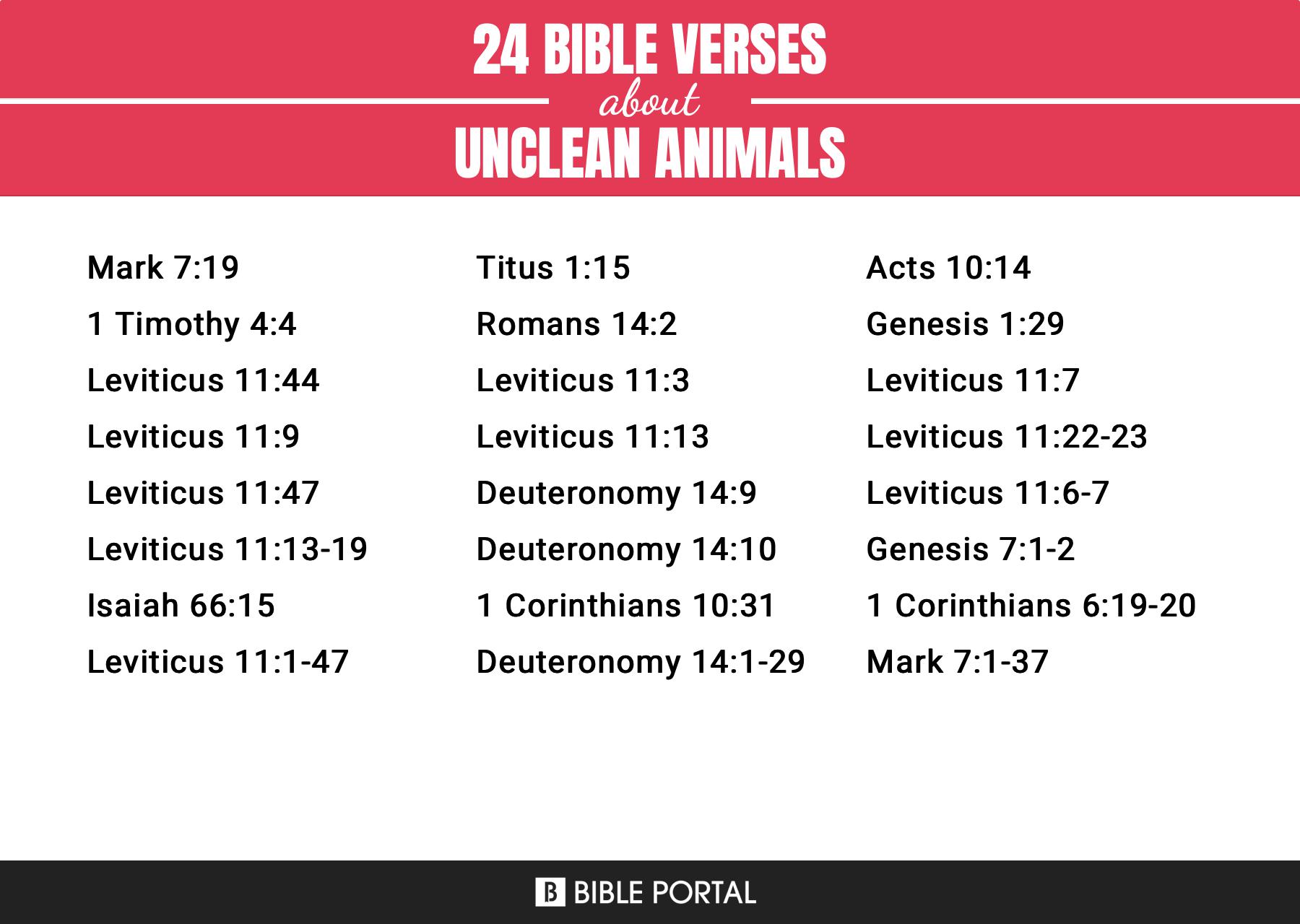
In the realm of biblical texts, the concept of unclean animals transcends mere dietary restrictions; it encapsulates a delicate tapestry woven from threads of spirituality, morality, and cultural identity. From the earliest books, particularly Leviticus and Deuteronomy, specific guidelines delineate which creatures are deemed unclean, rendering their consumption taboo for the chosen people of Israel. What lies beneath these proclamations is a profound narrative ripe for exploration.
Defining unclean animals is like peering into an intricate mirror. The classifications, though seemingly archaic, reflect deeper resonances of purity and holiness, intertwining with the moral fabric of the community. In essence, these creatures are not merely marked as forbidden food; they symbolize broader themes of separation and covenant between God and humanity. The list includes animals like the pig and the hare, esteemed for their apparent foulness and lack of rumination, along with aquatic life lacking fins and scales—each selection serving as a metaphor for ethical and ritualistic standards.
The term “unclean” itself evokes an aura of stigma and reservation. In ancient Hebrew culture, cleanliness was a pathway to holiness, a prerequisite for approaching the divine. The unclean, then, symbolizes those barriers that keep individuals from achieving that sanctification and living in harmony with divine decrees. The unclean animals are metaphors for the moral pitfalls that humanity must navigate, representing the chaos inherent in the world. Thus, the edicts surrounding them craft a dichotomy: the clean, aligned with God’s intentions, and the unclean, embodying spiritual disarray.
Consider the pig, an animal often ridiculed for its perceived impurity. The refusal to eat pork extends beyond dietary preferences; it serves as a profound declaration of identity. For the ancient Israelites, to partake in such flesh was to engage in a form of spiritual treachery. Thus, the pig becomes a symbol of temptation—a metaphorical gateway leading congregants astray from the narrow path of righteousness. Further, the pig’s ability to wallow in mud echoes the human propensity to stray into moral filth and sin. This vivid imagery, while ancient, reverberates through centuries, urging the faithful to avoid the metaphorical muck that can taint their existence.
On the other end of the spectrum lies the hare, another unclean animal, which presents its own conundrum. The hare’s duplicity, with its ability to dash blindly, signifies the tendency of humanity to leap into choices without discernment. Just as the rabbit bounds through the underbrush, so too do we mimic that thoughtless rush towards decisions devoid of reflection. The act of eschewing such creatures invites adherents to engage in contemplative practices, reinforcing a relationship with wisdom and prudence.
The classification of unclean animals also serves an ecological function. By prohibiting the consumption of certain creatures, these laws may have originated as a means of ensuring the health and sustainability of the community. The prohibition against scavengers like vultures and certain insects can be seen as a divine governance ensuring the preservation of environmental sanctity. This connects us to a broader notion of stewardship, galvanizing believers toward a care for creation that honors the Creator. Such precepts reflect a deep understanding of interdependence; the dietary code becomes a sanctuary for both soul and soil.
The unclean animals described in biblical texts are often juxtaposed against clean animals, those permitted for consumption and sacrifice. This binary lays the groundwork for the discourse on holiness and sin, establishing a criterion that extends beyond the animal kingdom. The act of eating is transformed from a mere biological necessity into a sacred ritual, a communion with the divine order. To partake in the flesh of clean animals is to engage in an exalted act, a testimony of loyalty to spiritual principles.
Yet, the narrative does not conclude merely at the distinction between clean and unclean. The New Testament recontextualizes these laws, particularly in the acts of Jesus and the teachings of Peter, who proclaimed that it is not what enters the mouth that defiles a person, but rather what emerges from the heart. This monumental shift widens the scope of understanding regarding purity and cleanliness, inviting believers to transcend legalistic interpretations. In a world that often idolizes the physical, the teachings promulgate a deeper, more nuanced inquiry into moral integrity and spiritual authenticity.
The metaphoric implications of unclean animals continue to resonate in contemporary discourse. They are not simply antiquated regulations but serve as ancient signposts guiding modern moral navigation. They remind the faithful of their commitments, urging a conscientious examination of actions and intentions. Every interaction with a spiritual text is an invitation to self-reflect, an exploration of how the unclean shadows within echo the complexities of human experience.
In contemplating the world of unclean animals through a biblical lens, we embark on a journey laden with spiritual significance. The interplay of environment, morality, and identity breeds a fertile ground for discussion, urging humanity to reconcile ancient wisdom with current realities. The terrain of spirituality, steeped in metaphor, beckons us to pursue heights where divine purpose and earthly existence harmonize. Thus, the discourse around unclean animals becomes not merely a reflection of dietary laws but an illuminating pathway toward a holistic understanding of ourselves, our world, and our Creator.

