

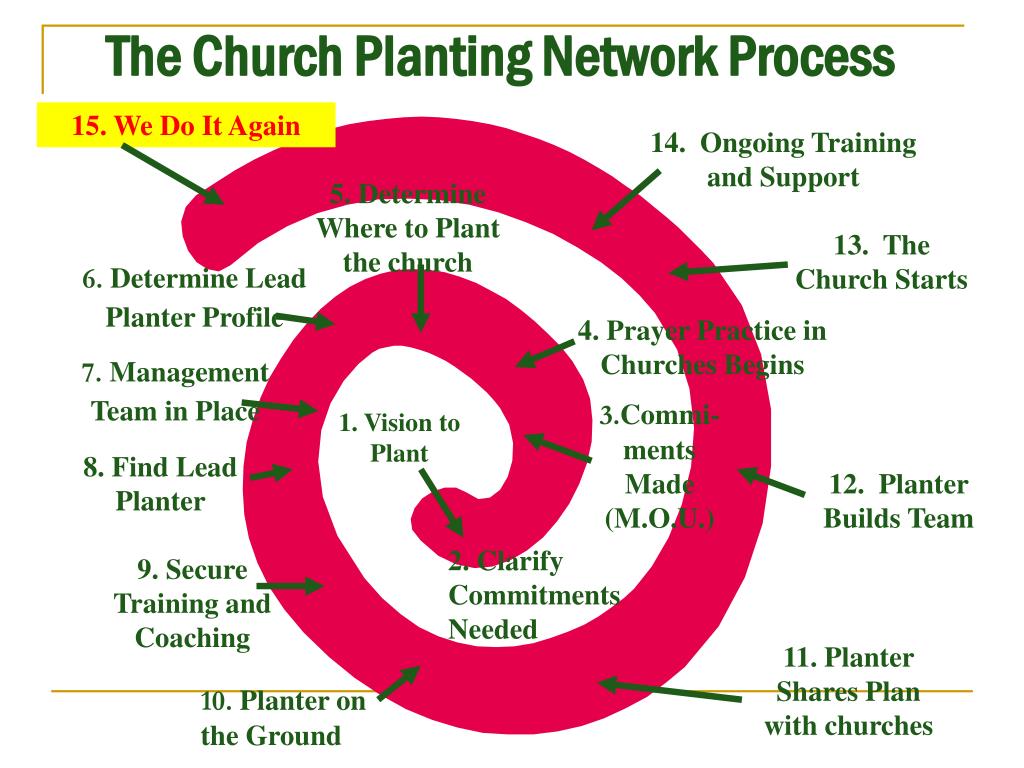
In the fertile soil of contemporary mission, church planting networks function like a sprawling mycelium—thread‑like filaments that weave disparate communities together, exchanging nutrients of vision, prayer, and strategic insight. This living lattice does more than link congregations; it births an ecosystem where each new expression of faith can flourish, supported by the collective heartbeat of its peers. The result is a vibrant tapestry of ministry that stretches beyond the horizon, inviting believers into a narrative of shared purpose and bold opportunity.
The Canopy of Shared Vision
When a network of church‑planting ministries aligns around a common narrative, the canopy of shared vision offers shelter against the gusts of doubt. Each congregation becomes a leaf, catching sunlight in its unique way while drawing sustenance from the same underground network. The synergy generated by this collective focus transforms individual aspirations into a poly‑rhythmic chorus, where diverse voices harmonize without losing their distinct timbre. Through regular “vision syncs,” leaders exchange stories, prayer points, and missional markers, thereby nurturing a culture of accountability and momentum.
The relational lattice also acts as a conduit for inspiration. When a church in a coastal city experiences a breakthrough in community engagement, the ripples travel through the network, igniting fresh ideas in a land‑locked community. This catalytic flow—almost synaptic in its swiftness—ensures that innovation does not remain isolated but reverberates across the entire organism.
Resource Commons: The Underground Mycorrhizal Exchange
Church planting networks create a “resource commons” akin to the mycorrhizal web beneath a forest floor. Financial reserves, training curricula, worship media, and leadership development tools are pooled, allowing emerging ministries to tap into a rich repository without reinventing the wheel. A newly formed congregation can access a library of discipleship pathways, volunteer recruitment systems, and digital outreach platforms, all curated by seasoned practitioners who have weathered the trials of early-stage ministry.
Beyond tangible assets, the commons transmit intangible capital—wisdom, experience, and relational credibility. Mentors become “root guides,” offering counsel through the precarious stages of formation. The result is a democratization of missional capacity, where even the smallest expression of faith can draw on a deep well of collective expertise.
Strategic Mobility and Agility
In a world where cultural currents shift with dizzying speed, church planting networks provide strategic mobility. Like a fleet of navigators sharing a common compass, member churches can recalibrate their mission vectors in near‑real time. When a demographic trend signals an emerging pocket of seekers, the network can rapidly deploy a team, share contextualized curricula, and coordinate prayer sprints, reducing the latency that often plagues isolated efforts.
This agility is further amplified by the network’s polycentric structure. No single hub dominates; instead, multiple nodes function as decision‑making centers, each empowered to act decisively within its context while remaining tethered to the broader organism. The resulting “distributed agency” allows the network to experiment with innovative worship formats, social‑impact initiatives, or digital mission strategies, learning from each micro‑experiment and scaling the most promising models.
Leadership Ecosystems: Cultivating the Next Generation
Effective networks treat leadership development as a cultivation process, akin to tending a permaculture garden. Rather than relying on a single harvest, they design staggered cycles of training, apprenticeship, and peer coaching that produce a continuous outflow of capable ministers. Aspiring planters are immersed in apprenticeship pipelines where they absorb not only theological frameworks but also the nuanced art of community listening, conflict mediation, and missional entrepreneurship.
These ecosystems also celebrate “leadership polymaths”—individuals who can move fluidly between pastoral care, strategic planning, and creative communication. By fostering a culture that values versatility, the network ensures resilience; when one leader transitions to a new city, the relational and knowledge base remains intact, preventing the loss of institutional memory.
Evangelistic Momentum: The Synaptic Burst
The evangelistic fervor of a single congregation can be likened to a neuron firing, sending a signal across a synapse. Within a network, these bursts become amplified, turning isolated sparks into a cascade of transformative energy. When a church experiences a revival of conversion, the network channels that momentum outward—through coordinated prayer campaigns, shared mission trips, and collaborative outreach events—multiplying the impact far beyond what any single entity could achieve.
Moreover, the network’s collective storytelling creates a compelling witness. Testimonies of transformed lives, community impact, and pioneering church births become part of a larger narrative that captures the imagination of seekers, donors, and partner organizations. This shared saga serves as a powerful apologetic, demonstrating the tangible fruits of a collaborative gospel effort.
Overcoming Isolation: The Interstitial Bridges
Church planting, by its nature, can feel like a solitary expedition across unfamiliar terrain. Networks dismantle isolation by constructing interstitial bridges—spaces where planters can intersect, exchange burdens, and co‑create solutions. Regular “bridge gatherings,” whether in person or virtual, function as crossroads where challenges are aired, successes celebrated, and mutual encouragement flows freely.
These bridges also act as safety nets during crises. When a planting effort faces legal hurdles, community resistance, or internal conflict, the network can mobilize a rapid response team, offering counsel, prayers, and practical assistance. The assurance that no ministry is truly alone fortifies leaders against burnout and cultivates a resilient, supportive culture.
Future Horizons: Innovation and Collaboration
Looking ahead, church planting networks are poised to become laboratories of Kingdom innovation. By integrating emerging technologies—AI‑driven disciple‑making platforms, immersive storytelling experiences, and data‑informed mission mapping—the network can experiment with new forms of community formation while preserving the timeless core of the gospel.
Collaborative research initiatives, cross‑denominational think tanks, and shared mission labs will further expand the horizon, enabling the network to anticipate cultural shifts and proactively plant churches in strategic locations. The resulting “innovation ecosystem” will ensure that the network remains adaptive, prophetic, and ever‑ready to respond to the moving Spirit.
Conclusion: The Unfolding Path
The path of church planting networks is not a static road but an unfolding journey—a living organism that breathes, grows, and adapts. By intertwining shared vision, pooled resources, strategic agility, robust leadership ecosystems, evangelistic momentum, relational bridges, and forward‑thinking innovation, these networks create a milieu where each new expression of faith can flourish in harmony with its siblings. The unique appeal lies in the realization that no single congregation bears the full weight of the Great Commission alone; together, they form a resilient, expansive canopy under which countless souls can find shelter, nourishment, and hope.

