

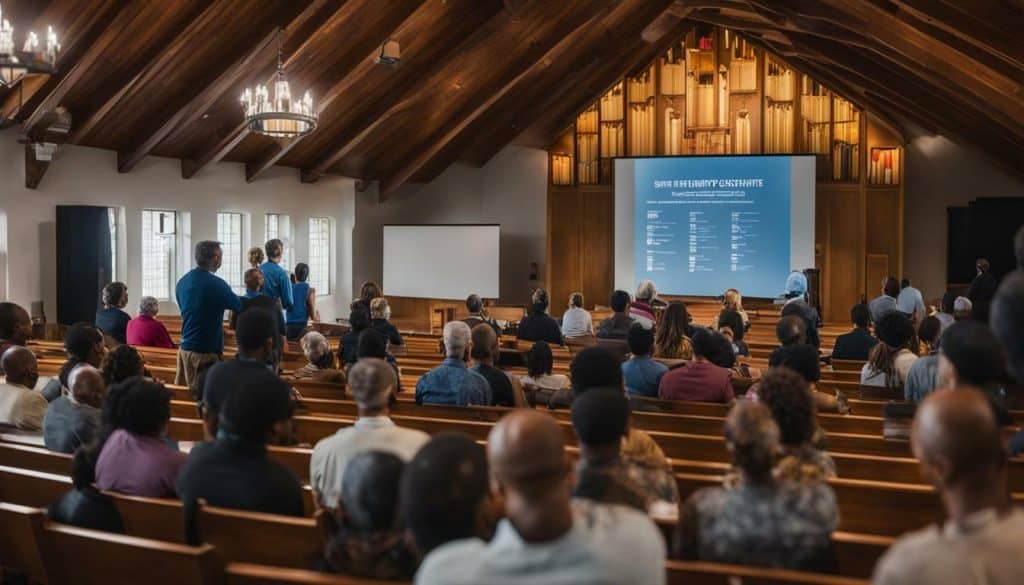
When a congregation gathers, the heartbeat of its mission pulses through the people who keep the doors open, the prayers alive, and the community secure. Training church staff is not merely a checklist of tasks—it is an invitation to deepen faith, sharpen skills, and awaken a collective sense of purpose that reverberates far beyond Sunday morning.
The Imperative of Intentional Formation
Church environments are living organisms, where each interaction can either nurture spiritual growth or leave a wound unnoticed. Intentional formation demands that leaders view staff development as a sacred covenant rather than a mundane HR exercise. By recognizing the inherent dignity in every role—from greeter to treasurer—churches can cultivate a culture where learning becomes an act of worship. The shift from reactive problem‑solving to proactive preparation reshapes the narrative, transforming ordinary duties into extraordinary opportunities for service.
Identifying Core Competencies for the Faithful Servant
Before curriculum design begins, stakeholders must enumerate the competencies required for each position. Core competencies extend beyond technical know‑how; they encompass empathy, crisis stewardship, confidentiality, and liturgical awareness. A hospitality coordinator, for instance, must master the art of gracious welcome while also understanding emergency evacuation protocols. By mapping these heterogeneous skill sets, churches can align training objectives with the mission’s theological underpinnings, ensuring that knowledge serves the gospel.
Designing a Curriculum That Engages Heart and Mind
A curriculum that merely lectures fails to capture the affective dimension of faith‑based service. Effective design weaves together doctrinal insight, practical演练, and reflective storytelling. Sessions can begin with a scriptural meditation, transition to a case study, and conclude with a group debrief. This symphonic flow invites participants to hear, feel, and apply, creating a learning loop that resonates on multiple cognitive levels. Incorporating multimedia—such as parable‑inspired video vignettes—adds sensory richness and reinforces memory retention.
Interactive Learning: Role‑Playing, Simulations, and Situational Fluency
Passive listening rarely cements complex procedures. Role‑playing scenarios empower staff to inhabit perspectives they may rarely encounter—greeting a nervous newcomer during a lock‑down drill or mediating a pastoral conflict. Simulations, whether tabletop exercises or full‑scale emergency drills, grant a safe arena to test decision‑making under pressure. Feedback loops, facilitated by seasoned mentors, provide immediate corrections, nurturing situational fluency that can be summoned instinctively when real crises arise.
Cultivating Volunteer Enthusiasm: Motivation, Ownership, and Reciprocal Trust
Volunteers constitute the backbone of many church operations, yet their engagement often wanes without intentional nourishment. Motivation thrives when volunteers perceive their contributions as integral to the larger divine narrative. Structured mentorship programs pair seasoned volunteers with newcomers, fostering a sense of lineage and belonging. Ownership is amplified when staff are invited to co‑create training modules, allowing personal insights to shape the learning ecosystem. Reciprocal trust, built through transparent communication and acknowledgment of effort, transforms duty into delight.
Measuring Impact: Metrics, Reflective Practice, and Data‑Driven Insight
While spiritual growth resists reduction to numbers, tangible indicators still illuminate effectiveness. Quantitative metrics—such as response time during safety drills, attendance rates at training sessions, or incident‑report frequency—offer concrete evidence of preparedness. Qualitative reflection, captured via post‑session surveys or storytelling circles, reveals the emotional resonance of the experience. Integrating both data streams enables leadership to fine‑tune curricula, celebrate successes, and address gaps with surgical precision.
Sustaining a Culture of Continuous Improvement: Ongoing Development, Fellowship, and Prayerful Reflection
Training should never be a one‑off event but a perpetual journey. Ongoing development opportunities—such as quarterly workshops, peer learning circles, and external certification courses—keep knowledge fresh and enthusiasm alive. Fellowship events, whether informal meals or collaborative service projects, reinforce relational bonds that make learning communal. Finally, prayerful reflection grounds every educational endeavor in its spiritual context, inviting divine guidance and humility into the process. When staff regularly pause to ask, “How has this training deepened my witness?” the organization cultivates an ethos of perpetual renewal.
From Training to Transformation
When church staff are equipped not only with skills but with a shared vision of compassionate service, the congregation itself transforms. Each interaction becomes a living parable, each safety protocol a testament to care, each learning moment a step toward deeper communion with the divine. The journey from training to transformation is Ongoing, iterative, and profoundly relational—an adventure that beckons every servant to grow, serve, and inspire.

