

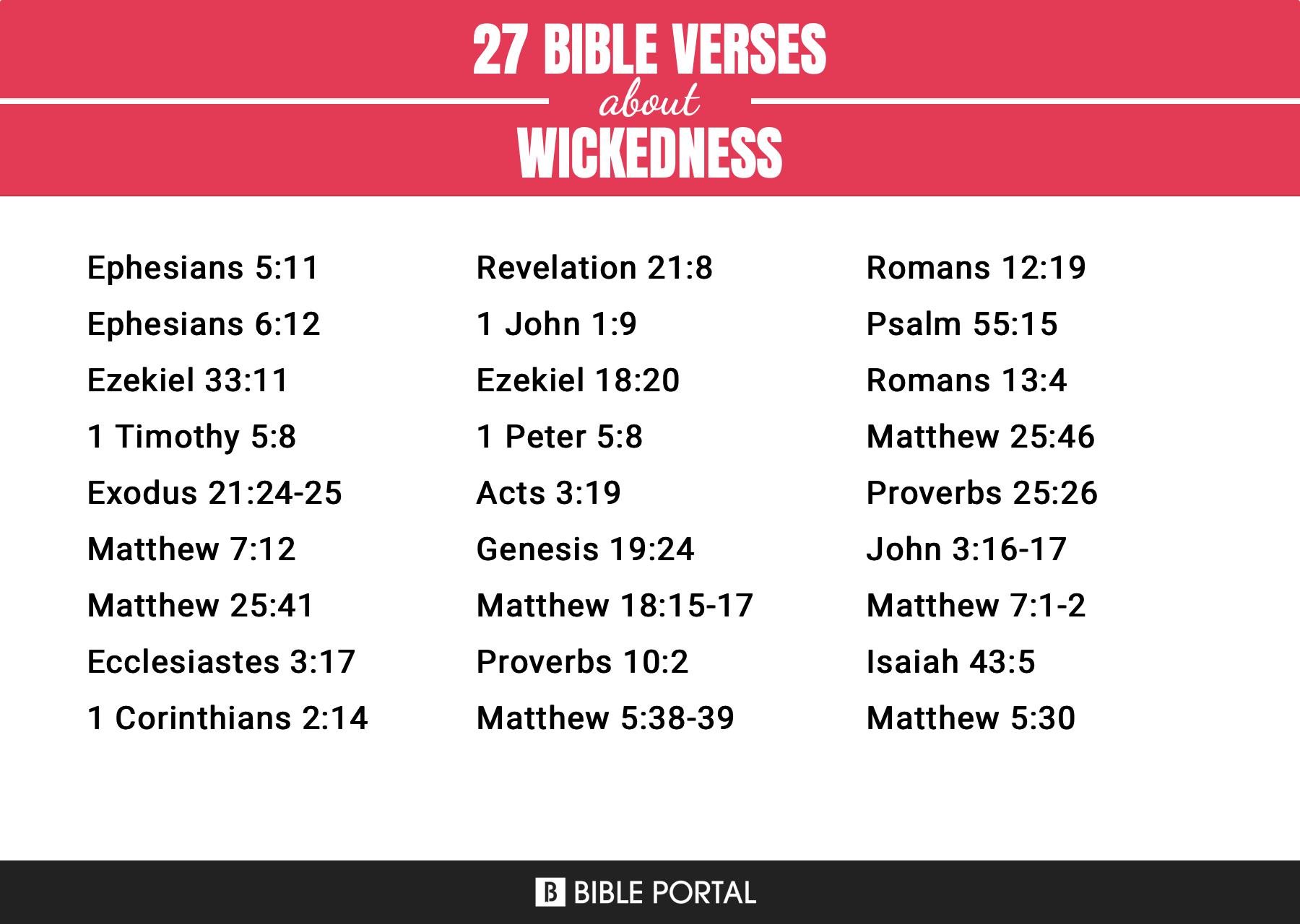
Wickedness is a term that reverberates throughout the pages of the Bible, encapsulating a concept that is both profound and multifaceted. From the ancient narratives of the Old Testament to the moral exhortations found in the New Testament, the scripture presents a thorough examination of wickedness—its origins, manifestations, and ultimate consequences. This exploration not only challenges the reader to contemplate the nature of evil but also invites a transformative shift in perspective.
At the heart of biblical discourse on wickedness lies a significant dichotomy: the contrast between righteousness and wickedness. The Book of Proverbs frequently underscores the importance of moral integrity, stating, “The wicked flee when no one pursues, but the righteous are as bold as a lion” (Proverbs 28:1). This assertion illustrates a fundamental truth: wickedness is often accompanied by fear and insecurity, whereas righteousness fosters strength and confidence. This perspective shift emphasizes that a life grounded in goodness not only enhances personal well-being but also contributes to the harmony of one’s community.
The Bible offers vivid recounts of wickedness in various forms. Consider the story of Sodom and Gomorrah, cities epitomizing moral depravity. Their ultimate destruction serves not merely as an ancient tale of divine judgment, but as a cautionary narrative warning against the excesses of immorality and depravity. The palpable despair and suffering that shadow such accounts beckon the inquisitive mind to reflect on the social and spiritual ramifications of wickedness—its insidious ability to unravel the very fabric of societal norms.
Wickedness manifests not only in grandiose tales of ruin but also in subtle, everyday choices. The prevalence of envy, greed, and dishonesty infiltrates human interactions, challenging an individual to engage in self-examination. The Apostle Paul articulates this complexity in Galatians 5, where he delineates the fruits of the Spirit versus the works of the flesh—an explicit invitation to evaluate one’s actions and motivations. Such reflections compel an individual to confront the darker impulses within, offering the promise of redemption through conscious choice and moral fortitude.
Moreover, the Bible elucidates the consequence of wickedness: separation from God. Isaiah poignantly declares, “But your iniquities have made a separation between you and your God, and your sins have hidden his face from you” (Isaiah 59:2). This explication not only describes the relational estrangement that wickedness causes but also highlights the innate yearning for reconnection with the divine. This yearning elevates the conversation from mere condemnation to a higher calling for reconciliation and transformation.
Yet, within this somber narrative of wickedness lies an incandescent promise of redemption. The New Testament introduces the notion of grace—God’s unmerited favor that is extended even to the most egregious transgressors. Consider the prodigal son, who, after spiraling into a life of debauchery and despair, receives a lavish welcome upon his return. This parable crystallizes the divine willingness to forgive and restore, illuminating the transformative power inherent in contrition and genuine repentance.
In conclusion, the Bible’s discourse on wickedness is not merely an exploration of moral downfall; it is an invitation to introspection. The texts urge the reader to ponder not just the nature of wickedness, but also the abundant grace available to those who seek it. This dichotomy serves as a reminder that the journey from wickedness to righteousness is not only possible but profoundly redemptive, promising a renewed perspective that can illuminate the path forward.

