

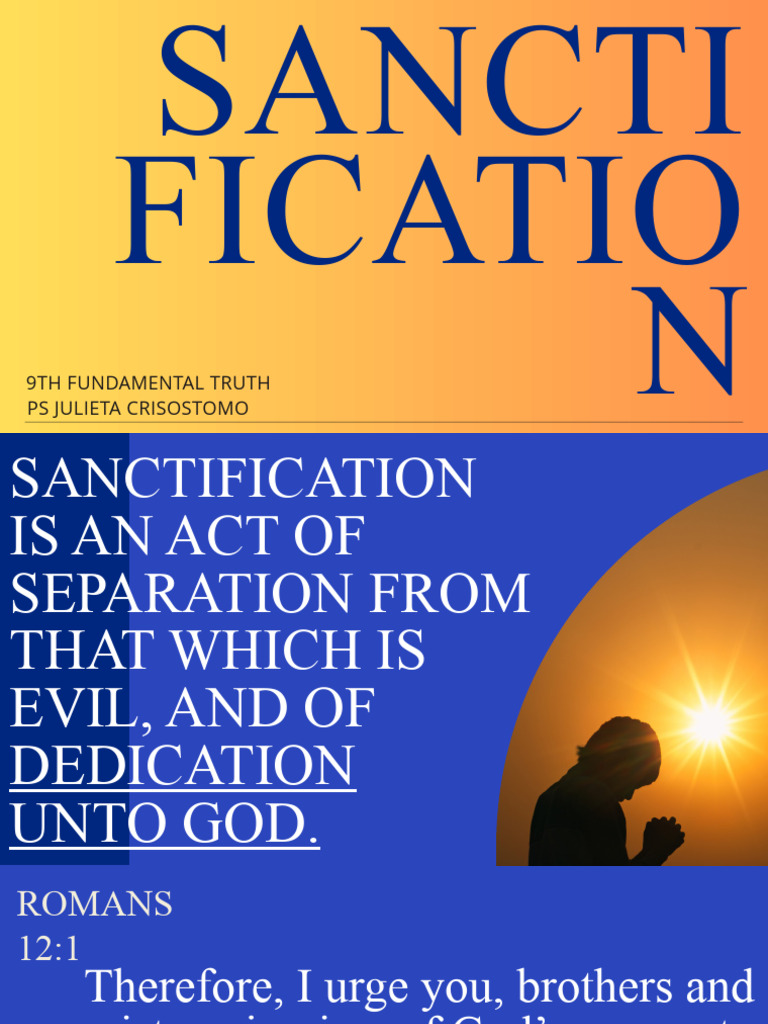
Sanctification is a profound and multifaceted concept deeply rooted in Biblical theology. It connotes an ongoing transformation through which individuals are set apart for holy purposes. This process, starkly different from mere moral improvement, involves a dynamic interaction between divine grace and human agency. Understanding sanctification requires delving into its biblical context, definitions, processes, and significance within the Christian faith.
To comprehend sanctification fully, one must first explore its scriptural foundations. The term itself is derived from the Latin word “sanctificare,” which translates to “make holy.” In the New Testament, the Greek word typically used is “hagios,” referring to being set apart for God. Key biblical passages illuminate the nature of sanctification. For instance, 1 Thessalonians 4:3 explicitly states, “For this is the will of God, your sanctification.” Through this verse, it becomes evident that sanctification is not merely an option for believers, but a divine mandate that underscores the importance of living in alignment with God’s character.
Within the scriptures, sanctification can be delineated into two principal aspects: positional sanctification and progressive sanctification. Positional sanctification refers to the instantaneous act of being declared holy before God at the moment of salvation. This transformative experience occurs when one accepts Christ, leading to a new identity as a child of God. Ephesians 2:8-9 emphasizes that we are saved by grace through faith, highlighting that this sanctification is not earned but rather bestowed through the redemptive work of Christ.
Conversely, progressive sanctification is the gradual, lifelong process where believers grow in holiness and conform more closely to the image of Christ. This journey is marked by struggles, victories, and transformative moments, as articulated in Philippians 1:6, which reassures believers that “He who began a good work in you will carry it on to completion until the day of Christ Jesus.” This progressive aspect is where the interplay of divine grace and human effort becomes pronounced. Sanctification involves actively pursuing holiness through spiritual disciplines such as prayer, scripture study, and community engagement.
The role of the Holy Spirit in sanctification cannot be overstated. Regarded as the divine agent of change, the Holy Spirit indwells believers and empowers them to live righteous lives. Galatians 5:22-23 enumerates the “fruits of the Spirit,” which manifest in a believer’s life and serve as evidence of sanctification. Love, joy, peace, patience, kindness, goodness, faithfulness, gentleness, and self-control are not merely characteristics to achieve but are reflections of the transformative power of the Spirit within. Thus, sanctification is not simply about behavioral modification; it is about becoming more like Christ through the Holy Spirit’s guidance.
Moreover, sanctification bears an ecclesiastical dimension, particularly concerning its communal aspects. The body of Christ—the Church—is designed to be a vehicle through which sanctification occurs. The act of gathering for worship, engaging in fellowship, and participating in the sacraments all contribute to the communal aspect of growth in holiness. Hebrews 10:24-25 emphasizes the importance of not neglecting to meet together, as this encourages and helps believers on their sanctification journey. Thus, it can be noted that individual sanctification is intrinsically linked to corporate sanctification, fortifying the belief that growing in faith is not a solitary endeavor.
Additionally, the eschatological dimension of sanctification must be acknowledged. The Bible portrays sanctification as a process that culminates in glorification—the final state of perfection in the presence of God. 1 John 3:2 articulates this hope, stating, “When He appears, we shall be like Him, for we shall see Him as He is.” This ultimate transformation envisions a future where believers are completely set apart from sin and fully embody the holiness of God. Thus, the journey of sanctification is not solely about the present but is imbued with a future expectation, anchoring hope in the believer’s life.
However, the discourse surrounding sanctification is not devoid of challenges. Questions often arise regarding the nature of sin in a believer’s life and the tension between the already and not yet aspects of sanctification. Romans 7:15-20 articulates the internal struggle that many Christians experience—where the desire to do good coexists with the propensity to sin. This paradox emphasizes that while sanctification is assured, the journey is fraught with complexities, requiring continual reliance on God’s grace and perseverance.
In conclusion, sanctification serves as a pivotal theme in the Christian faith, encompassing positional and progressive dimensions shaped through the work of the Holy Spirit and communal engagement within the Church. This transformative journey underscores the believer’s call to pursue holiness, rooted in the assurance of God’s promises and the anticipation of ultimate glorification. As one navigates the intricacies of sanctification, it is essential to embrace the grace that empowers this sacred journey, acknowledging that it is both a personal and communal voyage towards becoming more like Christ.

