

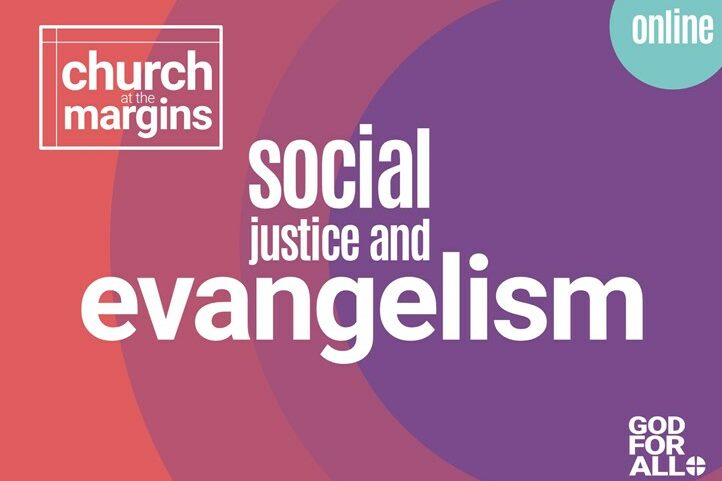
In an era where the lines between pulpit and public square blur with increasing urgency, the intersection of faith and justice has never been more compelling—or more necessary. The modern church stands at a crossroads, not merely as a sanctuary for spiritual solace but as a catalyst for transformative action. This evolution is not a departure from tradition but a rediscovery of its most radical roots: a faith that does not retreat from the world but engages it with prophetic clarity. The rise of webinars dedicated to social justice within ecclesiastical circles is more than a trend—it is a clarion call, echoing through digital corridors, inviting believers to move beyond passive observation and into the arena of active advocacy.
The Church’s Moral Imperative: From Pulpit to Public Square
For centuries, the church has been both a refuge and a reproach. It has cradled the broken yet also confronted the oppressive. Today, that dual role has intensified. Congregations are no longer content to sing hymns of hope while ignoring the cries of the marginalized outside their doors. The modern believer is awakening to a truth as old as the prophets: justice is not an optional addendum to faith but its very essence. The webinars emerging in this space are not mere educational tools; they are spiritual awakening sessions, where theology meets activism, and doctrine is tested against the weight of human suffering.
The shift is palpable. Where once social justice was relegated to the fringes of church life—whispered about in Bible study groups or dismissed as “political”—it now occupies center stage. This transformation is not born of societal pressure alone but of a deeper reckoning. The church is rediscovering its vocation: to be a voice for the voiceless, a shield for the vulnerable, and a mirror reflecting the justice of God in a world that often distorts it. The webinars serve as both compass and catalyst, guiding believers through the complexities of systemic injustice while equipping them to dismantle it.
The Digital Reformation: Why Webinars Are the New Sermon
The pulpit has always been a platform for proclamation, but the digital age has democratized that platform. Webinars are the modern equivalent of the town square, where ideas are exchanged, strategies are forged, and movements are ignited. Unlike traditional sermons, which are often one-directional, these virtual gatherings foster dialogue, debate, and collective action. They transcend geographical boundaries, uniting believers from diverse backgrounds under a shared banner of justice.
Consider the power of this medium: a pastor in Nairobi can engage with a theologian in Buenos Aires, a young activist in Chicago can challenge a bishop in London. The barriers of time and space dissolve, replaced by a global chorus of voices demanding change. This is not mere convenience; it is a revolution in how faith communities organize and mobilize. The webinar format allows for immediacy—real-time discussions on pressing issues like racial equity, economic disparity, or environmental degradation. It turns passive listeners into active participants, transforming spectators into advocates.
Yet, the digital pulpit is not without its pitfalls. The very accessibility that makes webinars powerful also risks diluting their impact. In a world of endless content, how does one ensure these sessions are not just another click in an endless scroll? The answer lies in their depth. The most effective webinars are not superficial pep talks but rigorous, thought-provoking explorations of faith in action. They challenge assumptions, confront complicity, and call believers to a higher standard of discipleship. They are not for the faint of heart but for those willing to wrestle with the hard questions of justice and mercy.
The Theology of Justice: Reclaiming a Forgotten Heritage
At the heart of this movement is a theological reckoning. The church’s engagement with social justice is not a modern innovation but a return to its foundational texts. The prophets of old thundered against oppression; Jesus overturned tables in the temple; Paul wrote of a kingdom where “there is neither Jew nor Greek, slave nor free, male nor female.” These are not incidental details but core tenets of the Christian faith. The webinars are, in many ways, a retrieval of this heritage—a reclaiming of a narrative that has been obscured by centuries of institutional complacency.
This theological revival is not without tension. Some within the church argue that social justice distracts from the “true gospel” of salvation. Yet, this critique often stems from a narrow understanding of the gospel itself. The good news is not merely about individual salvation but about the restoration of all things. It is about a God who sides with the oppressed, who hears the cry of the widow and the orphan, who commands his people to “do justice, love mercy, and walk humbly.” The webinars are a testament to this expansive vision of faith—one that refuses to compartmentalize justice as a secondary concern.
The deeper fascination here lies in the realization that justice is not an afterthought but the very framework of God’s redemptive plan. From the Exodus to the resurrection, the biblical narrative is one of liberation. The church’s role, then, is not to advocate for justice as an addendum to its mission but to embody it as the natural outworking of its faith. The webinars serve as a reminder: to follow Christ is to follow the path of justice, even when it leads through uncomfortable terrain.
From Awareness to Action: The Webinar as a Catalyst for Change
Knowledge alone is insufficient; transformation demands action. The most impactful webinars do more than inform—they inspire and equip. They move beyond theoretical discussions to provide practical tools for advocacy: how to organize a community response, how to lobby for policy change, how to stand in solidarity with the oppressed. They bridge the gap between conviction and action, ensuring that the fire of justice does not remain confined to the screen but spreads into the streets.
This is where the rubber meets the road. A webinar on racial reconciliation, for example, is not complete if it does not challenge participants to examine their own biases or to take concrete steps toward reconciliation in their communities. Similarly, a session on economic justice must move beyond lament to propose solutions—whether through microfinance initiatives, fair wage campaigns, or policy advocacy. The best webinars leave attendees not just informed but empowered, with a clear sense of their role in the larger narrative of justice.
The challenge, however, is sustaining momentum. Webinars can spark inspiration, but sustained change requires community. This is why many of these initiatives are paired with local gatherings, mentorship programs, or ongoing advocacy groups. The digital space is a starting point, but the real work happens in the tangible, face-to-face interactions of believers committed to seeing justice prevail. The webinar is the spark; the movement is the fire.
The Future of Faith and Justice: A Movement Unfolding
The rise of webinars on social justice within the church is not a fleeting phenomenon but a harbinger of a broader awakening. It reflects a generation of believers who refuse to divorce their faith from their activism, who see no contradiction between worship and protest, between prayer and policy change. This is a movement that is still in its infancy, with much to learn and much to achieve. Yet, its potential is staggering—a church that is not just a voice in the wilderness but a force for transformation in the world.
The road ahead is fraught with challenges. Institutional resistance, theological divisions, and the sheer scale of injustice can feel overwhelming. But history has shown that the most profound movements often begin with small, determined steps. The webinars are one such step—a digital gathering of voices united in a shared vision of justice. They are a reminder that the church’s role is not to retreat from the world but to engage it, not to preserve the status quo but to challenge it, not to preach justice from afar but to live it out in the grit and grind of everyday life.
As this movement grows, it will undoubtedly face scrutiny, debate, and even backlash. But that is the price of prophetic witness. The church has always been at its most faithful when it has stood against the grain, when it has chosen the narrow path over the broad way. The webinars are a sign of that faithfulness—a sign that the church is waking up to its calling, not as a museum of tradition but as a movement of justice, mercy, and love.

