

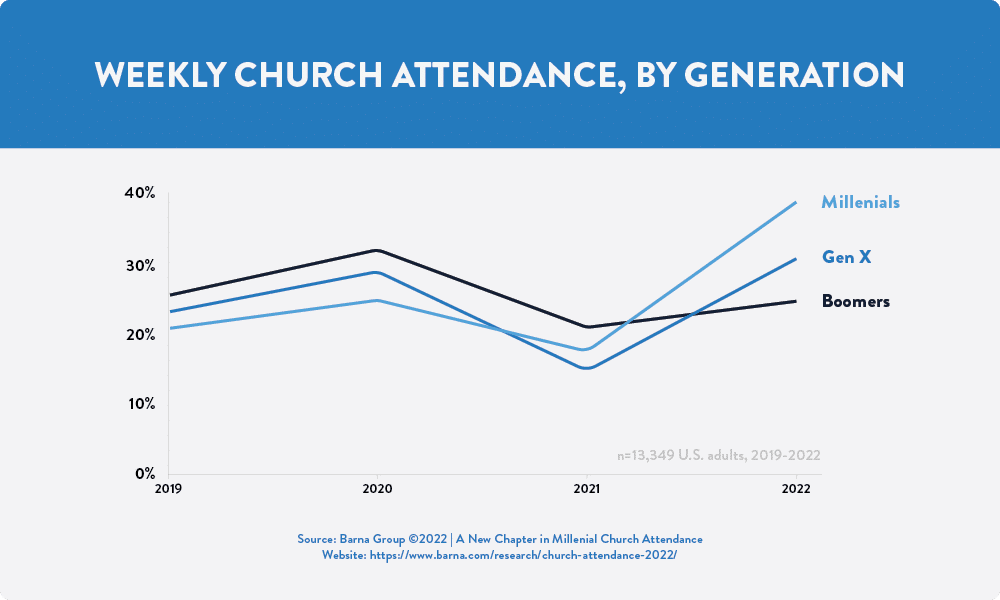
What if the future of the church wasn’t about pews filling up, but about hearts opening up—especially among the generation that’s rewriting the rules of engagement? Millennials, those enigmatic bridge-builders between analog nostalgia and digital ubiquity, are reshaping the spiritual landscape in ways that defy tradition and demand innovation. They’re not just showing up; they’re asking questions, demanding authenticity, and redefining what it means to belong. But here’s the twist: while their curiosity about faith is undeniable, their loyalty to institutions is anything but. So, how do we bridge this gap? How do we speak a language they understand, one that resonates with their values, their skepticism, and their hunger for meaning? Let’s dive into the numbers, the trends, and the untold stories behind the millennial relationship with the church.
The Millennial Paradox: Seeking but Not Settling
Millennials are often painted as a generation of wanderers—spiritually curious but institutionally wary. They crave connection, yet they’re allergic to empty rituals. They long for transcendence, but they’re allergic to dogma. The data reveals a fascinating paradox: while 70% of millennials identify as spiritual, only 40% affiliate with a specific religion. This isn’t apathy; it’s a quest for something real. They’re not rejecting faith; they’re rejecting facades. The church, then, faces a Herculean task: how to become a beacon of authenticity in a world that’s seen too many hollow performances.
Consider this: Millennials are the most educated generation in history. They’ve grown up dissecting everything from algorithms to ethics, and they bring that same scrutiny to their spiritual lives. They want to know the “why” behind the “what.” Why does this belief matter? Why should I commit? Why should I trust this institution? The church that answers these questions with vulnerability—and not just with sermons—will earn their attention. But here’s the catch: vulnerability requires humility, and humility is the last thing many institutions are known for.
The Digital Divide: Faith in the Age of Algorithms
If millennials are digital natives, then the church’s digital presence isn’t just an option—it’s a lifeline. Yet, many congregations still treat online engagement as an afterthought. The truth? Millennials don’t just consume faith; they curate it. They follow spiritual influencers on Instagram, binge theology podcasts on their commutes, and join virtual small groups before they’ll darken the door of a traditional Sunday service. The church that ignores this reality is like a library refusing to stock books because they’re “not the real thing.”
But it’s not just about being present online; it’s about being present *meaningfully*. Millennials don’t want to scroll through another lifeless livestream or another poorly designed app. They want interactive, immersive experiences that meet them where they are—whether that’s a TikTok devotion or a Discord community where they can wrestle with doubt alongside peers. The challenge? Most churches aren’t built for this. They’re built for Sunday mornings, not Sunday evenings (or 2 AM existential crises). The millennial who stumbles upon a stale, uninspired online service isn’t just unimpressed; they’re confirmed in their suspicion that the church is out of touch.
Community Over Congregations: The Millennial Hunger for Belonging
Millennials aren’t just looking for a place to sit on Sunday; they’re looking for a place to belong. And belonging, to them, isn’t about membership rolls or potluck sign-ups. It’s about shared stories, mutual accountability, and a sense of home. The problem? Traditional church structures often prioritize programs over people. They’re designed for efficiency, not intimacy. A millennial walking into a cavernous sanctuary with rows of empty pews isn’t just seeing a lack of attendance; they’re seeing a lack of connection.
This is where the rise of micro-communities comes in. Millennials are flocking to house churches, intentional communities, and even secular spaces that offer the kind of belonging they crave. They want to be known—not just as a face in the crowd, but as a person with doubts, dreams, and struggles. The church that can foster this kind of intimacy—without the pressure of performance—will find millennials not just attending, but thriving. But here’s the rub: intimacy requires time, and time is the one thing most churches don’t have in abundance.
The Justice Imperative: Faith That Moves Beyond the Sanctuary
For millennials, faith isn’t just about personal salvation; it’s about systemic transformation. They’re the generation of Greta Thunberg and Black Lives Matter, of #MeToo and climate strikes. They don’t just want to hear about justice; they want to see it embodied. The church that preaches love but practices exclusion, that talks about mercy but ignores systemic oppression, will find itself increasingly irrelevant. Millennials aren’t just checking boxes; they’re demanding alignment between belief and action.
This is where the church has a unique opportunity—and a daunting challenge. How do we move from performative allyship to genuine solidarity? How do we shift from charity to justice? Millennials aren’t interested in handouts; they’re interested in partnership. They want to roll up their sleeves and work alongside the church to dismantle the very systems that keep people marginalized. The church that rises to this occasion won’t just attract millennials; it will transform communities.
The Leadership Question: Who’s Guiding the Next Generation?
Here’s a sobering truth: the average age of a churchgoer in America is 54. That’s not a typo. The church is aging, and millennials aren’t filling the pews fast enough to reverse the trend. The question isn’t just about programming or aesthetics; it’s about leadership. Who’s at the helm of these institutions? Who’s crafting the vision? Who’s speaking into the lives of millennials? The answer, more often than not, is someone who doesn’t understand them—and that’s a problem.
Millennials aren’t looking for leaders who talk *at* them; they’re looking for leaders who walk *with* them. They want mentors, not monarchs. They want collaborators, not commanders. The church that empowers young leaders—who gives them space to innovate, to fail, and to grow—will find itself not just surviving, but thriving. But this requires a seismic shift in how we view authority. It requires leaders who are willing to listen more than they speak, to learn more than they teach, and to serve more than they demand.
The Millennial Exodus: Why Some Are Walking Away—and How to Bring Them Back
Not all millennials are leaving the church. But those who are? They’re not just drifting away; they’re walking toward something else. Some are finding spirituality in secular spaces—yoga studios, meditation apps, or even atheist communities that offer the kind of intellectual rigor they crave. Others are turning to activism, convinced that changing the world is more urgent than changing their hearts. And still others are simply exhausted by the hypocrisy, the politics, and the performative piety that too often masquerades as faith.
The church that wants to reclaim these millennials must first acknowledge the reasons they’re leaving. It must confront its own complicity in creating a culture that feels more like a country club than a hospital for sinners. It must ask hard questions: Are we more concerned with rules than relationships? With appearances than authenticity? With tradition than transformation? The millennial who walks away isn’t just rejecting the church; they’re rejecting a version of faith that feels like a relic. The question is: Can the church evolve before it’s too late?
The Way Forward: A Church That Millennials Actually Want
So, what does a church look like that millennials actually want to be a part of? It’s not a one-size-fits-all answer, but there are threads we can follow. It’s a church that embraces doubt as part of the journey, not a sign of weakness. It’s a church that prioritizes relationships over programs, authenticity over appearances, and justice over platitudes. It’s a church that meets people where they are—whether that’s in a virtual small group at midnight or a protest in the streets at noon.
It’s also a church that’s willing to fail. Millennials don’t want perfection; they want progress. They want to see the church take risks, make mistakes, and learn along the way. They want a faith that’s alive—not just in the past, but in the present. And they want a community that feels like family—not just a Sunday obligation.
The future of the church isn’t about filling buildings; it’s about filling hearts. It’s not about preserving traditions; it’s about creating new ones. And it’s not about controlling the narrative; it’s about joining the conversation. The millennials are here. The question is: Is the church ready to listen?

