

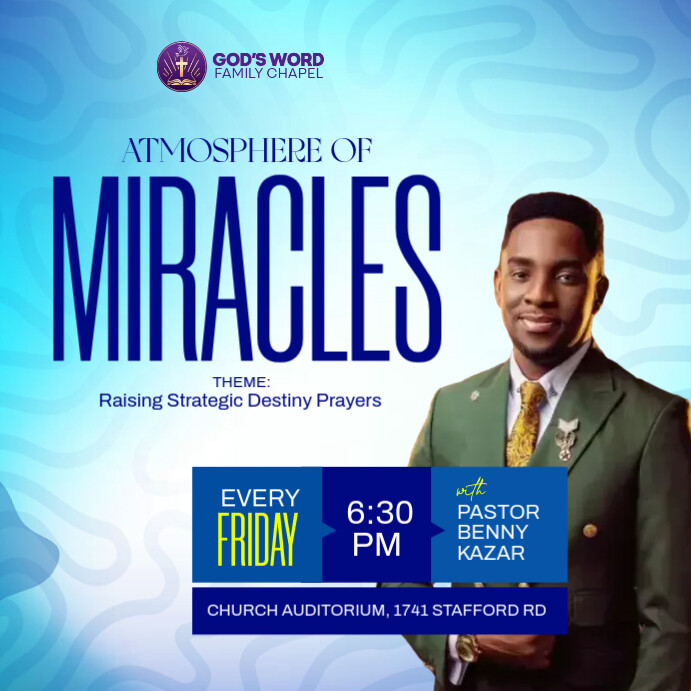
In the quiet hum of pews and the flicker of candlelight, stories of the inexplicable unfold—miracles that defy logic, shatter expectations, and ignite the human spirit. These divine interventions, whether whispered in hushed tones or emblazoned across flyers and billboards, captivate congregations and skeptics alike. A church’s ability to harness this fascination isn’t merely about spectacle; it’s about crafting a narrative that resonates with the deepest yearnings of the human heart. The most successful church miracles campaigns don’t just announce wonders—they invite participation, foster community, and transform belief into a living, breathing force. But how does one elevate a miracle from a fleeting moment to a movement? The answer lies in a fusion of ancient tradition and modern strategy, where reverence meets relevance, and faith becomes an experience rather than a doctrine.
The Psychology of Miracles: Why They Captivate the Human Soul
At the core of every miracle campaign lies an understanding of why these phenomena hold such sway over the human psyche. Miracles, by their very nature, disrupt the mundane. They are the cracks in the armor of predictability, the glimpses of a world where the impossible bends to the will of the divine. Psychologically, they satisfy a primal need—the desire to believe that the universe is not a cold, indifferent machine, but a tapestry woven with threads of purpose and grace. This fascination isn’t merely spiritual; it’s existential. When a congregation gathers to witness a healing or a supernatural sign, they aren’t just seeking proof of God’s power—they’re searching for reassurance that their own struggles matter in the grand design. A well-crafted miracles campaign taps into this hunger, framing each event not as a one-time spectacle, but as a chapter in an ongoing story of divine intervention.
Storytelling as Sacred Art: Crafting Narratives That Endure
The most enduring miracles aren’t the ones that are shouted from the pulpit, but the ones that are woven into the fabric of a community’s collective memory. Storytelling is the alchemy that transforms a fleeting moment into a legend. A successful campaign begins long before the miracle occurs—it starts with the careful curation of testimonies, the cultivation of anticipation, and the strategic release of narratives that build emotional investment. Consider the power of a single testimonial: a grandmother’s healed knees after decades of agony, a teenager’s sudden recovery from a terminal diagnosis, or a family’s financial breakthrough after years of despair. These aren’t just stories; they’re sacred texts that validate faith and inspire hope. The key lies in framing these narratives with authenticity, avoiding the pitfalls of sensationalism while still allowing the wonder to shine through. The best miracle stories feel personal, as if the divine hand reached down not just for the recipient, but for every listener in the room.
The Role of Symbolism: Bridging the Visible and the Invisible
Miracles campaigns thrive when they don’t just describe the supernatural—they make it tangible. Symbolism acts as the bridge between the ethereal and the earthly, allowing congregants to grasp the intangible through the concrete. A simple act, like the lighting of a candle during a healing service, becomes a physical manifestation of faith’s power. Similarly, the use of sacred objects—relics, icons, or even modern artifacts like digital prayer walls—can serve as focal points for divine connection. The most effective campaigns leverage these symbols not as distractions, but as gateways. When a flyer for a miracles event features an image of a radiant cross or a dove in flight, it’s not just decorative; it’s an invitation to the subconscious, a visual cue that whispers, “Something extraordinary is about to happen.” The challenge is to balance symbolism with substance, ensuring that the signs and symbols don’t overshadow the message they’re meant to convey.
Community as the Catalyst: Turning Witnesses into Participants
A miracle witnessed in isolation is a flicker; a miracle shared is a flame. The success of any miracles campaign hinges on its ability to transform passive observers into active participants. This begins with fostering a sense of communal ownership—encouraging congregants to not just attend events, but to contribute their own stories, their own prayers, and their own acts of faith. Small groups, prayer chains, and digital forums can serve as incubators for this collective energy. When a church creates spaces for people to share their struggles and victories, it doesn’t just build attendance numbers—it builds a culture of expectancy. The deeper the investment, the stronger the belief that miracles aren’t reserved for the few, but are a birthright of the faithful. This communal approach also mitigates the risk of miracles becoming mere entertainment; instead, they become a shared journey toward the divine.
The Power of Anticipation: Building Momentum Through Mystery
In a world of instant gratification, the art of anticipation is a lost treasure. Yet, it’s precisely this suspense that can elevate a miracles campaign from ordinary to extraordinary. The most compelling campaigns don’t just announce miracles—they tease them. They create a rhythm of revelation: a cryptic social media post, a whispered prayer request, a countdown on the church’s website. Each nudge builds curiosity, turning skepticism into intrigue and curiosity into conviction. The key is to balance secrecy with transparency. While the full revelation of a miracle should remain sacred, the journey toward it can be a carefully orchestrated dance of hints and clues. This approach mirrors the biblical parables, where truth was revealed not through blunt declarations, but through layered storytelling. When done right, anticipation doesn’t just prepare the audience—it transforms them into seekers, hungry for the moment when heaven and earth collide.
Leveraging Modern Tools: Digital Miracles in a Connected Age
The digital revolution has rewritten the rules of engagement, and miracles campaigns are no exception. Social media platforms, livestreaming, and interactive apps have become the new pulpits, extending the reach of divine wonders beyond the church walls. A well-designed campaign might feature a live prayer session on Instagram, where viewers from across the globe can submit requests in real time. Or it could use a dedicated app to track “miracle moments,” allowing congregants to log answered prayers and witness the cumulative power of faith in action. The challenge lies in using these tools without diluting the sacredness of the experience. Technology should amplify, not replace, the human connection at the heart of every miracle. When a digital platform feels like an extension of the sanctuary—rather than a distraction from it—it becomes a powerful conduit for spreading wonder.
Measuring Success Beyond Attendance: The Metrics of the Soul
In the realm of miracles, traditional metrics—attendance numbers, social media likes, or even conversion rates—only tell part of the story. The true measure of a campaign’s success lies in the intangible: the quiet tears of a healed heart, the renewed marriages, the restored faith of the doubters. These are the metrics that matter, though they resist quantification. A successful campaign doesn’t just fill seats; it changes lives. It leaves a congregation not just informed, but transformed. To capture this, churches must look beyond the surface. Surveys that ask, “How has this miracle impacted your faith?” or small group discussions that explore personal revelations can reveal the deeper workings of the spirit. The goal isn’t to chase numbers, but to nurture souls—and sometimes, the most profound miracles aren’t the ones that make headlines, but the ones that mend broken spirits.
The Ethical Dimension: Avoiding Exploitation in the Name of Faith
With great power comes great responsibility, and the realm of miracles is no exception. The line between inspiration and exploitation is thin, and crossing it can erode trust in an instant. A campaign that prioritizes spectacle over sincerity, or that pressures congregants to “perform” their miracles for the sake of content, risks reducing the sacred to the profane. Ethical campaigns are built on transparency, consent, and respect. They honor the vulnerability of those sharing their stories, ensuring that their testimonies are shared with dignity and without coercion. They also avoid the trap of promising miracles as a transaction—“Give and you shall receive”—which can distort the true nature of divine grace. Instead, they frame miracles as gifts, not rewards, and emphasize that faith is not a vending machine, but a journey. When ethics guide the narrative, the wonder remains pure, and the message endures.
The allure of miracles is as old as humanity itself, a testament to our unshakable belief that there is more to this world than meets the eye. Yet, in an age of skepticism and distraction, the challenge isn’t just to proclaim wonders—it’s to make them feel real, immediate, and deeply personal. A church that masters the art of miracles campaigns doesn’t just fill its pews; it ignites a fire in the hearts of its people. It turns faith from a concept into a lived experience, where every prayer feels like a whisper to heaven and every answered plea is a brushstroke in the masterpiece of divine love. The strategies outlined here are not just tactics; they are the scaffolding for something far greater—a community that doesn’t just believe in miracles, but becomes a testament to them.

