

The laws of God in the Bible—an intricate tapestry woven through history, culture, and spirituality—serve as a guiding constellation for millions. Much like the sacred scrolls that held the celestial wisdom of the ancients, these laws illuminate the moral and ethical pathways designed for humanity. They resonate deeply within the core of religious doctrine and have shaped societal standards since time immemorial.
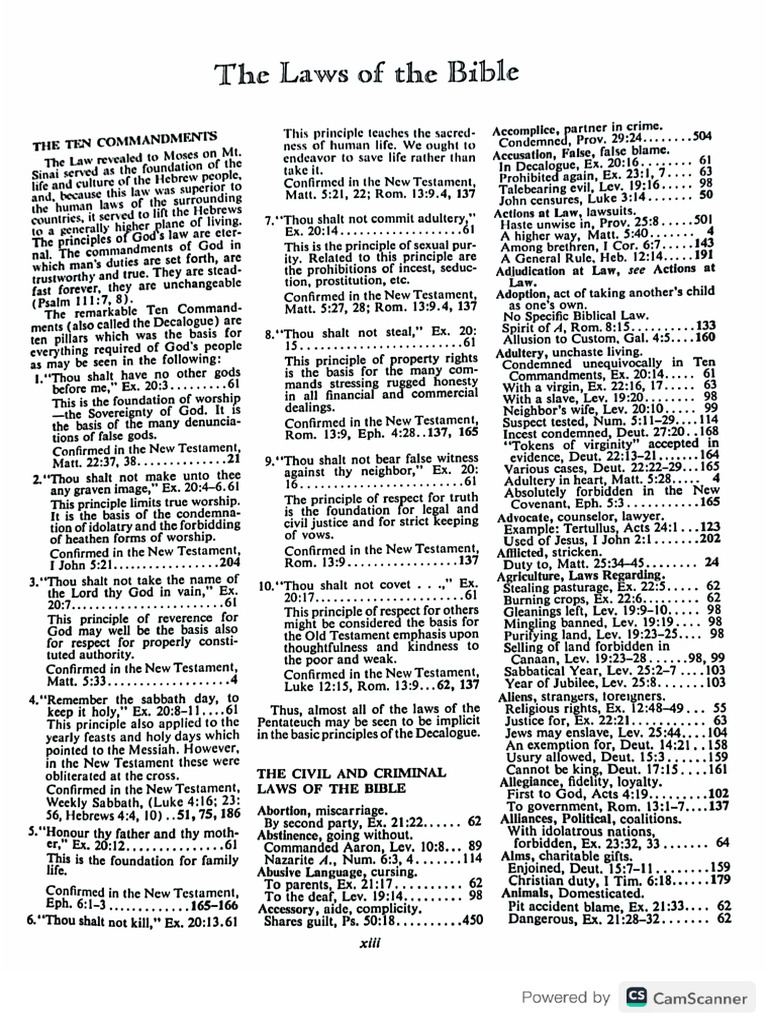
At the heart of these divine statutes lies the Decalogue, commonly referred to as the Ten Commandments. These tenets emerge like luminary stars against the universe of human existence, delivering edicts that transcend mere legality. “Thou shalt not kill” defends the sanctity of life, while “Thou shalt not steal” shields the integrity of property and trust. Each commandment acts not merely as a prohibitive boundary but as a nurturing guidepost directing one’s spiritual voyage.
Yet, these laws extend beyond a simple list etched in stone. They are infused with a profound metaphysical essence, reflecting the very character of God—immutable, just, and merciful. The intricacies of the law can be likened to a gardener’s pruning shears, designed to foster growth and prevent decay within the human soul. The laws not only reveal what is forbidden but underscore what is encouraged: compassion, justice, and humility.
The Mosaic Laws, initially framed for the Israelites, further exemplify this complexity. Comprised of 613 commandments spanning dietary laws, moral conduct, and ritual practices, they illustrate a lifestyle imbued with divine purpose. Like a carefully crafted symphony, each regulation harmonizes to create a sublime melody of holy living. The observance of these laws promoted community cohesion and collective identity amidst a backdrop of trials and tribulations.
However, one may ask whether these ancient edicts hold relevance in contemporary society. The answer unfolds within the realm of moral philosophy. The ethical principles embedded within these laws challenge individuals to confront the duality of human nature. While the world may often resemble a tempestuous sea, the wisdom of the biblical laws anchors the soul amid the crashing waves of moral ambiguity. Love thy neighbor, as espoused in the teachings of Christ, not only resonates with the ethical fibers of the Mosaic tradition but expands upon it, inviting inclusivity into the divine conversation.
Moreover, the Beatitudes—the radical teachings of Jesus—can be seen as a lens through which the original laws can be viewed anew. “Blessed are the meek, for they shall inherit the earth,” juxtaposes ambition with humility. The unique appeal of these divine edicts lies in their ability to adapt and reinterpret the notion of justice and mercy in light of human experience. They act as an eternal mirror, reflecting the complexities of the human condition while offering pathways of redemption.
In considering the laws of God, it becomes apparent that they possess an alluring depth, inviting exploration and introspection. They are not mere obligations or restrictions; they are conduits through which divine glory is magnified in everyday life. Paradoxically, the laws liberate the spirit even as they delineate the boundaries of behavior, allowing individuals to flourish within a framework of divine order.
In conclusion, the laws of God in the Bible weave a narrative rich with moral teaching, spiritual reflection, and ethical obligation. They stand as a testament to humanity’s quest for meaning, justice, and relationship with the divine. Much like the perennial cycle of seasons—where winter gives way to spring—these laws invite a metamorphosis, urging individuals to blossom into their highest selves amidst the trials and tribulations of life.

