

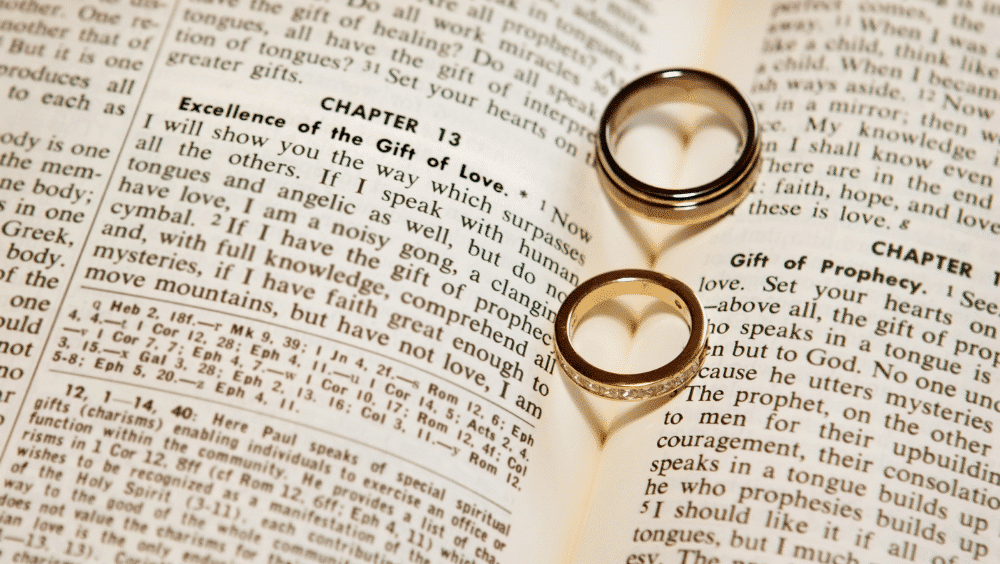
Marriage, a concept steeped in tradition and spiritual significance, often incites curious contemplation: What constitutes the essence of marriage according to the Bible? It’s a question that beckons both devout seekers and those merely intrigued by the notion of sacred unions. As one delves into the scriptural texts, a comprehensive tableau of marital ideals and definitions unfolds.
At its core, the Bible portrays marriage as a divine covenant—an unbreakable bondality forged not just between two individuals, but fundamentally intertwined with God’s overarching plan. This notion of covenant transcends mere contract; it implies commitment, loyalty, and a solemn agreement to protect and nurture one another through all of life’s vicissitudes. In the Old Testament, the concept of covenant is prevalent, explicitly detailed in the accounts of significant figures who entered into marital unions, underscoring the sanctity and gravity of the matrimonial bond.
Genesis, the opening book of the Bible, provides some of the most profound insights into the nature of marriage. In Genesis 2:24, it is stated, “Therefore a man shall leave his father and mother and be joined to his wife, and they shall become one flesh.” This verse encapsulates several pivotal elements that elucidate the biblical definition of marriage: leaving one’s family, joining together as partners, and ultimately achieving a profound intimacy that transcends physicality—an ethereal ‘becoming one.’ This imagery evokes a sense of closeness that is both spiritual and emotional, signifying the union’s depth.
Moreover, within the New Testament, the epistles further elucidate the roles and responsibilities inherent in a marriage relationship. In Ephesians 5:25-33, the Apostle Paul offers a vivid metaphor of Christ’s relationship with the Church, urging husbands to love their wives sacrificially, much like Christ. This directive not only sets a standard for love but also implies mutual submission, respect, and care—a triad of virtues essential for a historically rich bond.
As one navigates this biblical narrative, a playful question arises: In an era where marriage faces myriad challenges—from shifting societal norms to varying expectations—how can these time-honored principles be revitalized for contemporary couples? The journey of marriage has evolved, and perhaps this exploration prompts deeper inquiry into how a covenant relationship can adapt while maintaining its core values.
The Bible also emphasizes the importance of fidelity and exclusivity within marriage. The Ten Commandments explicitly advocate for this in Exodus 20:14, stating, “You shall not commit adultery.” This admonition stresses the sanctity of the marital bond, reinforcing the commitment partners make to one another. The repercussions of straying from this vow echo throughout scripture, revealing the inherent dangers of compromised fidelity and the heartache it can engender.
Furthermore, the biblical perspective on marriage is woven intricately with the theme of love—agape love, which embodies selflessness and unconditional care. 1 Corinthians 13 vividly illustrates the qualities of love, presenting an ideal that all married couples should aspire to emulate: patience, kindness, and resilience. Thus, love is not merely an emotion; it is a deliberate choice that nurtures the growth of a relationship through trials and tribulations.
In conclusion, the biblical definition of marriage transcends the superficiality often attached to modern ensembles of relationships. It beckons individuals to engage in a profound, sacred communion with one another, grounded in love, commitment, and mutual respect. Through the lens of scripture, marriage emerges as an enduring journey—one that entails both joy and challenges, and above all, a steadfast commitment to navigate life’s labyrinth together. Embracing this multifaceted view may not only enrich individual marriages but serve to restore faith in the sanctity of this age-old institution.

