

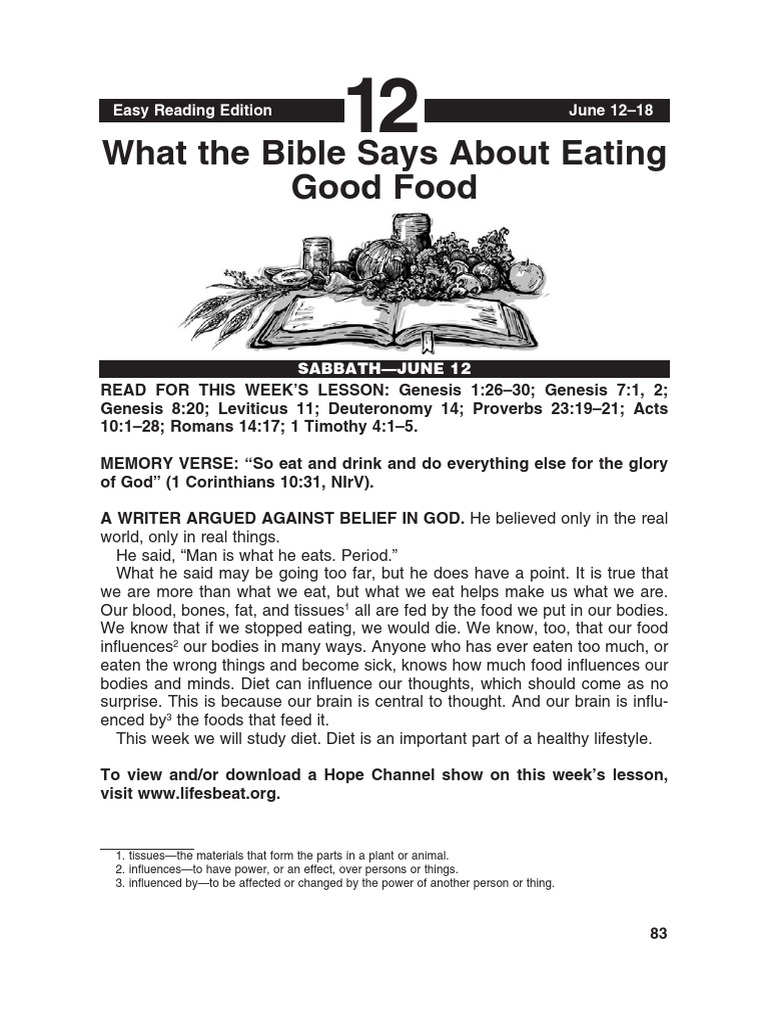
The Bible, a compendium of profound spirituality and ethical wisdom, serves not only as a theological foundation but also as an exquisite guide to healthy living. Within its sacred texts resides the essence of vitality, advocating for a diet that nourishes both body and soul. As one delves into the annals of Scripture, a rich tapestry of culinary counsel emerges, reminiscent of a well-tended garden bursting with vibrant fruits and vegetables, beckoning the faithful to partake in its bounty.
From the very outset, Genesis presents a divine decree: “Behold, I have given you every herb bearing seed, which is upon the face of all the earth, and every tree, in the which is the fruit of a tree yielding seed; to you it shall be for meat.” This proclamation not only lays the cornerstone of vegetarianism but also underscores a reverence for nature’s offerings. The verdant expanses of Eden serve as a perennial metaphor for health, portraying a world where people consume a diet rich in plant-based sustenance, a path crowned with both physical vigor and spiritual enlightenment.
The narratives and parables within the Bible further highlight the profound connection between the food we consume and the life we lead. Consider the story of Daniel, who, alongside his companions, chose a diet devoid of the king’s rich and lavish foods. Instead, they opted for “vegetables and water.” This seemingly modest choice unfolded into a magnificent testament of vitality and wisdom, illustrating the duality of nourishment: it serves not just the physical form but also a deeper moral and ethical dimension. Daniel’s resolve resonated through the ages, epitomizing the concept that true strength often springs from simplicity, where quality prevails over ostentation.
In the teachings of Proverbs, wisdom personified calls for a consideration of our dietary choices, imploring, “When you sit down to eat with a ruler, consider attentively what is before you, and put a knife to your throat if you are a man given to appetite.” This metaphorical exhortation emphasizes the importance of mindfulness and moderation. Amidst a world suffused with temptation and excess, the biblical text orchestrates a symphony of restraint, reminding us that indulgence does not lead to fulfillment, but rather, thoughtful consideration of one’s consumption leads to holistic well-being.
The New Testament, too, echoes the sentiment of healthy eating. Christ’s miracles, such as the multiplication of loaves and fishes, evoke a celebration of sustenance that is both communal and abundant. Through these acts, the emphasis is placed on sharing and the nourishment of community, signifying that food is not merely sustenance, but a unifier, a means of fostering relationships and promoting collective health. Our meals can be transformed into acts of love and devotion, becoming sacred rituals that bind us together in fellowship.
Ultimately, the Bible serves as a horticultural manual for living. The injunctions to avoid excess, to prioritize whole, plant-based foods, and to engage in mindful consumption permeate its pages. Every meal becomes an opportunity to honor the sacred, as the very act of eating reverberates through both the earthly and spiritual realms. As the biblical narrative unfolds, so too does the understanding that our diet influences not just our physical health, but our spiritual walk. The pursuit of a healthier lifestyle, inspired by these ancient texts, becomes an endeavor that narrows the divide between the material and the divine.
In embracing the wisdom encapsulated within the Bible, one finds encouragement to cultivate a diet that nurtures the body while uplifting the spirit. This holistic approach to nourishment not only fosters physical well-being but enriches one’s spiritual journey, inviting all to celebrate the miracle of food in every bite. Thus, this sacred text stands as an enduring testament, guiding believers not merely on what to eat, but on how to eat mindfully and with purpose.

