

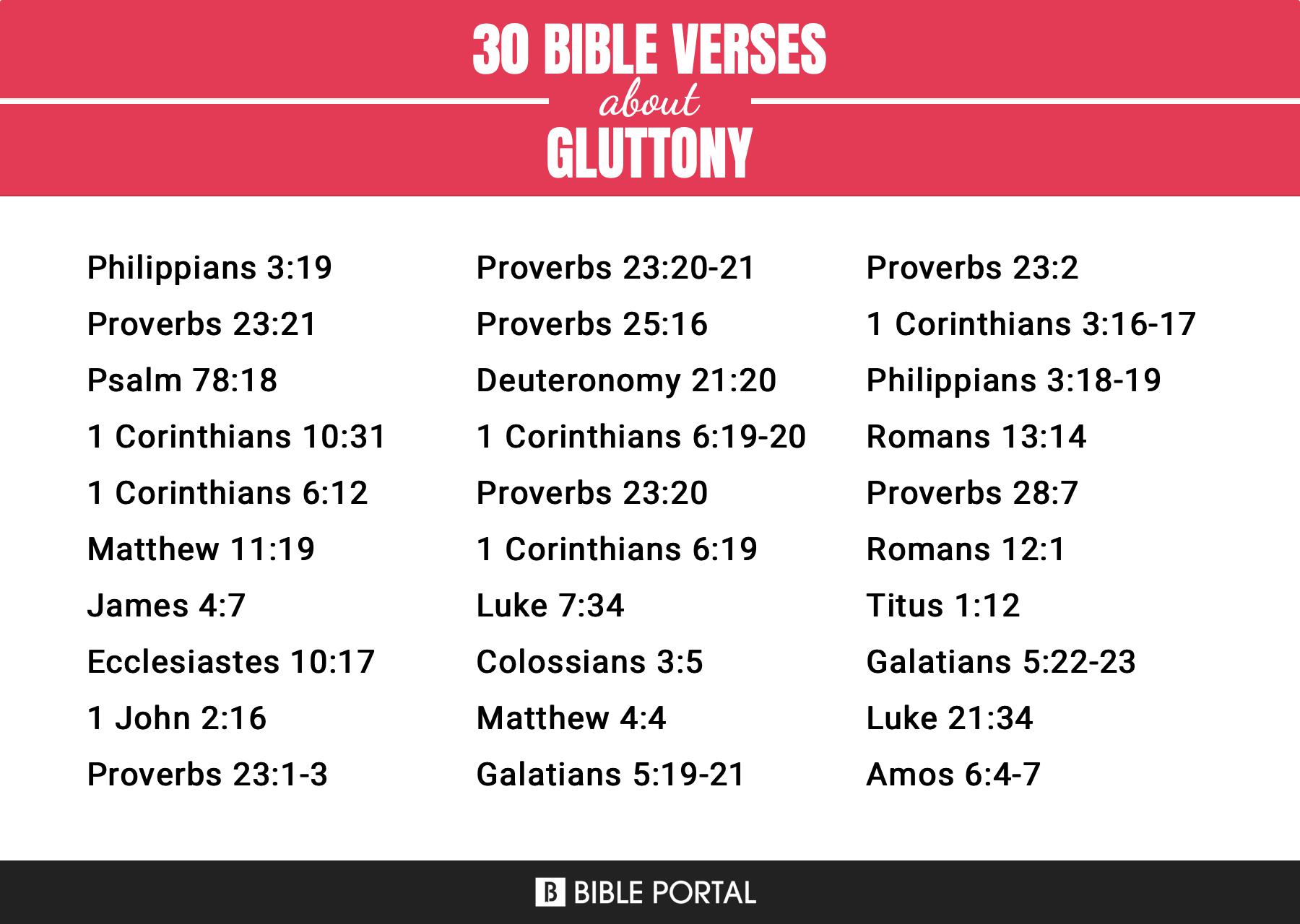
What do you think about gluttony? Is it merely an indulgence in food, or does it extend beyond the plate to encompass a broader lack of moderation in life? This intriguing question invites contemplation and challenges our understanding of temptation and excess. The Bible offers profound insights into the sin of gluttony, addressing not only the act of overeating but also the underlying attitudes and behaviors of individuals.
To begin, gluttony is often characterized as an excessive desire for food and drink, resulting in overindulgence. The scriptures don’t shy away from confronting this behavior. For instance, Proverbs 23:20-21 warns against the company of gluttons, stating, “Do not join those who drink too much wine or gorge themselves on meat, for they are on their way to poverty, and drowsiness will clothe them in rags.” This admonition not only highlights the consequences of gluttony as a financial drain but also positions it as a moral failing, tethering it to one’s character and choices.
In another poignant reference, Philippians 3:19 describes those whose “god is their belly,” indicating that gluttony can lead to idolatry of the self. Here, the scripture delineates a stark divide; when one’s appetite governs their actions, spiritual integrity often suffers. This notion compels a reflection on our priorities. Are our desires aligned with our faith, or do we find ourselves ensnared by the allure of hedonistic pleasures?
Gluttony doesn’t exist in a vacuum; it intertwines with gluttonous attitudes toward various facets of life. One might ask: Is it possible to be gluttonous in our consumption of entertainment, technology, or even relationships? Perhaps modern society’s obsession with instant gratification poses a similar challenge to scriptural warnings about overeating. The sentiment echoes Ecclesiastes 6:7, which asserts, “All a person’s labor is for their mouth, yet their appetite is never satisfied.” Are we perpetually craving more—more food, more experiences, more validation—like a bottomless pit, unable to fill our internal voids?
Moreover, Christian teachings underscore the importance of moderation. 1 Corinthians 6:19-20 reminds believers that their bodies are temples of the Holy Spirit, thus warranting care and reverence. This perspective compels an introspective evaluation of our choices, steering us towards a lifestyle where nourishment and spiritual health coexist harmoniously. With this in mind, it’s essential to recognize that gluttony transcends physical excess; it embodies a broader philosophy of abundance. Are we consuming things that elevate our spirit and serve others, or are we caught in cyclical patterns of self-indulgence?
A different angle emerges when considering the virtue of self-control. Romans 12:1 encourages individuals to present their bodies as a living sacrifice, holy and pleasing to God. Engaging in practices that foster self-discipline—be it through fasting, mindful eating, or simply pausing to reflect on our cravings—can serve as an antidote to gluttonous tendencies. How can we challenge ourselves to fast from gluttony in all its forms? Consciously choosing moderation invites the possibility of spiritual growth, limited only by our willingness to embrace it.
In conclusion, grappling with the concept of gluttony as presented in the Bible encourages an examination of both the physical and spiritual realms. It urges us to reflect on our consumption patterns and their ripple effects on our lives and relationships. So, as you ponder the question of gluttony, consider this challenge: What small, intentional changes can you embrace this week? Whether in your eating habits or beyond, daring to tread the path of moderation may yield abundant rewards both for the soul and the spirit.

