

Frogs, a ubiquitous component of various ecosystems, hold profound symbolic meaning within the pages of the Bible. Their representation is often intertwined with notions of transformation, impurity, and divine judgment. Examining these amphibians within biblical texts offers insights into their metaphoric significance and how they reflect broader theological themes.
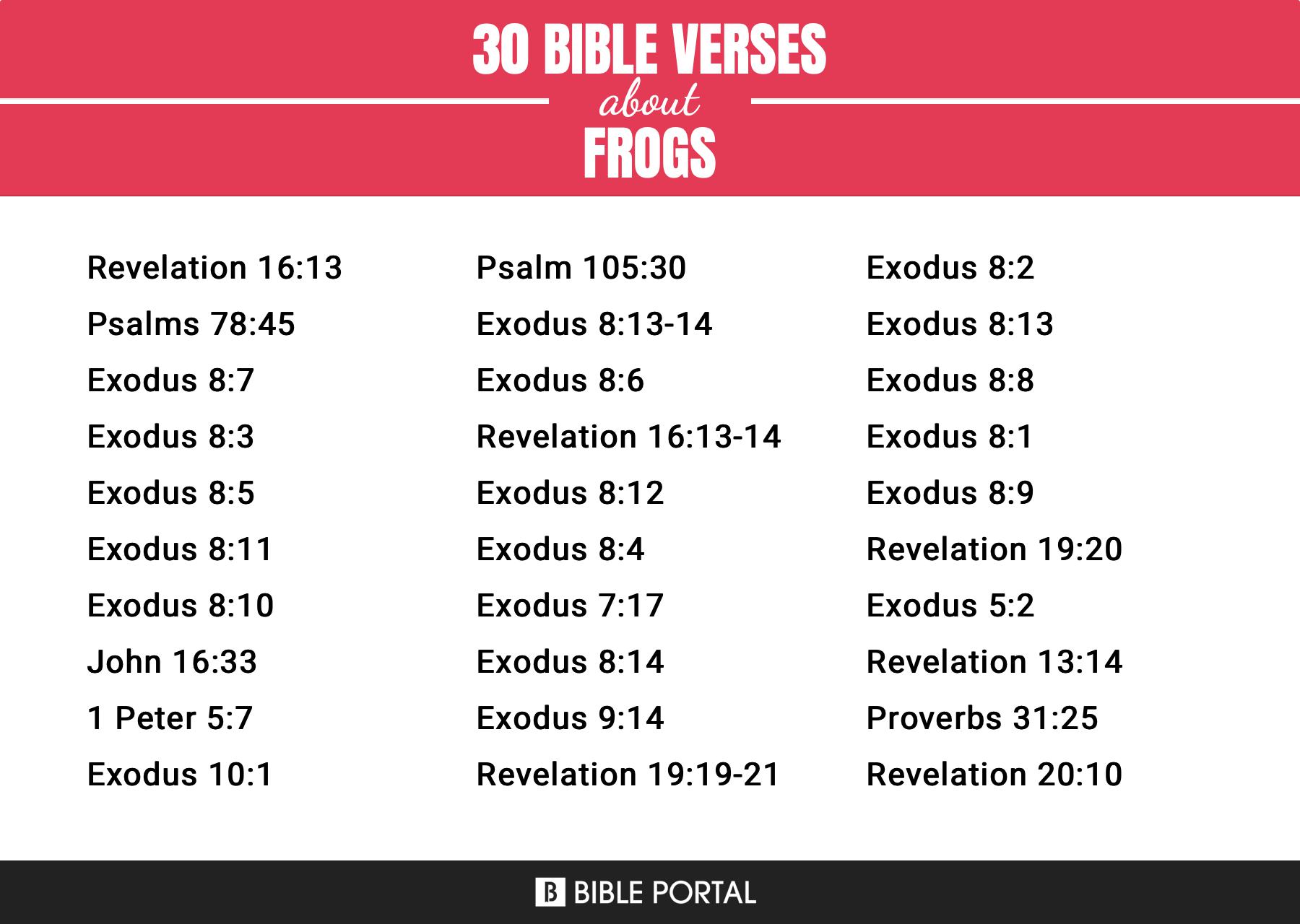
To understand the representation of frogs, one must delve into their most notable mention in the biblical narrative: the Ten Plagues of Egypt. Frogs, emerging from the waters of the Nile, signify the second plague inflicted upon Pharaoh. This event illustrates a critical theological theme—God’s sovereignty over creation. The abundance of frogs cannot be overlooked; they inundated the land, illustrating the gravity of divine retribution and Pharaoh’s subsequent refusal to heed God’s commands. This overwhelming presence of frogs becomes a manifestation of the divine will, confronting both human obstinacy and ecological order.
In addition to their role in the plagues, frogs symbolize impurity and filth. In the Book of Leviticus, the law regarding clean and unclean animals specifies that frogs are unclean creatures. This categorization signifies a spiritual and ritual separation. To the ancient Israelites, being deemed unclean meant one could not participate in sacred practices or approach the temple. Hence, frogs epitomize notions of sin and moral degradation, serving as a reminder of the need for purification and the necessity of adhering to divine law.
Moreover, the frog has occasionally been associated with pagan idolatry. In Egyptian culture, for instance, the frog was a symbol of fertility and rebirth, often linked to the goddess Heket. This duality in symbolism bolsters the biblical narrative, where the God of Israel starkly contrasts the idolatrous practices of surrounding nations. Therefore, frogs serve as a theological juxtaposition, a tangible reminder of the futility of worshipping false gods in light of the sovereignty of the One True God.
Prophetic literature also alludes to frogs in a more esoteric context. The Book of Revelation presents frogs in a symbolic light, depicting them as unclean spirits that emerge from the mouths of the dragon and false prophets. This imagery of frogs as agents of deception and chaos underscores the notion of spiritual warfare. The portrayal of frogs in this manner alerts believers to the subtleties of evil that can pervade their lives, prompting vigilance and discernment against malign influences.
The multifaceted symbolism of frogs extends beyond mere representation; it highlights the often paradoxical nature of biblical narratives. They serve as a reminder of God’s judgment, the need for purity, and the dangers of idolatry. In exploring these amphibians within the biblical context, one can discern a broader spiritual narrative concerning humanity’s relationship with the divine. The presence of frogs in the sacred texts calls for reflection on the consequences of disobedience and the ever-looming call for repentance and sanctification.
Through the lens of scripture, frogs become emblematic not just of environmental reality but of deeper spiritual truths. They reflect the complexity of God’s creation—rich, varied, and sometimes challenging. In contemplating what frogs represent in the Bible, one engages in an intricate dance between the physical and the metaphysical, unveiling layers of meaning that echo throughout both ancient and modern faith. In summary, the biblical symbolism of frogs invites readers to wrestle with themes of judgment and redemption, urging a reflective approach to understanding the divine narrative.

