

The question of which Bible the Lutheran Church uses is not merely one of preference or habit; it invites a deeper contemplation of faith, tradition, and the ever-evolving relationship between scripture and community. The Lutheran denominational identity is intricately tied to the texts it venerates, enriched by theological underpinnings and historical événements.
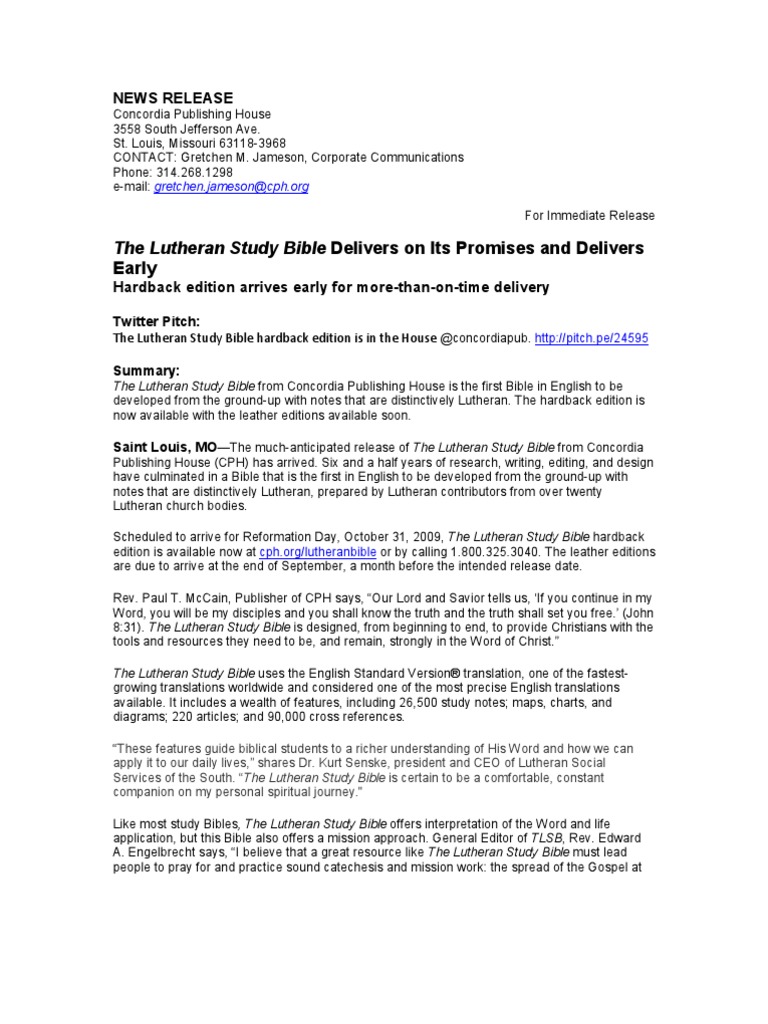
At the forefront of Lutheranism’s scriptural engagement is the Lutheran Study Bible, which reflects a synthesis of Lutheran theological insights and scholarly exegesis. But to fully understand its role and significance, one must delve into both the historical and theological dimensions that shape its use within the church. This exploration will reveal not just what Bible is used, but why it holds such significance for believers.
Historically, the Lutheran Church emerged during the Reformation, a period when Martin Luther ardently championed the principle of sola scriptura. This tenet posits that scripture alone is the final authority in matters of faith and doctrine. The understanding of the Bible thus became a pivotal element in defining Lutheranism as distinct from Roman Catholicism. Over the centuries, Luther’s translations and interpretations have laid the groundwork for what many Lutherans consider indispensable texts.
Through the decades, the Lutheran Bible has seen various translations. The most notable of these include the King James Version (KJV), the New International Version (NIV), and more contemporary translations like the English Standard Version (ESV). Each version carries linguistic nuances and stylistic choices that can resonate differently with varying audiences. Nonetheless, the Lutheran Church commonly employs the New Revised Standard Version (NRSV) and the English Standard Version (ESV) in its worship settings, as these translations often align with Lutheran theology and ecclesiology.
Why this particular choice of translations? The answer lies not just in the accuracy of textual reproduction, but also in the overarching themes of grace, law, and the active Word that define Lutheran belief. For instance, the focus on justification by faith becomes more palpable and engaging when articulated through a version that uses clear yet nuanced language. The Lutheran Church desires to make scriptural teachings accessible and comprehensible to embody the Spirit of the Gospel in everyday life.
The role of the Lutheran Study Bible specifically merits mention. It is designed to not only present scripture but to elucidate and apply it within the context of Lutheran doctrine. In exploring the biblical texts, readers find annotations that guide interpretations consistent with Lutheran teaching, offering insights into theological concepts and historical backgrounds. Such resources enhance the depth of understanding and application, facilitating spiritual growth and informed discussion within congregations.
Furthermore, the importance of catechesis— the instruction of faith—cannot be overstated. The Lutheran Church emphasizes teaching foundational beliefs rooted in scripture. The Bible, accompanied by explanatory notes and questions for reflection, serves as an educational tool. It isn’t merely a book of pious stories; it is a compendium of divine communication that engages the intellect and stirs the heart. This dual focus on reason and emotion is a hallmark of Lutheran doctrine that imbues congregants with a comprehensive worldview.
The fascination with the Lutheran Bible goes beyond mere textual analysis. It embodies a communal identity that transcends geographical and cultural barriers. Lutheran congregations, in varying locales, find unity and continuity through a shared scriptural repertoire. This common ground fosters solidarity, as members of the church engage in similar liturgical practices centered around these biblical texts. The rhythm of readings, prayers, and responses is grounded in scripture; this shared experience strengthens bonds and nurtures a sense of belonging.
Moreover, the act of engaging with the Bible emerges as an avenue to encounter the larger narrative of God’s redemptive work. Each verse, each story, serves as a marker along a divine timeline that encompasses humanity’s complex relationship with the Creator. Lutherans are invited into this narrative and encouraged to reflect on their own places within it. This introspective approach allows for a profound engagement with the divine, moving beyond rote memorization to a lived experience of faith.
In contemporary times, the manner in which the Lutheran Church interacts with the Bible has adapted to technological advancements. With digital copies accessible and myriad online resources available, congregants can explore scripture in unprecedented ways. While traditional print Bibles remain a staple, the dual nature of physical and digital texts complements each other, creating an environment ripe for exploration, discussion, and application.
As the Lutheran Church navigates contemporary challenges, the scriptures continue to function as a bedrock of theology and practice. They provide answers, comfort, and even conviction. By engaging with the biblical texts, Lutherans are equipped not just to confront the moral dilemmas of our time but to engage with them thoughtfully and faithfully. Hence, the Lutheran Bible is not simply a book; it is a living dialogue that shapes believers’ lives and inspires action within the world.
The exploration of what Bible the Lutheran Church uses reveals extensive layers of historical significance, theological grounding, and communal identity. Through its use of texts, both ancient and evolving, the church remains steadfast in its mission to reflect the heart of the Gospel, inviting believers into a transformative relationship with their faith and scripture. Ultimately, it is this tapestry of history, translation, and interpretation that invites individuals to seek, question, and be renewed within the realm of faith.

