

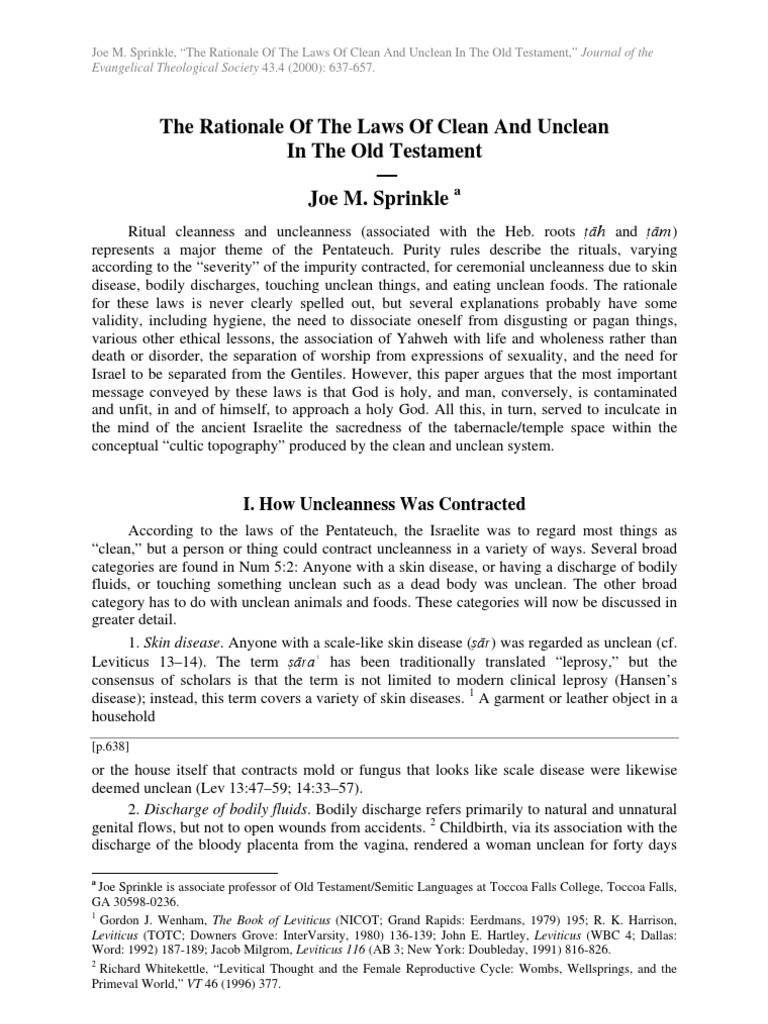
In biblical texts, the term “unclean” encapsulates a complex array of meanings and implications, entwined with spiritual, ritualistic, and moral dimensions. Understanding what “unclean” signifies requires a deep dive into its varied contexts within the scriptures, particularly within the books of Leviticus and Numbers, where detailed laws and regulations abound. These texts serve as a compendium of instructions delineating the boundaries between holiness and defilement, serving as a moral compass for the ancient Israelite community.
At the heart of the biblical notion of being unclean is the concept of ritual impurity. This form of uncleanliness arises from various circumstances, including contact with certain animals, bodily emissions, or even death. In Leviticus 11, for instance, dietary laws are spelled out, explicitly branding certain creatures as unclean—such as pigs, shellfish, and many birds. The underlying philosophy promotes a distinction between that which is holy or clean and that which is not. Observing these laws was essential for maintaining proper relationship with God, emphasizing a holistic approach to community and spirituality.
Moreover, physical manifestations of uncleanliness convey deeper spiritual truths. Engaging in practices that render an individual unclean was not merely about adhering to rules; it was about recognizing God’s sovereign authority over life and purity. For instance, the act of menstruation rendered a woman unclean, not as a punishment, but as a recognition of the natural processes of life that required periods of holistic restoration and reflection. This acknowledgment of life’s cycles highlights the intertwined nature of spirituality and corporeality.
Uncleanliness also encompasses moral and ethical dimensions. The Hebrew Bible introduces a moral code that extends beyond ritualistic purity. A person could become unclean through actions such as theft, lying, or displaying malicious intent. This notion illustrates that spiritual health is intrinsically linked to ethical behavior. Adultery and idolatry, for example, not only breach social contracts but irreparably damage a relationship with God, leading to spiritual defilement. The moral implications ensure that adherents remain vigilant not merely in ritual observance but in cultivating personal integrity and justice.
In addition to personal conduct, societal structures in the biblical narrative address collective uncleanliness. Entire communities could become unclean due to various infractions. When the Israelites wandered in the wilderness, they were constantly reminded of their identity as a people chosen to reflect God’s holiness. A lapse in communal ethics, such as oppression or injustice, could lead to national calamity and separation from divine favor. The narrative thus encourages a collective responsibility: individual purity contributes to communal sanctity.
The inadequate observance of purity laws initiated significant ritual practices like the Day of Atonement, or Yom Kippur, where removal of sin and cleansing of the people was a communal event. The implementing of the scapegoat ritual, in which sins are symbolically transferred to a goat that is then sent away, underscores the intricate relationship between uncleanliness and the atonement process. These rituals served not just as an act of purification but as an opportunity for spiritual renewal and communal reconciliation.
Interestingly, the New Testament carries the theme of cleanliness forward, juxtaposing the traditional views against the radical teachings of Jesus. Through his actions and parables, He challenges established norms pertaining to uncleanliness. Individuals deemed unclean—lepers, the chronically ill, and even tax collectors—often found solace and healing in His presence. Jesus emphasized inner purity arising from one’s heart rather than merely adhering to external laws, thus shifting the paradigm from a strict legalism to a broader understanding of mercy and compassion.
These transformative insights reflect a more nuanced understanding of purity and uncleanliness. The reflective journey encourages believers to look inward, prioritizing intentions over mere compliance with the law. The apostle Paul expands on this theme, articulating that true cleanliness comes from the spirit, further distancing the Christian experience from the stringent rituals of ancient law.
The discussions surrounding cleanliness and uncleanliness have evolved, yet the essence remains relevant in contemporary contexts. Issues of moral integrity, social justice, and spiritual authenticity continue to resonate. Modern wanderers, whether believers or seekers, can find valuable lessons within the biblical concept of unclean, serving as a catalyst for introspection, ethical living, and deepening faith.
Ultimately, grappling with the implications of being unclean prompts a profound exploration of humanity’s relationship with the divine. It invites deep reflection on how we navigate the world—urging us to craft a narrative that honors both our complexity and our quest for purity. The richness of the discussion surrounding uncleanliness in the Bible serves as both a cautionary tale and an empowering call to cultivate a life that honors integrity, justice, and spiritual wholeness.

