

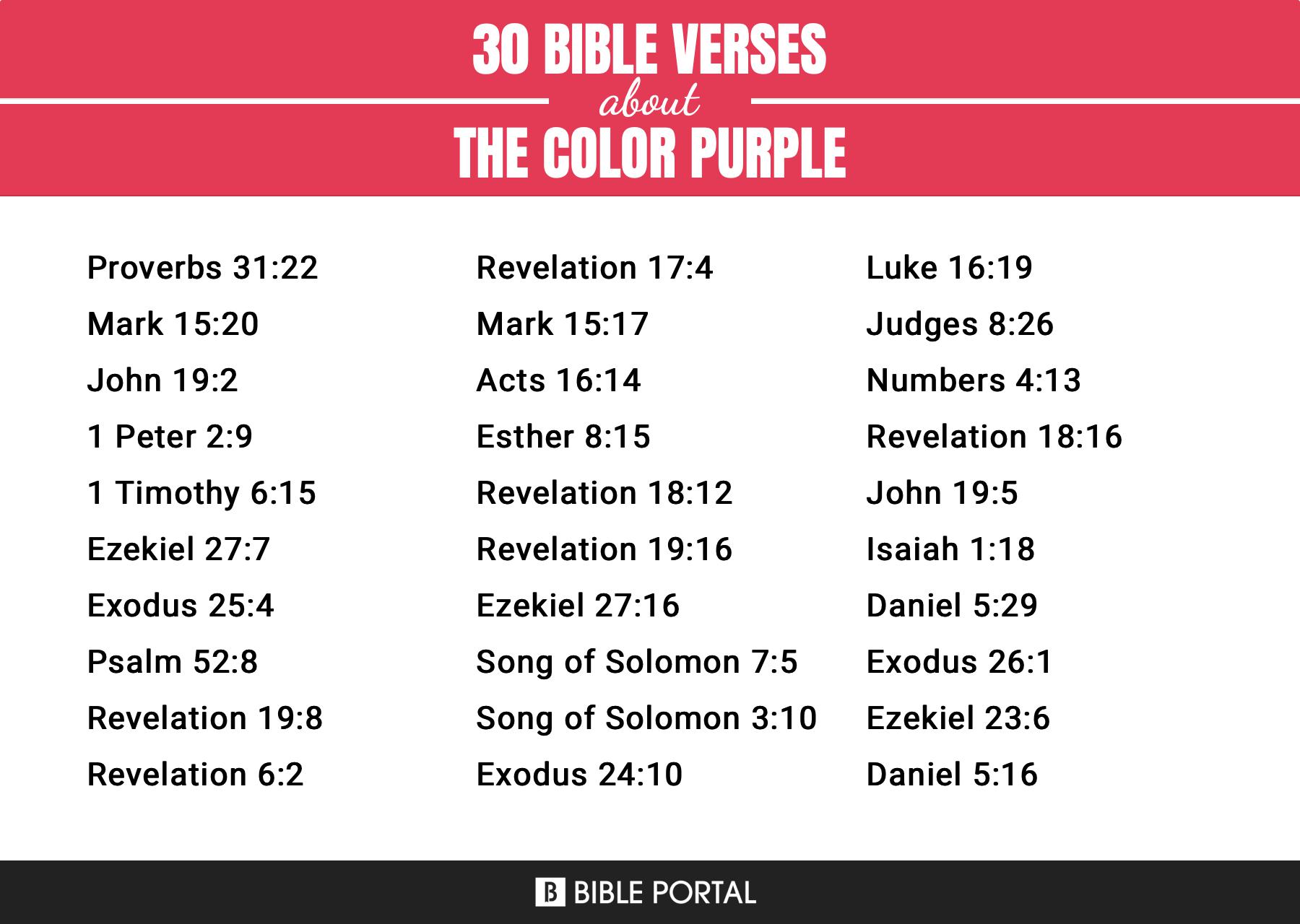
The color purple, imbued with a rich tapestry of cultural and spiritual significance, stands as one of the most compelling hues referenced in biblical scripture. Often verging on the mystical, purple encapsulates a spectrum of meanings that range from royalty and power to spirituality and transformation. Through an exploration of its biblical connotations, we unearth not only its aesthetic charm but also its profound implications in the spiritual domain.
Historically, the color purple has been associated with nobility and aristocracy. In ancient civilizations, it was exceptionally rare and difficult to produce, derived from the murex snail, making it a color reserved for the affluent and powerful. This notion of authority and supremacy resonates deeply in biblical texts. In the Book of Esther, for instance, purple garments are indicative of royal grandeur and status. Here, purple fabric symbolizes not merely wealth but an elevation to divinely appointed roles, marking individuals as chosen vessels of God’s purpose.
In the Christian tradition, the significance of purple extends beyond its association with royalty. During the liturgical calendar, purple is prominently featured during the seasons of Advent and Lent. Each period invites believers to reflect, repent, and prepare spiritually. The somber yet regal tone of the color serves as a poignant reminder of the introspective journey towards transformation and renewal. The juxtaposition of purple’s royal implications with the themes of sacrifice and humility paints a complex picture that invites deeper reflection on one’s own spiritual path.
Additionally, purple is emblematic of the high priestly garments described in the Old Testament. Specifically, in the Book of Exodus, God commands that the robes of the priests be adorned with purple alongside other colors. This directive illustrates the sanctity of worship and the importance of approaching the divine with reverence. The use of purple here symbolizes a bridge between the sacred and the mundane, suggesting that the divine can be woven into everyday life. Such a notion encourages believers to cultivate a sense of holiness within their hearts and lives.
Moreover, the rich tapestry of biblical narrative often associates purple with the theme of suffering and redemption. In the Gospels, Christ is adorned in a purple robe during his passion, a symbol of mockery by the Roman soldiers. This act is deeply ironic; while the robe signifies earthly power and authority, it simultaneously underscores Christ’s humility and ultimate sacrifice. The color thus becomes a potent symbol of the collision between worldly prestige and divine love, inviting reflection on the true nature of power and sacrifice.
In contemporary spirituality, the color purple continues to evoke a sense of wonder and fascination. Many use it in personal meditation and prayer, employing its calming and contemplative qualities to encourage spiritual awakening. Purple candles, for instance, are often lit during periods of reflection, serving as visual focal points for the inner work of self-examination and spiritual growth. The allure of this color against the backdrop of spiritual practice offers a space for transformation, inviting individuals to delve into the depths of their own hearts and emerge with newfound clarity.
Ultimately, the color purple in the Bible serves multifaceted purposes. It encapsulates the duality of royalty and humility, power and sacrifice, glory and suffering. As one contemplates the significance of this alluring hue, it becomes apparent that its impact stretches beyond mere visual appeal. Instead, it challenges individuals to consider their identity, purpose, and the divine journey that lies ahead. With its roots deeply intertwined in scripture, purple invites adherents to explore the layers of meaning that resonate across time and tradition, encouraging a continuous quest for understanding and connection to the divine.

