

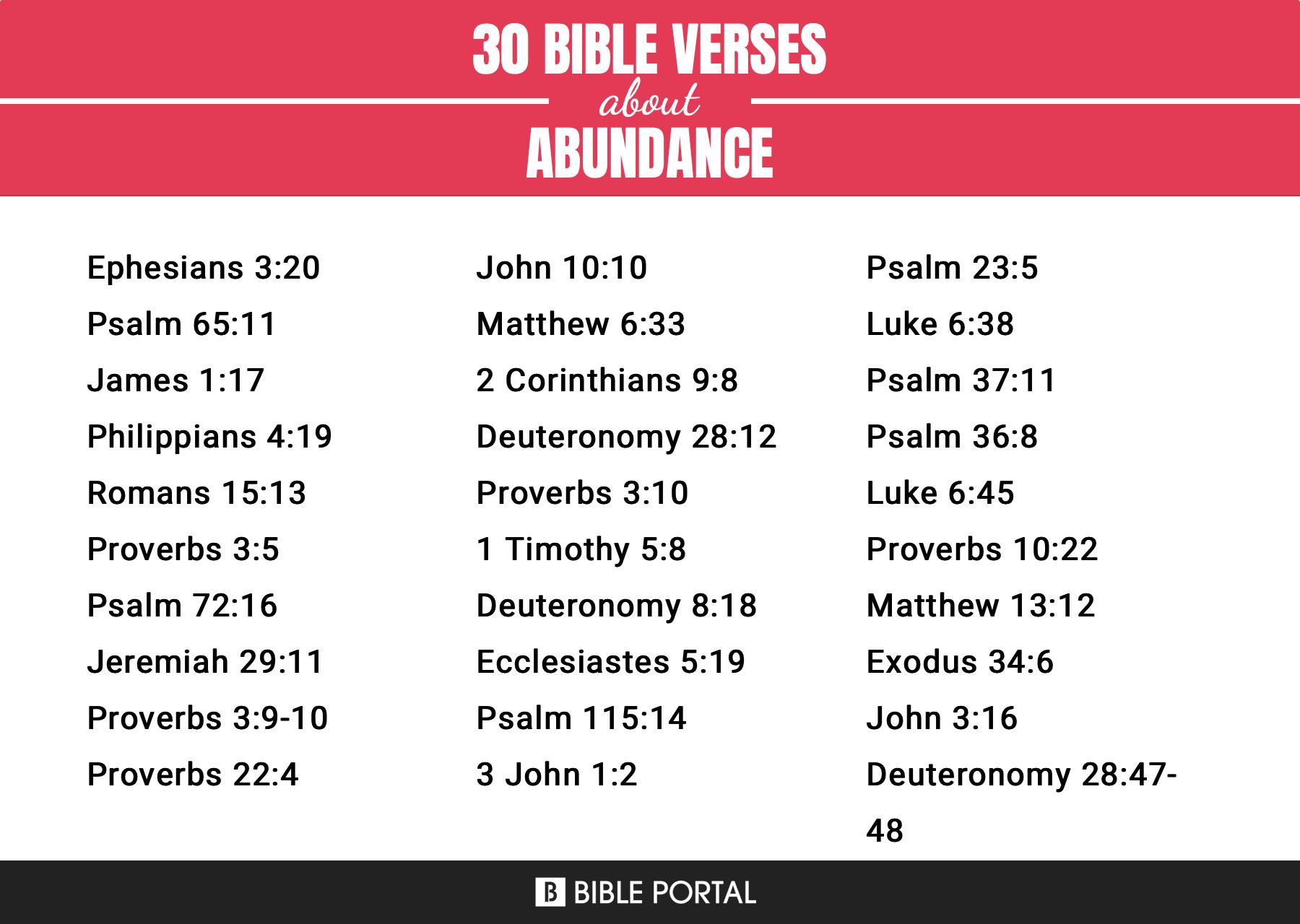
In the realm of spirituality and scriptural interpretation, the concept of abundance emerges as a multifaceted theme deeply embedded within the biblical text. To understand what abundance signifies in the Bible, one must explore its implications beyond the mere accumulation of wealth or material possessions.
At its core, abundance, as presented in biblical scripture, denotes a condition of overflow, a divine gift reflecting God’s generosity. This notion transcends the physical realm, encapsulating a rich tapestry of emotional, spiritual, and relational dimensions. A prime example can be found in John 10:10, where Jesus proclaims, “I have come that they may have life, and have it to the full.” This statement elucidates an expansive view of life, inviting believers to recognize that abundance is not solely confined to financial gain but rather extends to a holistic existence filled with joy, purpose, and fulfillment.
Exploring the Old Testament, one can witness how the theme of abundance operates within the context of God’s covenant with His people. The Israelites, often depicted in dire circumstances, are reassured of divine provisions that promise a land flowing with milk and honey. Such allegorical imagery signifies the promise of spiritual nourishment and sustenance. This portrayal of abundance is not just a physical reality but a metaphor for spiritual vitality, highlighting the intrinsic connection between divine blessings and a fulfilling life.
Moreover, abundance in the biblical sense frequently intersects with the principles of generosity and stewardship. In 2 Corinthians 9:8, it states, “And God is able to bless you abundantly, so that in all things at all times, having all that you need, you will abound in every good work.” Here, abundance is positioned not merely as a personal fortune but as a communal resource meant to bolster collective well-being. This shift in perspective challenges the contemporary materialistic view, prompting introspection on how one’s blessings can ripple into acts of kindness and community support.
The Proverbs further amplify the essence of abundance by contrasting wisdom and folly. Proverbs 11:25 declares, “A generous person will prosper; whoever refreshes others will be refreshed.” This dynamic suggests that true abundance is cultivated through the act of giving. In this light, the very act of sharing amplifies one’s own blessings, leading to a cycle of generosity that enriches both giver and recipient. Understanding this reciprocal relationship between abundance and generosity expands the horizon of how individuals perceive and engage with their resources.
Transitioning to the New Testament, Jesus’ parables often illustrate the principle of abundance through relatable narratives. In the Parable of the Sower, for instance, the seed that falls on good soil yields a crop that is a hundredfold. This imagery epitomizes the potential for growth and fruitfulness inherent in faith. Here, abundance is seen as the glorious manifestation of spiritual growth, where one’s faith can cultivate profound transformations not only within themselves but also in their surroundings, thereby piquing curiosity about the potential of one’s own spiritual journey.
In conclusion, to embrace the biblical interpretation of abundance is to recognize a profound shift in one’s perspective about life. It invites individuals to view their experiences and resources through a lens of gratitude and purpose rather than entitlement. The biblical narrative urges believers to traverse the complexities of existence with an attitude of abundance, fostering a belief that all things can be sources of enrichment and growth. This promises to elevate not just individual lives but the collective spirit of communities, wherein abundance becomes a shared vision for a thriving and compassionate world.

