

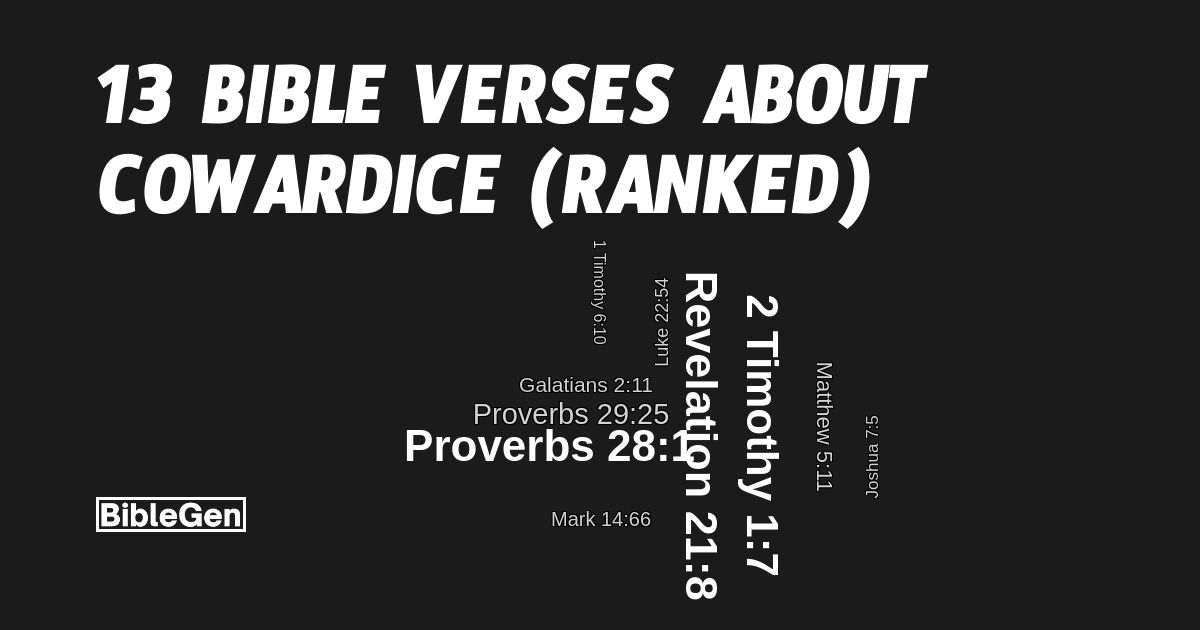
Courage and cowardice are two fundamental traits that resonate profoundly in the human experience. In spiritual discourse, particularly within the Bible, cowardice often emerges as a theme laden with both admonition and insight. It is fascinating how this biblical exploration not only outlines the ramifications of cowardice but also hints at the deeper human psyche and societal constructs that underlie such emotions.
Throughout history, individuals have grappled with the fear of vulnerability, the dread of judgment, and the reluctance to act in the face of adversity. The Bible’s perspective on cowardice provides a multifaceted understanding of these emotions, unveiling layers of significance that go beyond mere inaction. In the New Testament, we find explicit references to cowardice that evoke contemplation about human frailty.
One prominent verse articulating the biblical condemnation of cowardice can be found in Revelation 21:8, which states, “But the cowardly, the unbelieving, the vile, the murderers, the sexually immoral, those who practice magic arts, the idolaters and all liars—they will be consigned to the fiery lake of burning sulfur. This is the second death.” This powerful imagery juxtaposes cowardice with other moral failings, suggesting that it constitutes a significant spiritual shortcoming, often linked with a lack of faith.
Moreover, the biblical narrative often illustrates acts of valor that stand in stark contrast to cowardice. Figures like David exemplify bravery through their faith and determination, even when faced with daunting odds. The infamous encounter with Goliath epitomizes this theme, showcasing how faith can empower one to overcome formidable adversaries. Herein lies a crucial observation: cowardice is often rooted in a deficiency of faith. This notion makes biblical accounts all the more compelling and relevant—how often do we, in our modern lives, allow fear to eclipse our convictions?
The Old Testament further expands upon the implications of cowardice, notably through the story of Gideon. Initially, Gideon exhibits signs of trepidation in his Call to lead Israel against the Midianites. However, through divine encouragement, he transforms from a doubtful figure to a courageous leader. This transformation elucidates a vital principle: courage is frequently a cultivated virtue rather than an innate attribute. It emphasizes the importance of finding strength beyond oneself to confront fears—an idea that resonates across both ancient and contemporary landscapes.
The book of Proverbs also offers wisdom regarding the nature of fear and its paralyzing effects. Proverbs 29:25 states, “The fear of man lays a snare, but whoever trusts in the Lord is safe.” This verse highlights the notion that cowardice often stems from an excessive preoccupation with human approval. It encourages introspection into the motivations behind our actions—or lack thereof. When the quest for societal validation supersedes spiritual integrity, cowardice often prevails.
Furthermore, historical narratives within the Bible provide insight into the consequences of cowardice, particularly in the context of leadership. Numerous leaders faced dire situations where their hesitation resulted in communal suffering. The biblical text serves as a mirror reflecting not only the failures of individuals but also the broader implications for society when courage falters.
In conclusion, the journey through biblical discourse on cowardice compels us to examine the relationships between fear, faith, and action. Cowardice is not merely a character flaw; it is a barrier to spiritual fulfillment and moral integrity. By drawing on biblical teachings, one uncovers an enduring truth: courage, often born from faith and resilience, is vital in navigating the complexities of life. This timeless message continues to inspire countless individuals seeking to transcend their fears and embrace the fullness of existence.

