

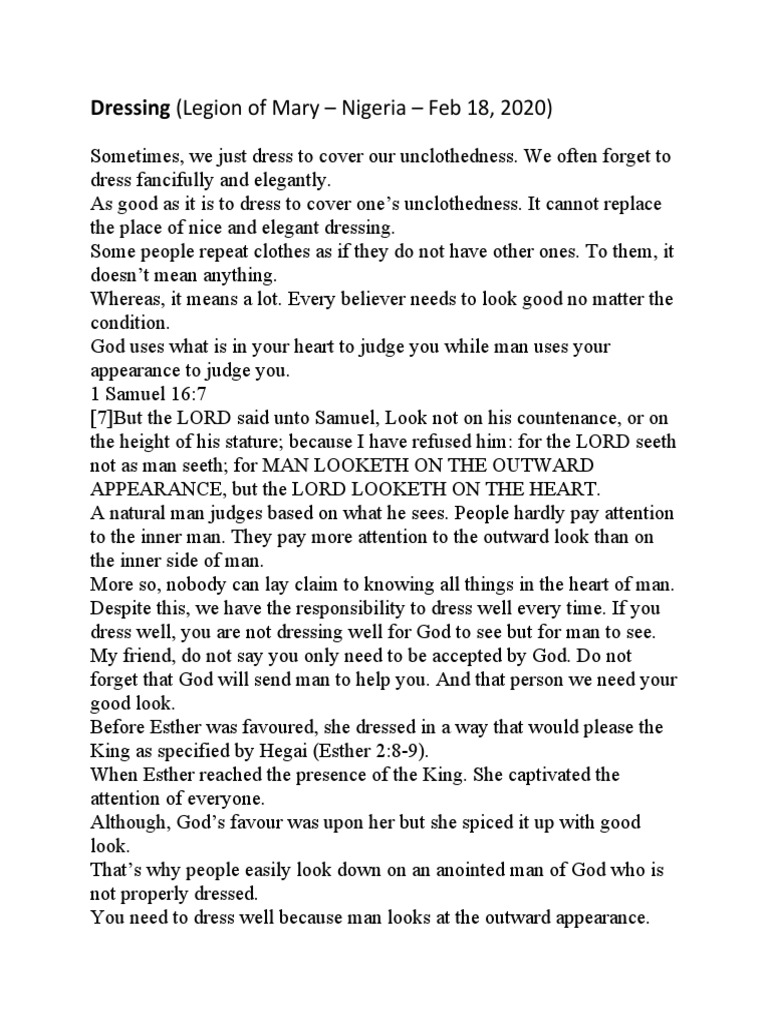
The Bible, as a profound repository of spiritual guidance, offers various insights regarding the attire and adornment of individuals. This topic intertwines deeply with themes of modesty, humility, and the inner disposition of the heart. Understanding the biblical perspective on dressing reveals a tapestry of cultural, theological, and ethical dimensions that invite contemplation.
First and foremost, the notion of modesty emerges prominently in scriptural discussions concerning attire. In 1 Timothy 2:9-10, the apostle Paul advises women to adorn themselves with “proper clothing, modestly and self-controlled,” emphasizing a demeanor that reflects inner godliness rather than an outward fixation on wealth or ostentation. This principle underscores that dressing is not merely a superficial aspect of one’s existence but rather an extension of one’s character and virtues.
When examining specific biblical instances regarding garments, one cannot overlook the symbolism attached to clothing. Consider the rich imagery found in Zechariah 3, where Joshua the high priest stands before the angel of the Lord, clothed in filthy garments. This portrayal serves as an allegory for sin, with the act of changing Joshua’s attire representing the transformational power of divine grace. In this context, attire transcends fabric and thread, representing purity and righteousness bestowed upon the faithful.
The Old Testament provides further insights into the cultural significance of clothing. In Exodus 28, God prescribes elaborate garments for the priests, which were detailed and ornate, signifying their unique position and duties within the community of faith. This divine decree highlights the importance of designated attire in delineating roles and responsibilities, asserting that clothing can convey divine intent and holiness. Thus, the Bible portrays dressing as a means of honoring both God and community responsibilities.
Moreover, the Bible addresses the potential for worldly extravagance and superficial concerns regarding attire. In Matthew 6:28-30, Jesus urges His disciples to consider the lilies of the field, which are adorned in splendor yet do not toil or spin. He reinforces the notion that excessive worry about clothing can distract from spiritual pursuits. This perspective invites individuals to prioritize their relationship with God over material concerns, cultivating a deeper understanding of contentment.
Another important theme is the idea of unity and equality within the body of Christ. Galatians 3:28 stresses that in Christ, there is neither Jew nor Gentile, neither slave nor free, nor is there male and female. This seminal verse encapsulates the belief that external distinctions, such as clothing, should not define one’s value or worth in the eyes of God. Instead, believers are encouraged to embrace a distinctive identity rooted in faith rather than fashion.
As we delve deeper into biblical teachings, we uncover a harmonic balance between freedom and responsibility when it comes to personal expression through attire. While external choices symbolize various aspects of identity, the underlying question remains: do these choices promote a heart aligned with God’s commands? Thus, the dialogue around dressing becomes not solely about what is worn, but about the posture of one’s heart. A thoughtful approach to dressing aligns with an intentional desire to reflect Christ’s love and character in a diverse world.
In conclusion, the Bible articulates a nuanced theology of dressing that transcends mere appearance, imbuing clothing with spiritual significance and moral considerations. Through the lens of scripture, individuals are invited to explore the intersection of personal expression and communal identity, challenging them to wear their faith authentically in a world characterized by superficiality. Ultimately, understanding what the Bible says about dressing becomes a journey toward embodying values that honor both God and the community.

