

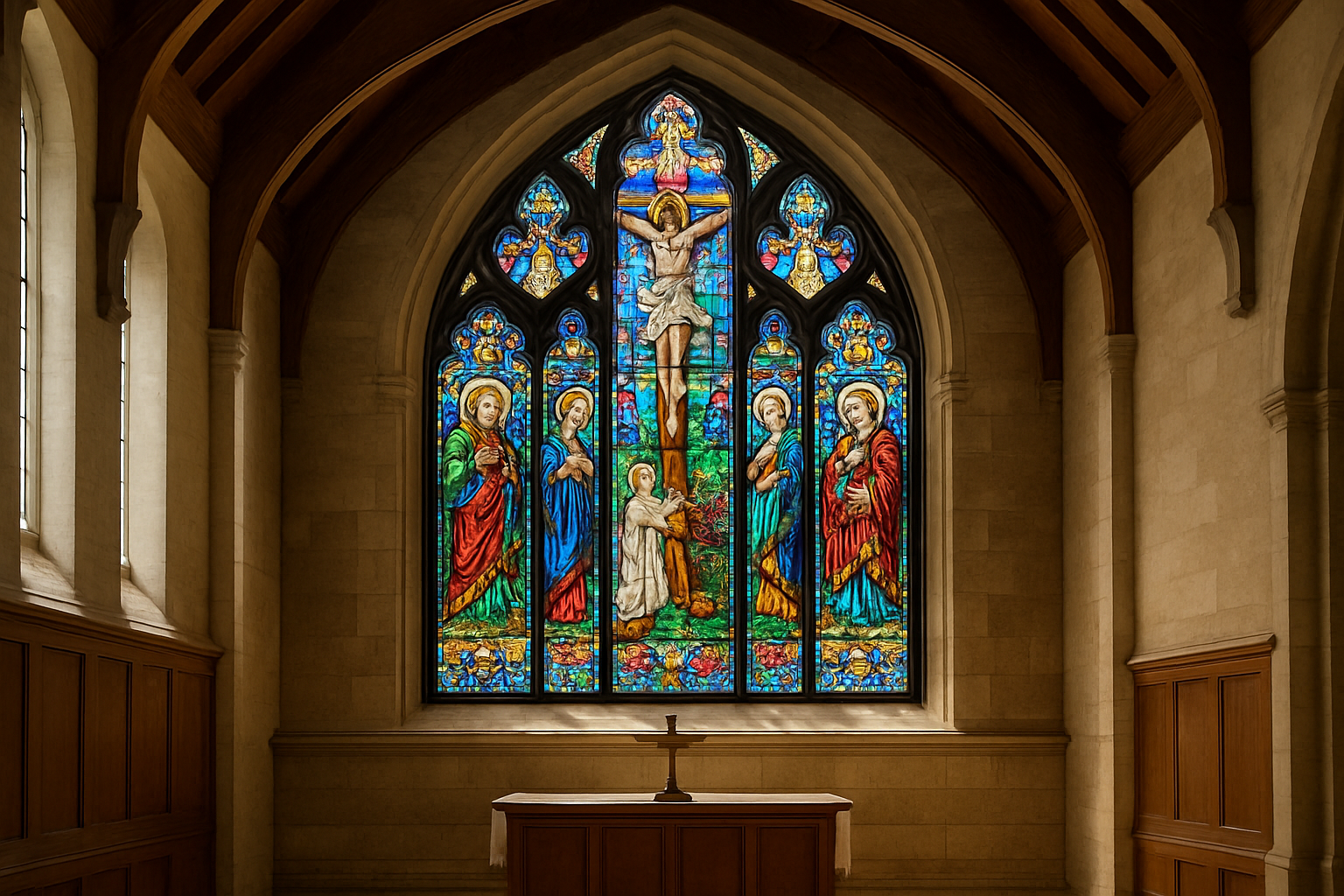
When light streams through a pane of colored glass, the interior of a church seems to tremble with a luminous hush, as if the very air is painted. This spectacle, common yet captivating, invites the observer to pause, to wonder why such fragile panels have endured centuries of devotion and destruction alike. Beneath the shimmering hues lies a story that intertwines craftsmanship, theology, and the human yearning for transcendence.
Origins and Early Development
The earliest precursors of church stained glass appeared in the Roman world, where small fragments of colored glass were set into windows to diffuse light in villa interiors. By the late antique period, artisans began embedding these shards into lead cames, creating simple geometric patterns that hinted at a nascent narrative purpose. Early Christian communities adopted this technique not merely for decoration, but as a means of communicating scripture to a largely illiterate congregation. The result was a nascent visual catechism, using light as ink and glass as parchment.
Medieval Evolution and the Language of Light
During the Romanesque and Gothic epochs, stained glass matured into an elaborate art form. Architects designed soaring arches and expansive rose windows specifically to accommodate large pictorial panels. The concept of “luminiferous” storytelling emerged: each pane acted as a conduit, converting daylight into biblical scenes. The famed windows of Chartres and Sainte‑Chapelle illustrate how the interplay of pigment, silica, and flux could produce a spectrum that felt almost sacramental. In these cathedrals, the glass became a “windowed sermon,” its radiance serving as a conduit for theological doctrine.
Symbolic Iconography: Colors, Figures, and Narrative
Every hue in a medieval pane carries a layered significance. Cobalt blue often denotes the Virgin Mary’s purity, while ruby red evokes the blood of martyrs. Gold, introduced via rare metallic oxides, symbolizes divine wisdom. Figures are arranged in a hierarchical tableau, with larger saints occupying prominent positions and smaller scenes relegated to marginal zones, echoing the order of celestial hierarchy. The inclusion ofgrisaille—uncolored glass painted with black pigment—served as a visual rest, allowing the eye to absorb the narrative in digestible intervals. Hagiographic cycles thus unfold across the nave, each panel a luminous stanza in an ongoing epic.
Techniques and Materials: From手工 to Modern Restoration
The creation of a stained glass window is a meticulous choreography of heat, chemistry, and manual dexterity. Raw materials—sand (silica), soda ash, and lime—are melted in a furnace to form a molten glass batch. By introducing metallic oxides such as copper carbonate or iron compounds, artisans achieve the desired color palette. Once cooled, the glass is cut into shapes, arranged on a cartoon (full‑scale drawing), and joined with lead cames that are then soldered at intersections. Occasionally, additional details are rendered using “cullet”—recycled glass fragments that are fused onto the surface to create texture. Modern restoration employs digital imaging to replicate lost cartoons, while ultraviolet‑stable adhesives secure fragile panels without compromising transparency.
Regional Variations and Notable Examples
While the core symbolism remains consistent, regional styles introduce distinct cultural fingerprints. In the British Isles, the use of “milled” glass and intricate lead lines yields a more delicate, lace‑like quality. French windows often showcase robust, saturated colors and dramatic figural proportions, reflecting the French penchant for monumental narrative. Germanic ateliers favor a more subdued palette, emphasizing the interplay of light and shadow—dubbed “licht‑und‑schatten”—to achieve a contemplative atmosphere. Notable specimens such as the Saint‑Étienne windows in Bourges, the Saint‑Denis apse, and the modern installation at the National Cathedral in Washington each illustrate how geographic context shapes both aesthetic choices and theological emphasis.
Preservation, Challenges, and Contemporary Relevance
The longevity of stained glass is perpetually threatened by environmental stressors, pollution, and structural vibration. Acidic rain can erode the surface, while thermal expansion can fracture lead cames. Preservationists now employ climate‑controlled housings and non‑intrusive support frames to mitigate damage. Community engagement programs often incorporate educational workshops that teach traditional glasspainting techniques, ensuring that the craft remains a living practice rather than a relic. Moreover, contemporary artists reinterpret the medium, blending traditional lead came with laser‑cut acrylics or employing LED backlighting to explore new dimensions of illumination. This fusion honors historic precedent while expanding the expressive vocabulary of light in sacred spaces.
Conclusion: The Enduring Fascination
The allure of church stained glass persists because it simultaneously addresses a common observation—light filtering through colored panes—and hints at deeper reasons for fascination: the interplay of material, faith, and narrative. Its evolution from modest Roman mosaics to soaring Gothic narratives bears testament to humanity’s desire to render the divine tangible. Through meticulous symbolism, innovative technique, and regional nuance, stained glass continues to transform architecture into a luminous scripture, inviting each passerby to experience a moment of reverence that transcends words.

