

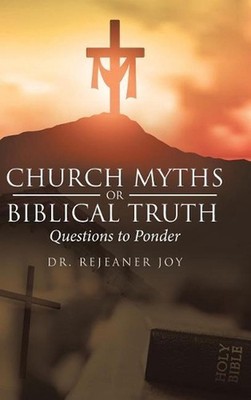
In the grand tapestry of faith, where threads of tradition weave alongside the whispers of scripture, it’s easy to mistake the echo for the voice. The church, a beacon of divine truth, has long been a vessel for both revelation and misconception. Myths, like shadows, stretch long and deceptive across the walls of doctrine, often obscuring the radiant core of biblical truth. But what if we peeled back the layers of these myths, not to dismantle faith, but to refine it? What if the questions we’ve been too timid to ask could illuminate the path to a deeper, more authentic understanding of God’s word? This journey isn’t about rebellion; it’s about reclaiming the raw, unfiltered essence of what it means to believe.
The Myth of the Perfect Church: A House of Fractured Saints
The first myth that crumbles under scrutiny is the romanticized image of the church as an immaculate sanctuary, untouched by human frailty. This illusion paints a picture of pews filled with flawless saints, their halos gleaming under stained glass. Yet, the Bible is a library of human stories—fraught with doubt, betrayal, and redemption. Peter’s denial, David’s lust, Paul’s persecution of Christians—these aren’t footnotes in a hagiography; they’re the very fabric of the church’s narrative. The church isn’t a museum of holiness; it’s a hospital for sinners, where the broken are mended by grace. To expect perfection is to misunderstand grace itself. The cracks in the walls of the church aren’t signs of failure; they’re the places where light gets in.
The Myth of Prosperity: Gold-Plated Promises or Gilded Lies?
Prosperity theology, with its glittering promises of wealth and health, has become a modern-day siren song, luring believers with the false promise that faith is a cosmic vending machine. But scripture paints a far grittier picture. Jesus, the ultimate embodiment of divine truth, owned no property, carried no gold, and warned that a camel would sooner pass through the eye of a needle than a rich man enter the kingdom of heaven. The apostles preached in rags, stoned in the streets, and sailed in leaky boats. Prosperity isn’t a divine right; it’s a stewardship. The myth isn’t that God desires abundance—it’s that abundance is measured in more than bank accounts. True wealth is found in love, joy, and the quiet triumph of a soul aligned with eternity.
The Myth of the One-Size-Fits-All God: A Divine Chameleon or a Fixed Star?
Culture has a way of shaping God in its own image, molding the Almighty into a deity who nods approvingly at our politics, our prejudices, and our personal ambitions. But the God of the Bible is not a reflection of our biases; He is the source of all truth, unchanging and unyielding. When we reduce Him to a caricature—a vengeful tyrant, a cosmic therapist, or a genie in a lamp—we strip Him of His majesty. The God who parted the Red Sea is the same God who wept over Jerusalem. The God who spoke through a burning bush is the same God who walked dusty roads with fishermen. To pigeonhole Him is to shrink the infinite into the finite. Faith isn’t about finding a God who fits our narrative; it’s about surrendering to a God who defines it.
The Myth of Silent Women: Voices Silenced or Truths Unheard?
History has often treated the voices of women in scripture as whispers in a patriarchal storm, their contributions drowned out by the clamor of male-dominated narratives. Yet, the Bible is alive with the echoes of women who shaped destiny—Deborah’s wisdom, Esther’s courage, Mary’s obedience. The myth that women were meant to be seen but not heard is a distortion, a cultural imposition rather than a biblical mandate. Jesus Himself shattered these conventions, engaging women in theological discourse, entrusting them with the first proclamation of His resurrection. The church’s failure to honor these voices isn’t a reflection of scripture; it’s a reflection of our own blind spots. The gospel isn’t a monologue; it’s a symphony, and every voice—regardless of gender—has a part to play.
The Myth of the End Times: Doomsday or Dawn?
Apocalyptic literature has a way of turning prophecy into a carnival of fear, where the end times are less about redemption and more about a divine horror show. But the book of Revelation, for all its vivid imagery, is ultimately a book of hope. The lamb who was slain is the lion of Judah. The dragon is defeated by the blood of the Lamb. The new Jerusalem descends not in fire, but in the gentle light of God’s presence. The myth isn’t that the end is coming; it’s that it’s a tragedy. In reality, the end is the beginning—the culmination of a story where every tear is wiped away, and every sorrow is swallowed by joy. Fear sells books; faith builds kingdoms.
The Myth of the Unchanging Church: Fossilized Tradition or Living Organism?
Tradition is a river, not a reservoir. It flows, it changes, it adapts—but its essence remains. The myth that the church must remain frozen in time, a relic of the past, is a death sentence for its vitality. The early church didn’t cling to rigid structures; it spread like wildfire, defying cultural norms and political powers. The Reformation wasn’t a betrayal of tradition; it was a return to its purest form. The church’s greatest moments have always been when it dared to evolve—not in doctrine, but in practice. To resist change is to resist the Holy Spirit, who moves like the wind, unpredictable and relentless. The church isn’t a museum piece; it’s a living, breathing body, meant to grow, to heal, and to transform.
The myths we’ve clung to for generations are not the foundation of our faith; they are the scaffolding we’ve mistaken for the structure itself. To question them isn’t to dismantle faith—it’s to purify it. The Bible isn’t a rulebook; it’s a love letter, written in the blood of a Savior who died to set us free. And freedom, true freedom, begins when we stop worshiping the shadows and start chasing the light.

