

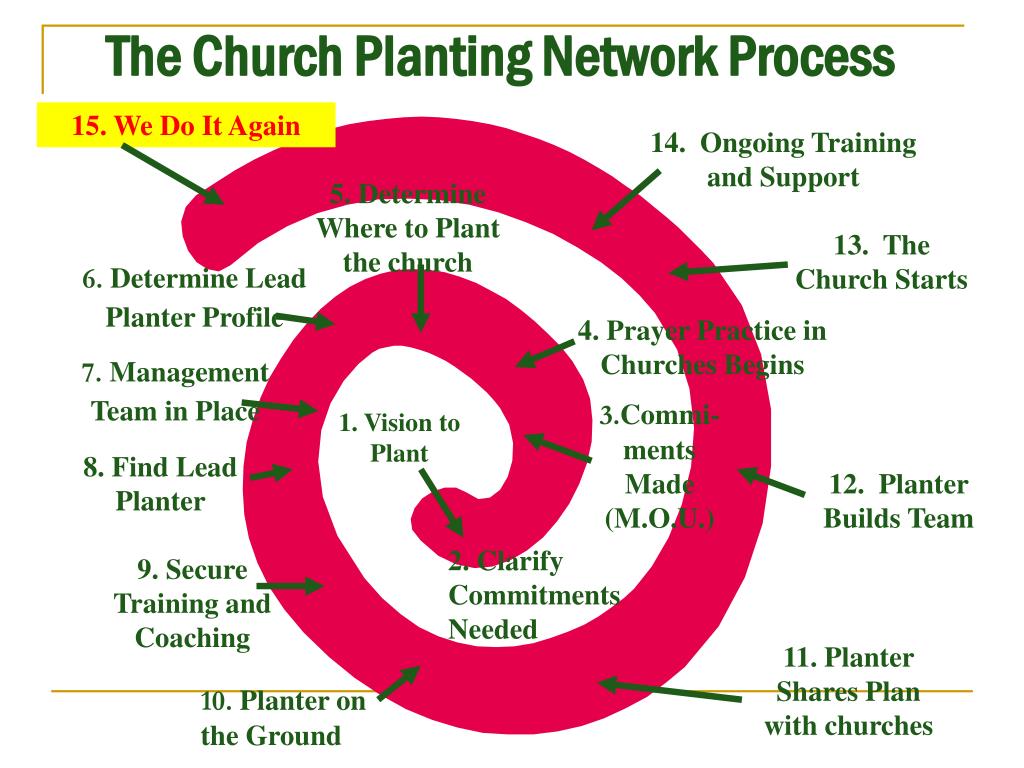
In a world that often feels like a concrete labyrinth, church planting networks rise like a subterranean mycelium—threading through neighborhoods, unnoticed yet profoundly connective, feeding the soil of faith with vital nutrients. This living lattice does more than spawn congregations; it cultivates leaders, shares resources, and creates a resilient ecosystem where every node thrives on mutual support. Imagine a forest floor where mycelial strands whisper wisdom from one mushroom to another, and you begin to glimpse the promise of a networked church planting movement.
Seeding a Vision: The Mycelial Metaphor
Biologists have long marveled at mycelium’s ability to decompose organic matter and shuttle nutrients across vast distances. In the same vein, a church planting network operates as an invisible, nutrient‑rich web that distributes spiritual capital, leadership know‑how, and missional momentum. When a new congregation sprouts, it draws from this underground network, receiving not just doctrine but the relational substrate that sustains growth. The metaphor invites planters to see themselves not as isolated pioneers but as part of a larger organism, each contribution vital to the whole.
By framing planting as a mycelial process, the network underscores the principle of interdependence. Just as a single filament cannot sustain a forest, a solitary church cannot sustain a movement. The image also emphasizes the organic, adaptive nature of growth—networks can re‑route, prune, and regenerate in response to shifting terrain.
Architectural Foundations of Networked Planting
The architecture of a church planting network is built on three pillars: nodes, connectors, and protocols. Nodes are individual congregations or planting teams, each a locus of worship, mission, and community life. Connectors are the relational bridges—mentors, coaches, and cohort leaders—who shuttle information, encouragement, and accountability. Protocols are the shared covenants—vision statements, doctrinal anchors, and evaluation rubrics—that ensure coherence without stifling creativity.
Polycentric governance allows each node a degree of autonomy while remaining tethered to the overarching mission. This balance cultivates a sense of ownership and empowerment, preventing the network from becoming a monolithic hierarchy. The connective tissue is deliberately designed to be porous, inviting fresh talent and novel ideas while maintaining doctrinal fidelity.
Training Ecosystems: Forming Catalytic Leaders
Leadership development within the network is not a static curriculum but an evolving ecosystem of formation. Prospective planters enroll in a discipleship matrix that blends theological instruction, practical apprenticeship, and experiential immersion. Courses on missional praxis, conflict resolution, and cultural exegesis are delivered through cohort-based learning, allowing participants to wrestle with real‑world challenges alongside seasoned practitioners.
The training paradigm adopts a catalytic approach: rather than simply transferring knowledge, it ignites a chain reaction of confidence and competence. Participants are taught to identify latent potentials within their communities, mobilize volunteers, and discern the subtle movements of the Holy Spirit in everyday contexts. By the time a trainee launches a new congregation, they have already practiced budgeting, pastoral counseling, and community organizing within a supportive sandbox.
Mentorship as Mycelial Thread
Mentorship functions as the mycelial thread weaving together disparate nodes. A seasoned pastor, affectionately termed a “root guide,” walks alongside a rookie planter for two to three years, offering wisdom that textbooks cannot capture. This relationship is reciprocal: the mentor gains fresh missional insights, while the mentee inherits a reservoir of relational capital.
The mentorship cadence is rhythmically paced—monthly face‑to‑face dialogues, quarterly vision retreats, and weekly prayer check‑ins. Structured feedback loops ensure that both parties continually recalibrate their goals, fostering a culture of humility and openness. As the thread extends, it spawns secondary filaments: peer cohorts, prayer chains, and collaborative mission projects that further entrench the network’s resilience.
Resource Synergy: Shared Liturgy and Praxis
Resource sharing in a mycelial network is akin to nutrient exchange across hyphae. Congregations pool liturgical resources—worship guides, children’s curricula, evangelistic tracts—creating a commons that reduces duplication and amplifies impact. Digital platforms serve as the “spore banks,” storing templates, best‑practice videos, and case studies that any node can access on demand.

