

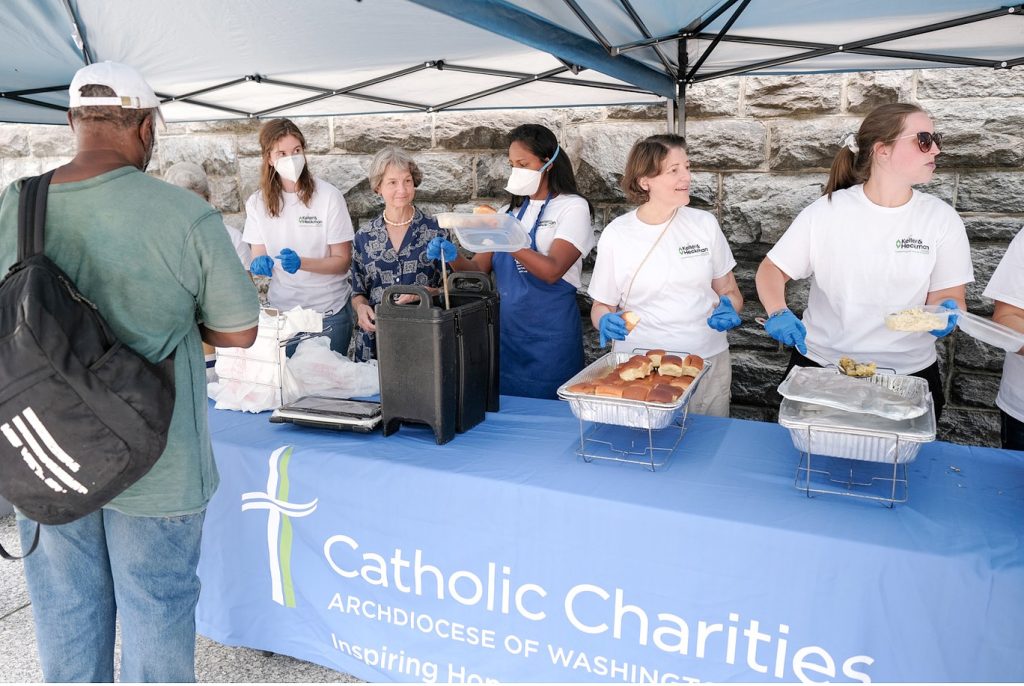
In the grand symphony of faith, where hymns rise like incense and pews hum with whispered prayers, there exists a lesser-known yet profoundly resonant movement—the Church Serving Campaigns. These are not mere events; they are sacred convocations of compassion, where the timeless call to “love thy neighbor” is transformed into tangible acts of service. They are the heartbeat of the modern Church, a pulsating rhythm that syncs the faithful with the rhythm of the world’s needs. Volunteers, the unsung heroes of these campaigns, are not just participants; they are the artisans of mercy, sculpting hope from the raw marble of human suffering. This is the story of how the Church mobilizes—not just its congregations, but its very soul—to serve with unwavering purpose.
The Church as a Living Organism: A Metaphor for Service
Imagine the Church not as a static edifice of stone and stained glass, but as a living organism—a vast, interconnected network of veins and arteries, pulsing with the lifeblood of service. Each volunteer is a cell, each campaign a heartbeat, and every act of kindness a synaptic spark that ignites a chain reaction of grace. This metaphor is not poetic fancy; it is the essence of how the Church operates in the world. When a parish launches a food drive, it is not merely distributing meals; it is feeding the collective body of Christ, ensuring no limb—no person—wastes away in hunger. The Church, in this light, is not a place to visit on Sundays, but a force to be reckoned with every day.
The beauty of this metaphor lies in its inclusivity. Whether you are a deacon arranging logistics, a parishioner baking casseroles, or a youth group painting a community center, you are vital. The Church does not demand perfection; it invites participation. In this way, service becomes a sacrament of unity, where the smallest act—even a smile—echoes through the halls of heaven.
The Alchemy of Mobilization: Turning Faith into Action
Mobilizing volunteers is not a logistical puzzle; it is an alchemical process, transforming the base metal of good intentions into the gold of tangible impact. The Church, as the ultimate alchemist, wields three key elements: vision, invitation, and infrastructure. The vision is the philosopher’s stone—a clear, compelling purpose that ignites the imagination. When a campaign’s mission is articulated with clarity—whether it’s rebuilding homes after a disaster or mentoring at-risk youth—it becomes a lodestar, guiding the faithful toward meaningful engagement.
The invitation, then, is the crucible in which hesitation melts away. It is not enough to announce a need; the Church must craft an invitation that resonates with the heart. This is where storytelling becomes a sacred tool. A single testimonial from a beneficiary, a poignant photograph of a family receiving aid, or a sermon that ties service to scripture can stir souls to action. The most effective campaigns do not guilt-trip; they inspire awe. They make volunteers feel not like cogs in a machine, but like co-creators of a divine narrative.
Infrastructure, the final element, is the scaffolding that holds the vision aloft. From sign-up sheets to training sessions, from supply drives to follow-up reports, the Church must provide the tools for success. Yet even here, the metaphor of alchemy holds: the tools are not the magic; they are the vessels through which the Holy Spirit works. A well-organized campaign is like a crucible—it contains the heat of passion and the pressure of purpose, forging bonds of community that outlast the event itself.
The Volunteer’s Pilgrimage: From Spectator to Servant
Every volunteer’s journey begins with a single step—a hesitant hand raised in a pew, a name scribbled on a sign-up sheet, or a quiet prayer asking, “What can I do?” This is the pilgrimage of the servant, a path that winds from doubt to devotion, from anonymity to belonging. The Church, as the guide on this journey, must recognize that the first act of service is often the hardest. It is here that the most profound transformations occur—not in the grand gestures, but in the small, courageous yeses.
Consider the reluctant teenager dragged to a soup kitchen by their parents. On the surface, it may seem like a chore, but within hours, something shifts. The aroma of simmering soup, the laughter of elderly patrons, the gratitude in a stranger’s eyes—these are the sacraments of the ordinary. The volunteer leaves not just with a full stomach, but with a fuller heart. They have glimpsed the divine in the mundane, and that glimpse changes everything.
This pilgrimage is not linear. There are setbacks—burnout, disillusionment, the creeping fear that one’s efforts are insignificant. The Church must walk alongside its volunteers, offering not just tasks but meaning. A well-timed word of encouragement, a moment of shared reflection, or even a simple “thank you” can reignite the flame. For the volunteer, service is not a destination but a way of life, a rhythm that syncs with the heartbeat of the Church itself.
Campaigns as Catalysts: Igniting Ripples of Change
A single Church Serving Campaign is not an island; it is a pebble cast into the pond of the world, sending ripples of change in every direction. The most effective campaigns are those that recognize their role as catalysts—sparking not just immediate aid, but long-term transformation. This is where the Church’s unique appeal shines: it does not merely bandage wounds; it teaches people to heal themselves.
Take, for example, a literacy program launched by a parish. At first glance, it may seem like a simple act of tutoring children. But within months, the ripple effects become visible. Parents learn alongside their kids, strengthening family bonds. The parish, in turn, becomes a hub of learning, attracting new members and fostering a culture of growth. The campaign does not end when the final report is filed; it lives on in the lives it has touched.
This is the power of campaigns that think beyond the event. They are not just about filling a need for a day; they are about building a legacy of service. The Church, in this role, is not just a provider of aid but a cultivator of resilience. It teaches that service is not a sprint but a marathon—a lifelong commitment to seeing Christ in every face and serving Him in every need.
The Unseen Threads: How Service Weaves Community
In a world that often feels fragmented, the Church Serving Campaigns are the unseen threads that weave disparate lives into a tapestry of community. They are the glue that binds strangers into siblings, turning “us” and “them” into a single, sacred “we.” This is the unique appeal of Church service: it does not just meet needs; it creates belonging.
Consider the elderly widow who, after her husband’s passing, finds purpose in knitting blankets for the homeless. Or the college student who, after a mission trip, returns home with a newfound passion for social justice. These are not isolated stories; they are threads in a larger narrative of connection. The Church, through its campaigns, becomes a loom where individual lives are woven into a collective story of hope.
This sense of community is not accidental; it is intentional. The Church must design campaigns that foster interaction—not just between volunteers and beneficiaries, but among the volunteers themselves. A shared meal after a workday, a group reflection on the day’s challenges, or even a group chat where stories are exchanged—these are the moments that transform a campaign into a family. In this family, no one is an outsider. Everyone has a role, a voice, and a place.
The Eternal Echo: How Service Resonates Beyond Time
The most profound campaigns are those whose impact echoes into eternity. They are not measured in hours or dollars, but in the lives they touch and the souls they transform. This is the eternal dimension of Church service—the knowledge that every act of love, no matter how small, resonates in the heart of God.
Think of the young mother who, years after volunteering at a food pantry, teaches her own children the value of service. Or the homeless man who, after receiving a meal, finds faith and later becomes a volunteer himself. These are the echoes that ripple through generations, the legacy of a Church that does not just serve, but loves.
The Church’s serving campaigns, then, are not just programs; they are prayers made flesh. They are the tangible expression of the Great Commission, where faith is not confined to the pews but unleashed into the world. And in this unleashing, the Church finds its truest purpose—not as a building, but as a movement. A movement of hands that feed, hearts that heal, and souls that serve.

