

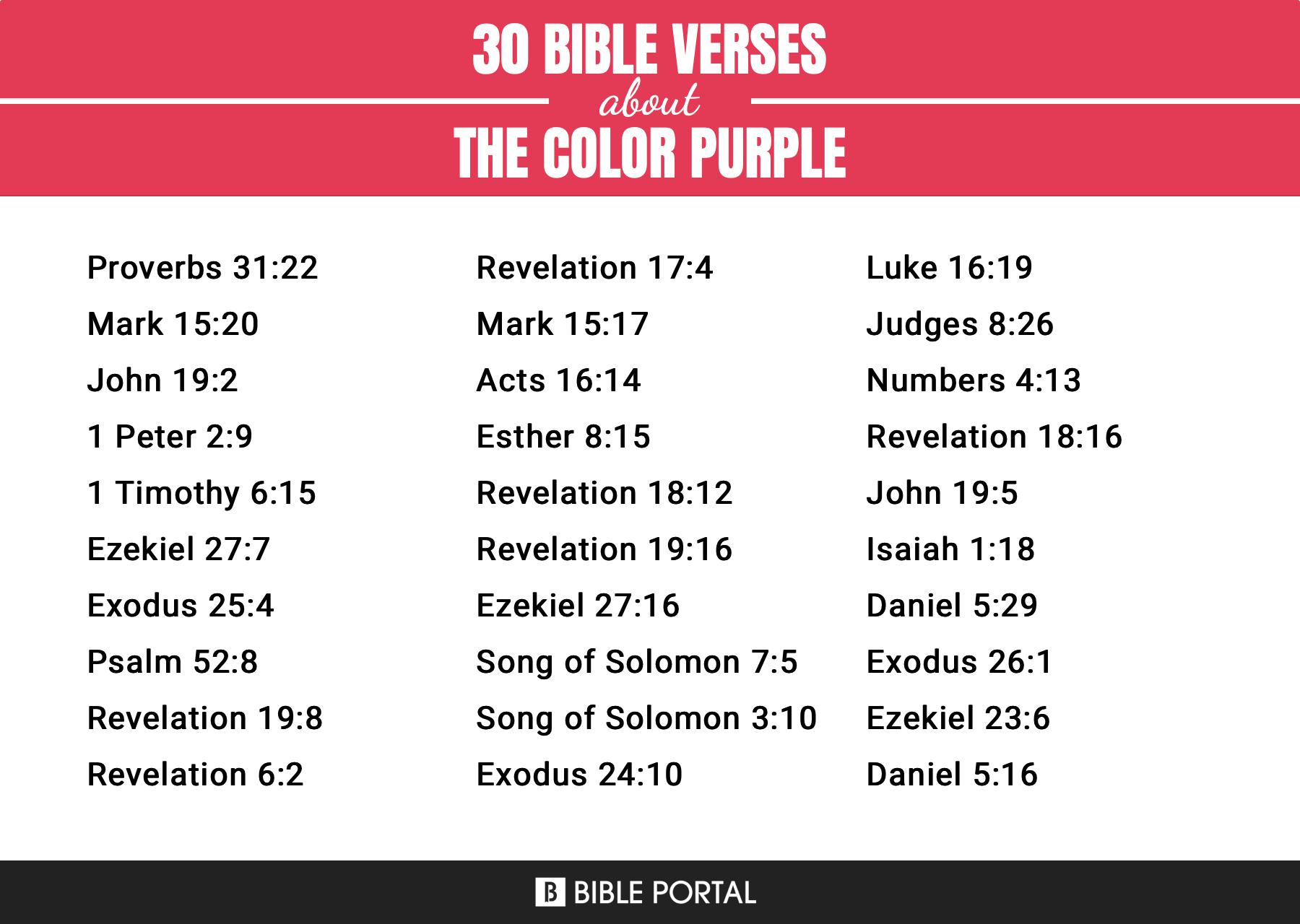
The color purple has been steeped in rich symbolism throughout history, evoking a multitude of meanings that resonate deeply within spiritual contexts. In biblical literature, this hue emerges not merely as a color but as a complex symbol replete with multifaceted significance. Its appearances in sacred texts are deliberate and profound, reflecting themes of royalty, divinity, and transcendent beauty. This article endeavors to elucidate the various layers of meaning the color purple carries within the Bible, highlighting its impact on spiritual understanding and faith.
1. Royalty and Authority
One of the most prominent representations of purple in the Bible corresponds with royalty. The fabric dyed purple was historically rare, due to the labor-intensive process of extracting dye from mollusks. As a result, purple became synonymous with nobility and affluence. In the Old Testament, purple adorns the garments of kings and those in positions of authority. For instance, the high priest’s robe described in Exodus 28 included purple among its colors, signifying the divine appointment of leadership.
2. Holiness and Divinity
The color purple extends beyond earthly authority to encapsulate the sacred. In the construction of the tabernacle, elements such as curtains and veils adorned in purple accentuated the sanctity of the space where God’s presence dwelled. This connection illustrates that purple is not just a color associated with human power; it also signifies the divine authority and the holiness of God. The richness of purple serves as a reminder of the gravity of worship and the reverence due to the Creator.
3. Suffering and Sacrifice
In a more somber vein, the color purple also represents suffering and sacrifice. Jesus Christ, during the final hours of his life, was garbed in a purple robe as a mockery of his claim to kingship (Mark 15:17). This act, while intended to belittle, inadvertently highlighted the profound truth of his sacrificial love for humanity. The vividness of purple in this context signifies the weight of agony intertwined with the majesty of ultimate sacrifice, creating a poignant visual juxtaposition.
4. Redemption and Transformation
Purple also symbolizes redemption and the transformative journey of faith. The biblical narrative is abundant with instances where individuals transition from despair to hope, darkness to light. The color purple becomes emblematic of this metamorphosis; it serves as a reminder of God’s capacity to rejuvenate the weary soul. Consider the parable of the Prodigal Son, where the father adorns his returning son in the finest garments, likely imbued with rich colors, signifying acceptance and restoration. This act conveys the depth of divine love, illustrating that no one is beyond redemption.
5. Spiritual Abundance
In the context of spiritual abundance, the color purple is often linked with the prosperity of faith. Proverbs speaks of wisdom as more precious than rubies, intimating that true wealth lies not in material possessions but in a depth of understanding and spiritual depth. Purple can be seen as a visual representation of this wealth: rich and vibrant, highlighting that the treasures of faith are far superior to worldly riches. This notion encourages believers to seek after spiritual fullness, rather than mere temporal success.
6. Community and Fellowship
Additionally, the color purple has implications for community and fellowship. In Revelation, the New Jerusalem, a symbol of the ultimate gathering of God’s people, is described with various precious stones and colors, of which purple is a part. This signifies unity among believers, who, regardless of their earthly status, are united in Christ. Thus, purple emerges as a color of inclusion and harmony, fostering a sense of belonging among the faithful.
7. Beauty and Aesthetics
The aesthetic allure of purple encapsulates spiritual beauty that transcends the mere visual. It invokes feelings of admiration and awe, prompting worship and reverence. The Song of Solomon alludes to the delightful beauty of love and relationships, often using colors, including purple, to accentuate poetic imagery. Here, the color becomes a metaphor for divine beauty within creation, urging readers to contemplate the artistry of God’s work in the world, enhancing an appreciation for both the physical and spiritual realms.
8. The Role of Purple in Worship
In modern contexts, the color purple remains vibrant within ecclesiastical settings. During liturgical seasons such as Lent and Advent, purple symbolizes penance and spiritual preparation. Through this cyclical observance, congregants are reminded of the themes of humility, reflection, and anticipation of divine grace. The use of purple as a liturgical color enriches the worship experience, allowing the faithful to immerse themselves in the deeper meanings of their faith.
In summary, the color purple envelops myriad meanings within the Biblical narrative, serving as a vessel for themes of royalty, divinity, suffering, transformation, and community, among others. It signifies both the grandeur of God’s kingdom and the intimate relationship shared between creator and creation. Through its vibrant hues, purple beckons us to explore our spiritual depths, fostering a richer understanding of our faith and the beauty inherent in God’s design. Whether representing authority or compassion, the color purple resonates profoundly, inviting reflection on the sacred journey of life, as encapsulated in the scriptures.

