

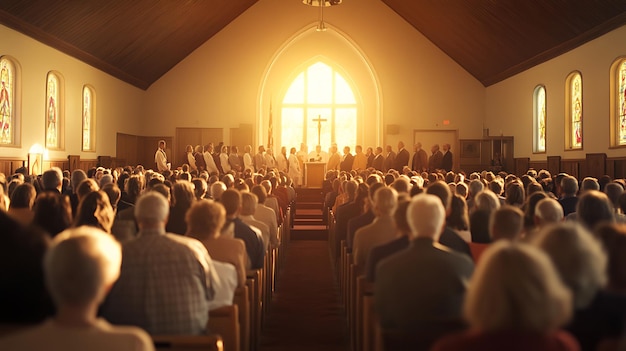
There’s something almost magnetic about a congregation united in prayer—when hearts beat as one, and faith becomes a visible force. Yet, too often, church campaigns feel like top-down directives rather than communal movements of the spirit. The challenge isn’t just to run a miracles campaign; it’s to ignite a shared hunger for the supernatural, where every member becomes both witness and participant. This isn’t about passive attendance or perfunctory involvement. It’s about transforming spectators into storytellers, skeptics into seekers, and the lukewarm into firebrands of faith.
The Power of Shared Expectation: Why Miracles Campaigns Often Fall Short
Most miracles campaigns begin with noble intentions: a season of prayer, a series of testimonies, perhaps a guest speaker with a compelling narrative. Yet, the most common observation is that enthusiasm wanes not because of divine absence, but because of human disengagement. The congregation listens, nods, and then returns to routine—unchanged, unchallenged, untouched. Why? Because miracles campaigns are often framed as events rather than movements. They’re scheduled, not cultivated. They’re announced, not anticipated.
The deeper issue lies in the disconnect between pulpit and pew. When leaders craft campaigns in isolation, they risk creating spectacles that dazzle momentarily but fail to seep into the soil of daily life. Miracles aren’t meant to be observed from a distance; they’re meant to be experienced collectively, where doubt is aired, faith is confessed, and breakthroughs are celebrated as communal victories. The fascination with miracles isn’t just about the supernatural—it’s about the longing to belong to something greater than oneself. And that belonging is forged not in pews, but in shared stories.
From Spectators to Storytellers: Redefining Congregational Roles
Imagine a church where the ushers aren’t just guides to empty seats, but gatekeepers of testimonies. Where the children’s ministry doesn’t just teach Bible stories, but collects modern-day miracles from the youngest voices. Where the elderly aren’t sidelined as spectators, but commissioned as living archives of answered prayers. This is the radical redefinition needed: every member, regardless of age or tenure, becomes a storyteller. Not just of past glories, but of present-day encounters with the divine.
How? Start small. During worship, pause not just to sing, but to invite spontaneous sharing. “Who here has seen God move in the last week?” Let the room fill with voices—some trembling, some triumphant. Create a “Miracles Board” in the foyer, where sticky notes bear witness to healings, provision, and unexpected breakthroughs. Let the congregation see that miracles aren’t relics of antiquity, but threads woven into the fabric of today. When people realize their stories matter, they stop being passive recipients and become active participants in the campaign’s momentum.
The Role of Testimonies: Why Personal Stories Outperform Sermons
There’s a reason why Jesus so often said, “Go and tell what you have seen.” Testimonies aren’t just anecdotes; they’re the DNA of faith. They bypass intellectual resistance and lodge directly in the heart. A sermon can explain the theology of miracles; a testimony can ignite the belief that miracles still happen. Yet, too many campaigns rely on polished, third-party stories rather than the raw, unfiltered accounts of the congregation itself.
Challenge the pulpit to step aside occasionally. Invite a young mother to share how she found $200 in an unexpected envelope when she was about to give up hope. Ask a retiree to recount the moment his doctor declared him cancer-free against all odds. Let the congregation hear not just the outcome, but the struggle—the doubt, the prayer, the sleepless nights. These stories do more than inspire; they dismantle the lie that miracles are reserved for the spiritual elite. They prove that God is not a distant observer, but a present helper, and that His intervention is as close as the next heartbeat.
Interactive Prayer: Moving Beyond “Amen” to Active Participation
Prayer meetings in many churches resemble a polite exchange of pleasantries—heads bowed, voices murmured, and then… silence. But what if prayer became a laboratory of the supernatural? What if the congregation wasn’t just praying for miracles, but actively seeking them together? This requires a shift from passive supplication to dynamic collaboration with the Holy Spirit.
Introduce “Prayer Labs” where small groups tackle specific needs—marriages in crisis, financial breakthroughs, healing for chronic illness. Provide guided prompts: “Where have you seen God move before?” “What scripture has anchored your faith during this trial?” Let the room become a symphony of voices, each contributing a note to the melody of breakthrough. And don’t just pray once—create a rhythm. Follow up weekly, not with guilt, but with curiosity. “Last week, we prayed for healing. How is your body today?” This turns prayer from a ritual into a relationship, where faith is not just declared but demonstrated.
The Psychology of Belonging: Why Shared Struggle Deepens Faith
There’s a quiet revolution happening in churches that understand the power of shared struggle. When a congregation collectively fasts, prays, and weeps over a crisis—whether personal or communal—the bonds forged are unbreakable. Miracles campaigns aren’t just about seeing signs; they’re about becoming a family that refuses to let go of hope. This is where the deeper fascination lies: not in the miracle itself, but in the transformation it births within the community.
Consider the early church, where believers “devoted themselves to the apostles’ teaching and to fellowship, to the breaking of bread and to prayer” (Acts 2:42). Their unity wasn’t circumstantial; it was cultivated through shared sacrifice and mutual encouragement. Apply this principle today. When one member’s breakthrough is celebrated as the victory of all, the entire body is strengthened. When one person’s doubt is met with compassion rather than judgment, the church becomes a safe space for raw, authentic faith. This is how miracles campaigns transcend logistics—they become incubators for a faith that is alive, communal, and contagious.
From Campaign to Culture: Embedding Miracles in the Church’s DNA
The ultimate goal isn’t to run a successful campaign; it’s to cultivate a culture where miracles are expected, not exotic. This requires more than a six-week series—it demands a recalibration of the church’s rhythm. Miracles shouldn’t be the exception; they should be the norm around which everything else revolves.
Start by integrating miracle-focused language into everyday life. Replace “I hope things get better” with “I believe God is about to do something.” Swap “Let’s pray about it” for “Let’s expect God to move.” Train leaders to model this expectancy, not just in big meetings, but in casual conversations. When a staff member casually mentions, “I’m praying for a parking spot today,” they’re not being flippant—they’re normalizing faith in the mundane. Over time, this shifts the congregation’s posture from passive observers to active participants in a supernatural story.
The fascination with miracles isn’t just about the desire to see the impossible—it’s about the longing to belong to a story that’s still being written. And when a church becomes a place where that story is lived out daily, the campaign isn’t just a season; it’s a legacy.

