

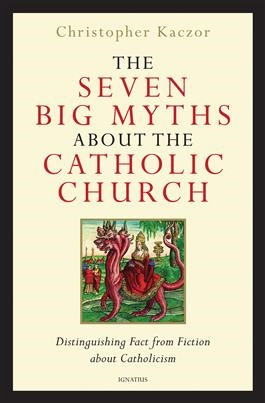
The Catholic Church, with its two-thousand-year history, stands as both a beacon of spiritual guidance and a lightning rod for controversy. Its towering cathedrals and whispered confessions contrast sharply with headlines decrying abuse scandals and doctrinal rigidity. This paradox isn’t accidental—it’s a reflection of humanity’s eternal dance between reverence and rebellion, between the sacred and the scrutinized. The myths surrounding the Church aren’t mere misunderstandings; they’re cultural artifacts, shaped by centuries of politics, propaganda, and personal prejudice. To unravel them is to peer into the heart of what it means to believe, to doubt, and to seek meaning in an often chaotic world.
The Myth of Unchanging Dogma: Evolution or Erosion?
Critics often paint the Church’s teachings as fossilized relics, immune to the tides of progress. Yet nothing could be further from the truth. The Catholic Church has weathered empires, scientific revolutions, and cultural upheavals not by resisting change, but by engaging with it—sometimes reluctantly, sometimes prophetically. The Second Vatican Council (1962–65) wasn’t a surrender to modernity; it was a deliberate act of translation, rendering ancient truths into a language the modern world could hear. The Church’s doctrines on human dignity, social justice, and environmental stewardship have evolved in their articulation, even as their core principles remain unaltered. This isn’t erosion—it’s a dialogue between eternity and temporality, a reminder that truth need not be brittle to be unshakable.
The Scandal of Silence: Abuse, Cover-Up, and Redemption
No myth cuts deeper than the belief that the Church’s hierarchy has been complicit in systemic abuse. The revelations of clergy misconduct have been a gut-wrenching betrayal, not just of victims, but of the Church’s own moral claims. Yet to reduce this crisis to a single narrative—of corruption without redemption—is to ignore the arduous path of reckoning the Church has undertaken. Diocesan bankruptcies, laicization of offenders, and the creation of victim assistance programs mark a painful but necessary reckoning. The myth of unassailable purity has been shattered, but so too has the illusion that any institution, no matter how sacred, is exempt from human frailty. The Church’s response—flawed, fragmented, but undeniably transformative—reveals a truth often overlooked: redemption is not the absence of failure, but the courage to confront it.
The Wealth Paradox: Opulence vs. Charity
Images of gold-encrusted altars and Vatican palaces fuel accusations of hypocrisy: how can a Church preaching poverty amass such riches? The answer lies not in contradiction, but in paradox. The Vatican’s art collections and real estate aren’t mere displays of power; they are repositories of cultural heritage, preserved for future generations. More critically, the Church’s wealth is not hoarded—it is mobilized. Catholic Charities alone serves millions annually, providing food, shelter, and healthcare without regard to creed. The paradox dissolves when one recognizes that the Church’s “treasures” are not ends in themselves, but tools for a mission far greater than material accumulation. The real scandal isn’t wealth—it’s the failure to wield it with wisdom and generosity.
The Gender Divide: Patriarchy or Prophetic Vision?
Feminist critiques of the Church often frame its male-dominated hierarchy as proof of institutional misogyny. Yet this overlooks the Church’s paradoxical role as a sanctuary for women in eras when their voices were otherwise silenced. Medieval convents offered women unprecedented education and autonomy. Female saints like Hildegard of Bingen and Teresa of Ávila reshaped theology while barred from priestly ordination. The Church’s teachings on the dignity of women—rooted in the radical idea that a woman, Mary, bore God incarnate—challenged ancient patriarchal norms. The tension between exclusion and elevation isn’t a flaw; it’s a mirror held up to society’s own contradictions. The Church’s struggle with gender reflects humanity’s broader wrestling with equality: progress is uneven, but the ideal endures.
The Science Wars: Faith vs. Reason in the Modern Age
From Galileo’s trial to debates over evolution, the Church has been caricatured as an enemy of science. Yet this myth ignores the Church’s foundational role in preserving and advancing knowledge. Medieval monasteries were bastions of scholarship, copying manuscripts that preserved classical learning. Jesuit astronomers mapped the stars while Galileo was still a student. The Church’s opposition to certain scientific theories often stemmed not from anti-intellectualism, but from a cautionary instinct: not all progress is benign. The Church’s caution on issues like human cloning or artificial intelligence isn’t Luddism—it’s a plea for ethics to guide technology. The real conflict isn’t between faith and reason, but between a utilitarian view of science and one that sees it as a tool for human flourishing.
The Political Puppet: From Constantine to Culture Wars
Conspiracy theories abound about the Church’s shadowy influence over governments, from medieval monarchs to modern lobbying. Yet this myth conflates institutional power with moral authority. The Church’s political entanglements have often been its greatest failures—witness the Crusades, the Inquisition, or the support of oppressive regimes. But these aren’t evidence of a grand design; they’re proof that even the holiest institutions are susceptible to the corrupting lure of power. The Church’s true political legacy isn’t in controlling nations, but in shaping cultures—through art, education, and the quiet persistence of its moral vision. The myth of the Church as a puppet master ignores the far more compelling truth: it has been, and remains, a reluctant participant in the messy theater of human governance.
The Future of Myth: Why the Fascination Endures
The persistence of these myths reveals something profound about the human condition. The Church, with its rituals and relics, its saints and sinners, offers a narrative that is at once ancient and urgently relevant. It is a story of fallibility and forgiveness, of grandeur and grit. In an age of algorithmic certainty and fleeting digital identities, the Church’s contradictions feel strangely comforting. It reminds us that truth is not a spreadsheet, but a journey; that holiness is not the absence of struggle, but the courage to rise after falling. The myths will persist, because they are not just about the Church—they are about us. They are the stories we tell ourselves when we grapple with the unanswerable: What does it mean to be human? What does it mean to seek the divine? And how do we find our way when the path is shrouded in myth and mystery?

