

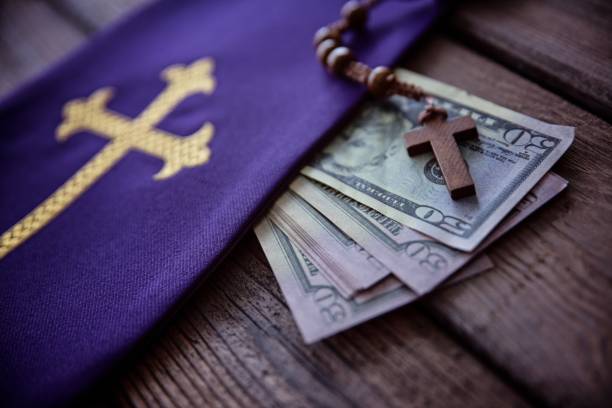
The relationship between church and money is as old as faith itself—a paradox woven into the fabric of human spirituality. For centuries, these two forces have danced in an eternal waltz, sometimes harmonious, sometimes discordant, but never truly apart. Money, in its cold metallic sheen, has been both a tool of divine purpose and a tempter of mortal souls. The church, with its soaring spires and whispered prayers, has sought to sanctify wealth while warning against its corrosive power. This is not merely a tale of tithes and offerings; it is a saga of human longing, moral struggle, and the eternal quest for meaning in a world where gold and grace often collide.
The Sacred Ledger: How Churches Have Embraced Wealth as a Divine Instrument
From the gilded domes of St. Peter’s Basilica to the humble collection plates passed in small-town chapels, money has always been a silent participant in the liturgy of faith. The church, in its wisdom—or perhaps its necessity—has long recognized that wealth, when wielded with purpose, can become an extension of divine will. Cathedrals rise not from thin air but from the alchemy of donations, bequests, and the tireless labor of those who believe that beauty on earth is a reflection of heaven’s glory.
Yet this embrace of affluence is not without its contradictions. The early Christians, who preached radical poverty, would have recoiled at the sight of a Vatican bank or a televangelist’s private jet. But history is a relentless sculptor, reshaping ideals into institutions. The church’s relationship with money evolved from austerity to accumulation, from the humility of the apostles to the opulence of Renaissance popes. Today, it stands as a paradox: a spiritual powerhouse that must navigate the treacherous waters of finance, where every dollar spent on charity is a dollar not spent on marble altars.
The Tithe’s Dual Nature: A Covenant or a Transaction?
The tithe—a tenth of one’s income—is one of the most contentious rituals in religious practice. Is it a sacred vow, a covenant between believer and deity? Or is it, in its quietest moments, a transaction, a quid pro quo where faith is measured in dollars and cents? The answer lies in the heart of the giver. For some, the tithe is an act of devotion, a tangible way to participate in the divine economy. For others, it is a burden, a reminder that even the holiest of acts can feel like a financial transaction.
Consider the farmer who drops a portion of his harvest into the collection basket, his calloused hands trembling not from labor but from the weight of his offering. Or the single mother who writes a check she can barely afford, believing that her sacrifice will unlock blessings beyond measure. The tithe is a mirror, reflecting the giver’s soul—sometimes radiant with generosity, sometimes clouded by doubt. It is the first whisper of a deeper question: Can devotion be quantified, or is it, like the wind, invisible yet undeniable?
The Preacher’s Pulpit and the Power of Persuasion
Few figures command the intersection of faith and finance as powerfully as the televangelist, whose voice booms across airwaves and screens, promising prosperity to those who dare to believe. The prosperity gospel—a doctrine that frames wealth as a sign of divine favor—has reshaped the spiritual landscape, turning prayer into a financial investment and faith into a get-rich-quick scheme. Critics decry it as heresy, a perversion of scripture where God’s blessings are measured in stock portfolios and luxury cars.
Yet the allure is undeniable. In a world where financial security is a fleeting dream, the promise of divine favor feels like a lifeline. The preacher’s pulpit becomes a stage, where sermons are not just about salvation but about the tangible rewards of devotion. Is this exploitation? Or is it, in its most cynical form, an honest transaction—where the currency is faith, and the return is wealth? The line blurs, and the faithful are left to decide: Is God a benevolent investor, or is the preacher merely a salesman in a three-piece suit?
The Silent Auction: When Faith Meets Fundraising
Churches have long relied on ingenious methods to fund their missions, from bake sales to galas, where the price of a ticket buys not just a meal but a sense of belonging. The silent auction is a masterclass in psychological persuasion, where the highest bidder doesn’t just win a quilt or a weekend getaway—they win the approval of their community. The items on display are not merely goods; they are symbols of devotion, trophies of generosity.
But beneath the glittering veneer lies a darker truth: the commodification of spirituality. When a church raffles off a “VIP pew seat” or a private prayer session with the pastor, is it fundraising or exploitation? The line is thin, and the faithful must ask themselves: Are they giving out of love, or are they buying their way into favor? The silent auction reveals the uncomfortable truth that even the holiest of spaces can become a marketplace, where every bid is a prayer, and every dollar is a vote of confidence in the divine.
The Dark Side of Divine Wealth: Scandals and Betrayals
History is littered with the wreckage of churches that succumbed to the siren song of wealth. From the medieval indulgences that sparked the Reformation to the modern-day scandals of embezzlement and fraud, the church’s relationship with money has often been a cautionary tale. The most egregious betrayals occur when those entrusted with spiritual leadership treat the flock’s offerings as their personal treasury, building empires on the backs of the faithful.
Yet these scandals are not just tales of greed; they are mirrors held up to the church itself. They force believers to confront an uncomfortable question: Is the institution capable of self-purification, or is it doomed to repeat the sins of its past? The answer lies in the resilience of faith—the same force that has sustained the church through centuries of corruption and renewal. Even in its darkest moments, the church has found a way to rise, phoenix-like, from the ashes of its own failures.
The Alchemy of Giving: When Money Becomes Grace
Amidst the shadows of exploitation and scandal, there exists a purer truth: the alchemy of giving, where money transforms into grace. When a church uses its wealth to feed the hungry, shelter the homeless, or heal the sick, it becomes more than an institution—it becomes a conduit for the divine. The dollar bill, once a symbol of greed, becomes a vessel of compassion, a tool for healing the world.
This is the church’s highest calling—not to hoard wealth, but to redistribute it. Not to build monuments to human ambition, but to create sanctuaries of hope. The most powerful sermons are not preached from pulpits, but in the quiet acts of kindness that follow a donation. When a child’s laughter echoes through a Sunday school classroom funded by anonymous gifts, or when a family receives a meal from a church food bank, money ceases to be a transaction. It becomes a sacrament.
The Eternal Ledger: Can the Church Ever Escape Its Paradox?
The relationship between church and money is a riddle with no definitive answer. It is a dance of light and shadow, where every step forward is shadowed by the possibility of stumbling. The church will always need money to survive, and money will always test the church’s soul. Yet within this tension lies the potential for transcendence—for the moment when wealth is no longer a burden, but a blessing.
Perhaps the truth is not in choosing between poverty and prosperity, but in recognizing that both are part of the human condition. The church’s greatest challenge is not to reject wealth, but to master it—to use it not as an end, but as a means to a higher purpose. In the end, the ledger of faith is not balanced in dollars and cents, but in the lives it touches, the hearts it mends, and the souls it uplifts.
So the next time you drop a coin into the collection plate, ask yourself: Is this a transaction, or a covenant? And more importantly—what will you do with the answer?

