

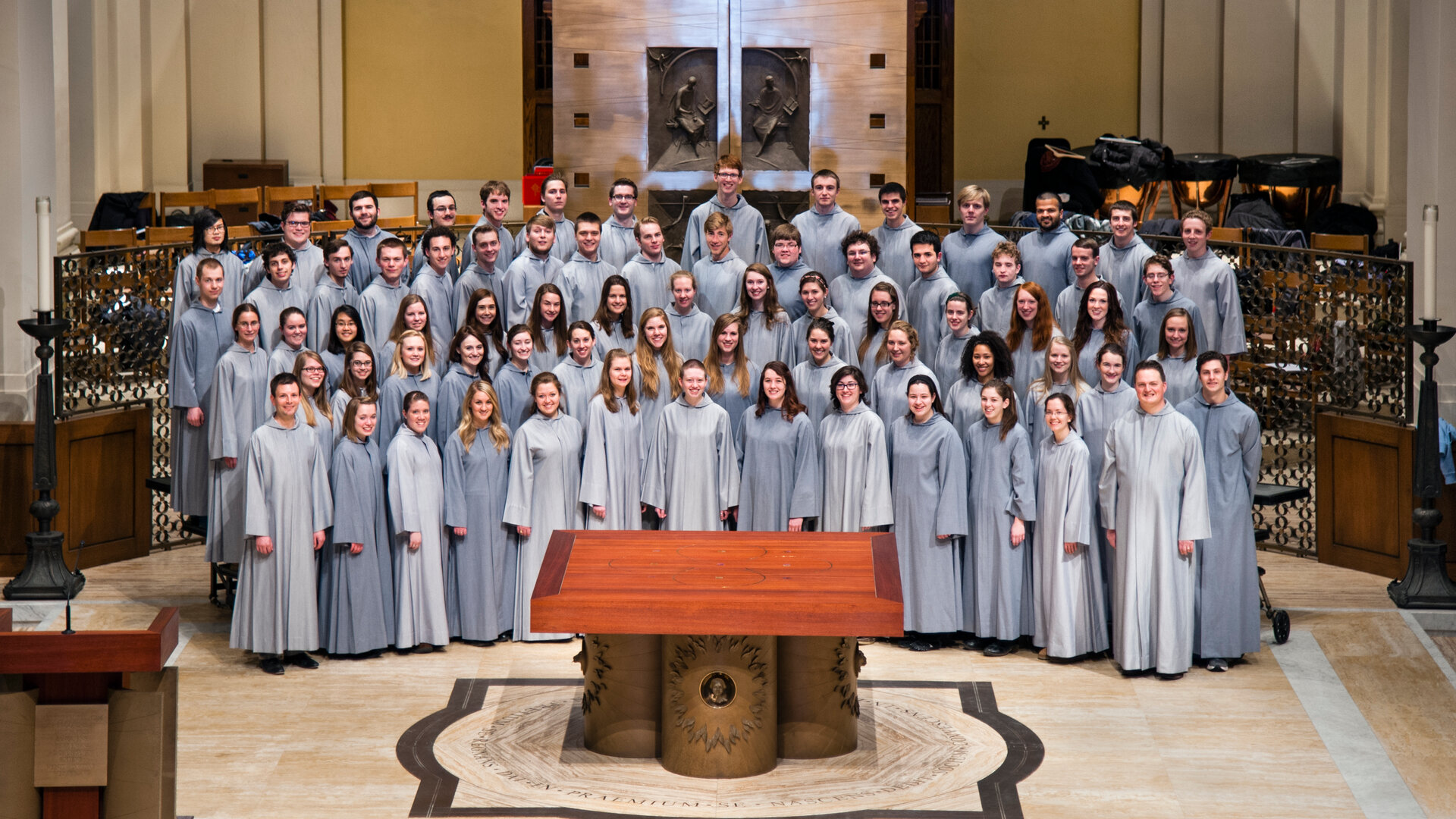
In the grand symphony of faith, where time dissolves into eternity and silence hums with divine resonance, music and liturgy are the twin pillars that elevate the human spirit toward the sacred. They are not mere rituals or melodies—they are the living breath of worship, the alchemy that transforms ordinary moments into transcendent encounters. For those who seek to master this sacred craft, courses on church music and liturgy are not just academic pursuits; they are pilgrimages into the heart of what it means to worship, to lead, and to belong.
The Sacred Score: Where Theology Meets Melody
Imagine a cathedral not just as stone and stained glass, but as a vast, resonant instrument, its arches and vaults humming with the vibrations of centuries-old hymns. This is the domain of church music—a realm where theology and melody intertwine like vines on an ancient oak. Courses in this field do more than teach hymnody or chant; they unravel the theological DNA embedded in every note, every rhythm, every pause. Students learn that a Gregorian chant is not just a medieval relic but a sonic prayer, its monophonic lines ascending like incense toward the heavens. They discover how Bach’s fugues are theological treatises in disguise, each voice a thread in the divine tapestry. Here, music is not decoration—it is revelation.
The study of liturgical music is, at its core, an exploration of sacred acoustics. It asks: How does sound shape the soul? How does a well-placed silence between verses become a vessel for the Holy Spirit? In these courses, students dissect the architecture of worship music, from the haunting simplicity of Taizé chants to the soaring grandeur of a Mozart mass. They grapple with questions of cultural context—why a gospel choir in a Black church feels like a different kind of worship than a Byzantine chant in an Orthodox monastery. The answer lies not just in the notes, but in the lived faith they embody.
The Liturgical Canvas: Painting with Time and Space
Liturgy is the choreography of the sacred—a meticulously designed dance between the divine and the human, where every gesture, every word, every breath is intentional. Courses on liturgy are less about memorizing rubrics and more about understanding liturgy as a living, breathing organism. They teach that the liturgy is not a static museum piece but a dynamic dialogue, a conversation between God and His people that evolves yet remains eternal.
Consider the liturgical year as a vast, unfolding tapestry. Advent is not just a season of waiting; it is a sonic meditation on longing, its purple hues mirrored in the minor keys of Advent hymns. Lent is a journey through the desert of the soul, its austerity reflected in stripped-down liturgies and the hollow echoes of the *Tenebrae* service. Easter is not merely a celebration—it is a symphony of resurrection, where the *Gloria* bursts forth like sunlight after a storm. Students learn to see liturgy not as a checklist of rituals but as a narrative, a story told in incense, in processions, in the clasp of hands during the Our Father.
But liturgy is also a spatial art. The placement of the ambo, the orientation of the altar, the flow of movement from the narthex to the sanctuary—all these elements are carefully calibrated to guide the worshipper’s soul. Courses delve into the theology of sacred space, exploring why some traditions favor high altars while others embrace the intimacy of a simple table. They examine how the architecture of a church—its domes, its arches, its labyrinthine paths—shapes the worship experience. A Byzantine dome, for instance, is not just a roof; it is a celestial map, a reminder that earthly worship is a participation in the worship of heaven.
The Cantor’s Baton: Leading with Voice and Vision
To stand before a congregation as a cantor or liturgical musician is to wield a power akin to that of a prophet. The voice becomes a conduit, the hands a compass, guiding the assembly through the sacred landscape. Courses on liturgical music leadership are rigorous not just in technique but in spirituality. They train students to read the room—to sense when a congregation needs the gentle lilt of a folk hymn or the thunderous declaration of a gospel chorus. They teach the art of balance: when to lead and when to step back, when to soar and when to kneel in reverence.
But leadership in liturgical music is more than technical skill. It is a call to holiness. The best cantors are not just musicians; they are mystagogues, those who reveal the mysteries of faith through sound. They understand that their role is not to perform but to facilitate an encounter with the divine. This is why courses emphasize the spiritual formation of the musician—prayer, meditation, and a deep, abiding relationship with Scripture. A cantor who leads without this foundation risks reducing worship to mere performance, a hollow echo of what it could be.
The training extends beyond the choir loft. Students learn the art of liturgical planning—how to curate a musical journey that mirrors the spiritual arc of the liturgical year. They study the psychology of congregational singing, the way a well-chosen hymn can soften hearts or a poorly executed psalm can distract. They grapple with the ethics of music in worship: Is it ever appropriate to update a beloved hymn? How do we honor tradition while embracing innovation? The answers are never simple, but the pursuit of them is what makes this field so endlessly fascinating.
The Living Tradition: Innovation Within Continuity
One of the most captivating aspects of studying church music and liturgy is the tension between tradition and innovation. How does one honor the past while embracing the future? Courses in this field are laboratories of creative fidelity, where students explore the boundaries of sacred music without rupturing its continuity. They study the work of contemporary composers like James MacMillan, whose masses blend medieval polyphony with modern dissonance, or the Taizé community, whose repetitive chants have become a global phenomenon of contemplative worship.
The key, students learn, is to innovate within the framework of the tradition. A new hymn is not just a new hymn—it is an addition to a centuries-old conversation. A fresh arrangement of a psalm is not a departure but a reinterpretation. This is where the study becomes deeply personal. Students are challenged to ask: What does it mean to be a steward of this tradition? How can I contribute to its evolution without betraying its essence? The answers are as varied as the students themselves, but the journey is what matters.
This dynamic interplay is perhaps most visible in the realm of liturgical dance and the arts. Some traditions have long embraced movement as a form of worship—think of the whirling dervishes of Sufism or the sacred dances of the Native American Church. In Christian contexts, liturgical dance is a growing movement, where choreography becomes a form of prayer. Courses explore how movement can deepen the liturgical experience, turning the sanctuary into a stage for the soul’s dialogue with God. Students experiment with gesture, rhythm, and space, learning that worship is not confined to the pews but can be a full-bodied, multi-sensory encounter.
The Call to Serve: Music and Liturgy as Vocation
At its heart, the study of church music and liturgy is a vocational pursuit. It is a calling to serve—not just the congregation, but the very idea of worship itself. Those who enter this field do so not for fame or fortune, but because they have heard a whisper in the silence, a summons to steward the sacred arts. They become the keepers of the flame, the ones who ensure that the fire of worship does not flicker out.
This vocation is not without its challenges. The modern world often views liturgy as archaic, music as entertainment, and tradition as irrelevant. Yet those who study this field know better. They see liturgy as a rebellion against the chaos of the world, a sanctuary of order and beauty. They understand that music is not just a soundtrack to worship but its very heartbeat. And they recognize that tradition is not a prison but a garden—one that must be tended, pruned, and allowed to bloom in new ways.
The rewards, however, are immeasurable. There is the joy of leading a congregation in a hymn that has echoed through centuries. There is the awe of witnessing a child’s first encounter with the mystery of the Eucharist, their eyes wide with wonder. There is the quiet satisfaction of knowing that, in some small way, you have helped to bridge the gap between heaven and earth. In a world that often feels fragmented, church music and liturgy are threads that weave the sacred into the fabric of daily life.
For those who are drawn to this path, the journey is one of both rigor and revelation. It demands discipline, creativity, and a willingness to be transformed. But for those who answer the call, it offers something far greater: the chance to participate in the eternal symphony of praise, to be, in the words of the psalmist, “a living sacrifice, holy and pleasing to God”—a song in the choir of the cosmos.

