

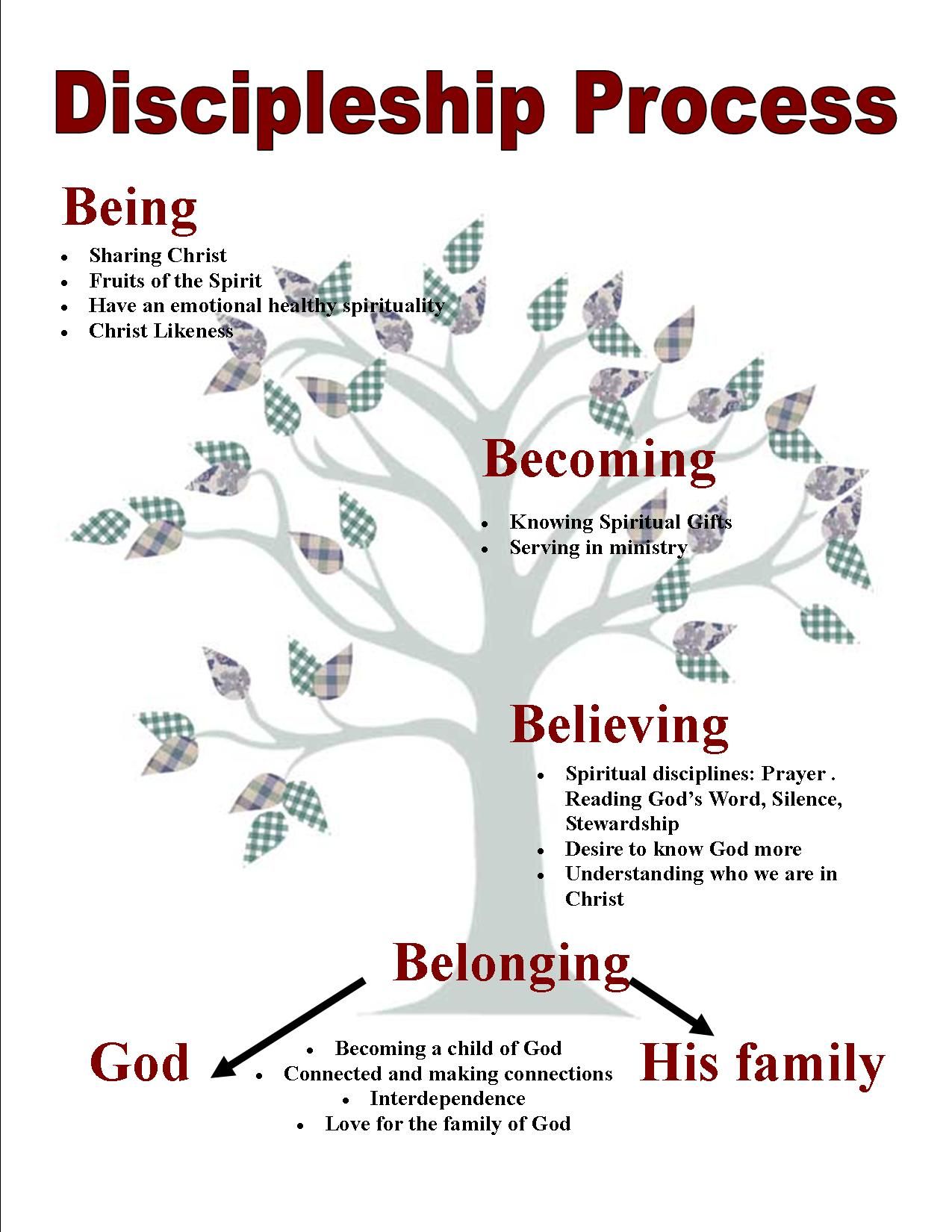
The journey of faith is not a solitary trek across barren deserts, but a vibrant pilgrimage where each step is illuminated by the light of divine companionship. Within the hallowed walls of the church, discipleship unfolds as a sacred rhythm—a dance between the seeker and the Savior, choreographed by the Holy Spirit. It is here, in the crucible of communal worship and personal devotion, that spiritual growth is nurtured, not as a distant aspiration, but as a tangible, transformative reality. This is where the ordinary becomes extraordinary, where the flicker of faith is fanned into an unquenchable flame.
The Church as a Spiritual Nursery: Cultivating Faith Like a Gardener Tends to Soil
Imagine the church as a vast, living greenhouse, where tender saplings of faith are nurtured under the watchful gaze of seasoned gardeners. Each believer is a seed, planted in the rich soil of scripture, prayer, and fellowship. The church, in its role as a spiritual nursery, provides the essential nutrients—preaching that pierces the heart, worship that stirs the soul, and service that strengthens the hands. Just as a gardener prunes dead branches to encourage new growth, the church gently trims away the excesses of worldly distractions, allowing the believer’s spirit to flourish.
Yet, this cultivation is not passive. It demands participation. The soil must be turned, the weeds uprooted, and the water of the Word poured out in abundance. The church is not a spectator in this process; it is the hands that plant, the voice that encourages, and the shelter that protects. In this sacred space, doubt is not scorned but refined, and questions are not silenced but answered with grace. Here, the believer learns that spiritual growth is not a sprint but a seasoned climb, where each rung on the ladder of faith is a testament to God’s enduring presence.
Discipleship as a Pilgrimage: The Map, the Compass, and the Guide
Discipleship is not a destination but a journey—a winding path that meanders through valleys of shadow and ascends peaks of revelation. Like any pilgrimage, it requires a map, a compass, and a guide. The map is the Bible, a timeless atlas of divine truth that charts the course from brokenness to wholeness. The compass is the Holy Spirit, whose still, small voice whispers direction when the path grows dim. And the guide? It is the church, a fellowship of fellow travelers who walk alongside, offering wisdom, accountability, and the occasional lantern to light the way.
But what makes this pilgrimage unique is its destination: not a place, but a Person. Every step, every trial, every victory is an invitation to draw nearer to Christ. The church, in its role as a guide, does not merely point the way; it embodies the journey. Through mentorship, small groups, and intentional relationships, discipleship becomes a shared odyssey where no one walks alone. The early church understood this well—Acts 2:42 paints a vivid picture of believers devoting themselves to the apostles’ teaching, to fellowship, to breaking bread, and to prayer. This was not a checklist; it was a rhythm of life, a cadence that sustained them through persecution and joy alike.
The Role of Mentorship: Passing the Torch of Faith from One Generation to the Next
Mentorship in the church is like the passing of a torch in a relay race—each runner holds the flame for a moment, but the light is meant to endure long after their hands have let go. The apostle Paul understood this when he wrote to Timothy, “What you have heard from me in the presence of many witnesses entrust to faithful people who will be able to teach others also” (2 Timothy 2:2). This is the chain of discipleship: a sacred lineage where truth is not hoarded but shared, where wisdom is not monopolized but multiplied.
Yet mentorship is not a one-way street. The mentor learns as much as the mentee. In the exchange of stories, struggles, and triumphs, both are refined. The older saint gains humility as they see God’s faithfulness through fresh eyes, while the younger believer gains courage as they witness the reality of a faith that endures across generations. The church thrives when this exchange is alive—when gray-haired saints and wide-eyed newcomers alike are bound by a shared hunger for God. This is the beauty of intergenerational discipleship: it is not about age, but about the posture of the heart.
Tools for Spiritual Growth: The Arsenal of the Believer
Spiritual growth is not left to chance; it is cultivated through intentional tools, each designed to sharpen the believer’s faith like a blade against a whetstone. The first and greatest of these is Scripture. The Bible is not merely a book; it is a living, breathing entity that breathes life into the soul. Daily reading, meditation, and memorization are not chores but lifelines, connecting the believer to the heart of God. Yet Scripture alone is not enough. It must be paired with prayer—a conversation that is as much listening as it is speaking. Prayer is the breath of the believer, the rhythm that keeps the heart beating in sync with heaven.
Beyond these, the church provides a treasure trove of tools: fasting to discipline the flesh, worship to exalt the spirit, and service to embody the love of Christ. Small groups offer a safe harbor for vulnerability, accountability, and growth. Retreats and conferences ignite fresh passion, while spiritual disciplines like solitude and silence carve out space for God to speak. Even suffering, when surrendered to Him, becomes a tool—mysterious, painful, but ultimately transformative. Each of these tools is a thread in the tapestry of discipleship, weaving together a life that reflects the image of Christ.
The Unseen Battles: Spiritual Warfare and the Armor of God
No pilgrimage is without its battles, and the journey of faith is no exception. The enemy prowls like a lion, seeking to devour, to distort, to discourage. Yet the church is not left defenseless. Ephesians 6:10-18 unveils the armor of God—a divine arsenal designed to withstand the assaults of the dark prince. The belt of truth, the breastplate of righteousness, the shoes of the gospel of peace—each piece is a promise of God’s protection and provision. But armor is useless if left in the closet. The believer must daily clothe themselves in it, not as a ritual, but as a declaration of war against the forces of darkness.
This is where the church’s role becomes even more critical. It is the barracks where soldiers are trained, the infirmary where the wounded are healed, and the watchtower from which the enemy’s movements are observed. Through corporate prayer, fasting, and unity, the church stands as a bulwark against the tide of spiritual decay. When believers gather, the atmosphere shifts. The enemy flees. The chains of addiction break. The chains of doubt shatter. This is the power of the gathered church—a force that cannot be contained, a light that cannot be extinguished.
The Fruit of Discipleship: A Life That Reflects the Master’s Image
Ultimately, discipleship is not about knowledge alone; it is about transformation. The goal is not to accumulate facts about God, but to become like Him. Jesus’ final command to His disciples was not to teach doctrine, but to make disciples (Matthew 28:19). This is the litmus test of true spiritual growth: does the believer’s life increasingly reflect the character of Christ? The fruit of the Spirit—love, joy, peace, patience, kindness, goodness, faithfulness, gentleness, self-control—is not produced by human effort, but by the indwelling Spirit working through surrendered hearts.
Yet this fruit is not for the believer alone. It is meant to spill over into the world, a fragrance that draws others to the Savior. A disciple’s life is a living sermon, a tangible demonstration of the gospel’s power. When the world sees a community marked by unity, generosity, and sacrificial love, it witnesses a miracle. It sees the kingdom of God breaking through the cracks of a broken world. This is the ultimate aim of discipleship: not just to know Christ, but to make Him known.

