

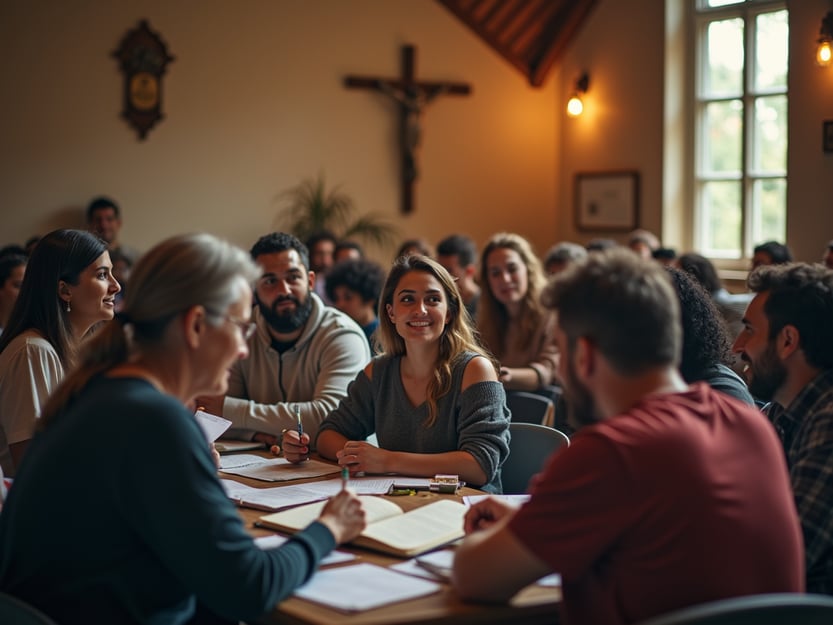
In the quiet hum of fellowship halls and the vibrant buzz of prayer circles, something transformative is taking root. Church discipleship campaigns and small groups are not just programs—they are lifelines, threading connection, purpose, and spiritual growth through the fabric of a congregation. These intentional communities become the heartbeat of a church, where faith is not merely studied but lived, where questions find space to breathe, and where every individual is seen, heard, and challenged to rise higher in their walk with God. Whether you’re a seasoned believer or a seeker taking your first tentative steps, these environments offer a sacred rhythm of accountability, encouragement, and shared discovery. Let’s explore the rich tapestry of content and experiences these campaigns and groups cultivate, and how they can breathe new life into your spiritual journey.
The Power of Shared Narratives: Story-Driven Discipleship Campaigns
At the heart of every transformative discipleship campaign lies a compelling story—one that resonates with the raw, unfiltered experiences of real people. These campaigns are not built on abstract theology alone; they are anchored in lived faith. Imagine a six-week journey where each session unfolds like a chapter in a collective memoir, where testimonies of transformation become the curriculum. Participants don’t just learn about discipleship—they witness it in action. A struggling single mother shares how small group prayer changed her perspective on provision. A young professional recounts how mentorship helped him navigate ethical dilemmas at work. These narratives do more than inform; they ignite empathy, dismantle isolation, and remind everyone that their struggles are not unique but part of a larger, redemptive story. The content here is immersive: video interviews, written reflections, interactive journals, and even dramatized reenactments that bring biblical principles to life in modern contexts. When people see themselves in the stories of others, discipleship stops being a concept and becomes a lived reality.
Small Groups as Laboratories of Grace: Intentional Community in Action
Small groups are the Petri dishes of spiritual growth—controlled environments where faith is cultivated, tested, and refined. Unlike the pulpit’s broad strokes, these intimate circles allow for precision, where every word, every silence, and every shared struggle becomes part of the alchemy. The content here is organic, evolving with the group’s rhythm. It might begin with structured Bible studies that dive deep into Scripture, using inductive methods to uncover layers of meaning. But it quickly expands into spaces of vulnerability: confession circles where burdens are lifted, prayer chains that weave together individual needs into a tapestry of collective supplication, and accountability partnerships where goals are set and progress is celebrated. The magic happens in the margins—the after-church coffee chats, the late-night text threads of encouragement, the meals shared in homes where theology meets real life. These groups become incubators for spiritual multiplication, where members don’t just consume faith but actively reproduce it in others. The content isn’t just pre-packaged; it’s co-created, shaped by the Holy Spirit’s movement within the group.
Curriculum with Teeth: Curated Content That Challenges and Equips
Not all discipleship content is created equal. The most effective campaigns and small group studies are those that refuse to settle for surface-level inspiration. They are rigorous, wrestling with tough questions about suffering, doubt, and cultural engagement. A curriculum on “Kingdom Ethics in a Post-Christian World” might dissect modern idolatries—consumerism, individualism, digital distraction—through the lens of Scripture, challenging participants to examine their own allegiances. Another study could explore the paradox of joy in suffering, using the letters of Paul as a guide to navigate life’s storms with gospel-centered hope. The content here is multi-dimensional: it includes guided discussions, reflective exercises, and even multimedia elements like podcasts or documentaries that spark conversation. Leaders are equipped not just to teach but to facilitate transformation, asking open-ended questions that probe the heart rather than just the mind. The goal isn’t to fill heads with information but to shape souls with truth that cuts to the core.
Equally vital is the inclusion of experiential learning—where theology is not just discussed but lived out. Service projects, mission trips, or even local outreach initiatives become extensions of the study, allowing participants to put their faith into action. A group studying “The Ministry of Reconciliation” might volunteer at a homeless shelter, not as a checkbox of good deeds, but as a tangible expression of Christ’s love. These experiences cement learning in memory and embed it in the fabric of a believer’s identity.
The Role of Mentorship: Passing the Torch of Faith
Discipleship is not a solo sport. It thrives in the exchange of wisdom, the modeling of Christ-like character, and the intentional investment of one believer into another. Mentorship programs within campaigns and small groups provide a structured way to cultivate this transfer of faith. Imagine a seasoned elder walking alongside a young adult, not as a distant authority, but as a fellow pilgrim, sharing both triumphs and failures. The content here is relational, built on trust and mutual submission. Mentors don’t just impart knowledge; they demonstrate how to navigate life’s complexities with grace—how to handle conflict in marriage, how to steward finances wisely, how to share the gospel with boldness. The mentee, in turn, learns the art of active listening, the discipline of prayer, and the courage to ask hard questions. These relationships become the scaffolding that supports spiritual growth long after a campaign ends. They are the difference between fleeting inspiration and lasting transformation.
Digital Discipleship: Expanding the Tent of Community
In an era where screens dominate our attention, digital discipleship has emerged as a powerful tool to extend the reach of small groups and campaigns. Online forums, private social media groups, and video conferencing platforms create virtual sanctuaries where connection transcends geography. A busy mom in a rural town can join a midday Bible study during her child’s naptime. A college student home for the summer can stay plugged into a group back at their university. The content here is adaptable, blending synchronous and asynchronous elements. Live Q&A sessions with guest speakers sit alongside pre-recorded teachings and discussion prompts that participants can engage with on their own time. Digital small groups also open doors for those who might feel intimidated by in-person gatherings—people with social anxiety, newcomers hesitant to speak up, or those with mobility challenges. The key is intentionality: even in a virtual space, the goal remains the same—to foster authentic community where people can grow, wrestle, and find belonging.
Celebrating Milestones: Rituals That Anchor Growth
Discipleship is a journey with signposts—moments that mark progress, deepen commitment, and celebrate God’s faithfulness. Campaigns and small groups that incorporate meaningful rituals create a rhythm of remembrance and anticipation. A “Baptism Sunday” where new believers publicly declare their faith becomes a communal celebration of God’s work. A “Covenant Renewal” service allows long-time members to recommit to their small group’s mission. Even simple traditions, like lighting a candle at the start of each meeting to symbolize the Holy Spirit’s presence, or sharing “God sightings” at the end of a study to highlight answered prayers, infuse the process with sacred intentionality. These rituals do more than mark time; they shape identity. They remind participants that they are part of something eternal, something bigger than themselves. In a culture that often prioritizes speed over depth, these moments of pause become lifelines, grounding believers in the truth that spiritual growth is a marathon, not a sprint.
The Ripple Effect: How Discipleship Multiplies Beyond the Group
The ultimate measure of a discipleship campaign or small group is not the depth of its meetings, but the breadth of its impact. The most transformative groups are those that don’t hoard faith but spill it out into the world. Participants begin to see their neighborhoods, workplaces, and families as mission fields. A small group studying “The Great Commission” might adopt a local school, praying for teachers and students, or host a neighborhood block party to build relationships. Another group might start a mentorship program for at-risk youth, modeling Christ’s love through consistent presence and guidance. The content here is outward-focused, equipping believers to live on mission. It includes training on evangelism, resources for hosting outreach events, and stories of how other groups have seen God move in their communities. The goal is to create a culture where discipleship is not confined to a program but is woven into the DNA of everyday life. When small groups become sending communities, the church doesn’t just grow numerically—it grows in its capacity to reflect Christ’s love to the world.

