

Ever wondered what happens when a church’s heart beats in sync with its community’s needs? A well-crafted Church Serving Campaign Plan isn’t just a checklist—it’s a living, breathing blueprint that transforms good intentions into tangible acts of service. But here’s the twist: without a clear strategy, even the most passionate volunteers can feel like they’re running in circles. So, how do you turn lofty ideals into a roadmap that actually works? Let’s dive into the art of crafting a campaign that doesn’t just inspire—it delivers.
The Foundation: Why Your Church Needs a Serving Campaign Plan
Imagine a Sunday service where the sermon is fire, the worship is electric, and the coffee is strong—but the church’s impact fizzles out the moment people step outside. A serving campaign isn’t just about hosting events; it’s about embedding service into the DNA of your congregation. It’s the difference between a one-time outreach and a movement that outlasts the campaign itself. Without a plan, you risk scattering your efforts like confetti in the wind—pretty to look at, but impossible to gather. A structured plan aligns your church’s mission with actionable steps, ensuring every volunteer, prayer, and dollar spent moves in the same direction. The challenge? Balancing spontaneity with strategy—because faith thrives in both the planned and the unexpected.
Step 1: Define Your “Why” with Surgical Precision
Before you rally the troops, ask yourself: What problem are we solving, and for whom? A serving campaign without a clear purpose is like a ship without a rudder—it might move, but it won’t go anywhere meaningful. Start by identifying the core pain points in your community. Is it hunger? Loneliness? Lack of access to education? Once you pinpoint the need, craft a mission statement so sharp it could cut glass. For example: “We exist to bridge the gap between isolation and community by delivering meals and companionship to seniors within a 5-mile radius of our church.” The trick? Keep it concise. If your “why” takes longer to explain than a TED Talk, it’s too vague. The challenge here is resisting the urge to boil the ocean—focus on one or two issues you can realistically tackle without burning out your team.
Step 2: Assemble Your Dream Team (No, Not the Usual Suspects)
Every church has its go-to volunteers—the ones who show up for every bake sale and potluck. But a serving campaign needs more than familiar faces; it needs diverse skill sets. Think beyond the choir director and the Sunday school teacher. Recruit a logistics whiz to handle permits, a social media maven to spread the word, and a local business owner who can sponsor supplies. The unspoken challenge? Convincing these people to commit. People are busy, and asking for their time is like asking for a kidney—precious and non-negotiable. So, make it worth their while. Highlight how their unique talents will make the campaign a success, and offer flexibility (e.g., remote planning meetings, staggered commitments). The goal isn’t just to fill roles but to create a team where everyone feels indispensable.
Step 3: Map the Journey—From Vision to Victory
A serving campaign isn’t a sprint; it’s a multi-phase odyssey. Break it down into digestible stages: Awareness, Recruitment, Execution, and Reflection. Start with a soft launch—tease the campaign in sermons, bulletins, and social media without overwhelming people. Then, hit them with a hard launch during a high-energy service or event. Next, focus on recruitment drives where you highlight the impact of past campaigns (if any) and paint a vivid picture of what’s possible. The execution phase is where the rubber meets the road: logistics, training, and day-of coordination. Finally, the reflection phase is your secret weapon—gather feedback, celebrate wins, and document lessons learned for next time. The challenge? Avoiding the “shiny object syndrome,” where you jump from idea to idea without seeing any through. Stick to the timeline, and trust the process.
Step 4: Fundraising with Flair (Because Boring Doesn’t Inspire)
Let’s talk money—the fuel that keeps your campaign engine running. But fundraising doesn’t have to be a stuffy pledge drive or a guilt-trip sermon. Get creative! Host a “Serve-a-Thon” where sponsors pledge donations per hour volunteers serve. Or launch a “Reverse Offering” where congregants donate their spare change in jars labeled with specific needs (e.g., “$50 buys a week’s groceries for a family”). The key is to make giving feel like an adventure, not a chore. The challenge? Overcoming donor fatigue. People are bombarded with requests for money—from schools, nonprofits, and even their kids’ sports teams. Stand out by showing the direct impact of their contribution. For example, “Your $100 provides 20 meals to homeless veterans” is far more compelling than “Help us reach our goal.”
Step 5: Train Volunteers Like Navy SEALs (Minus the Push-Ups)
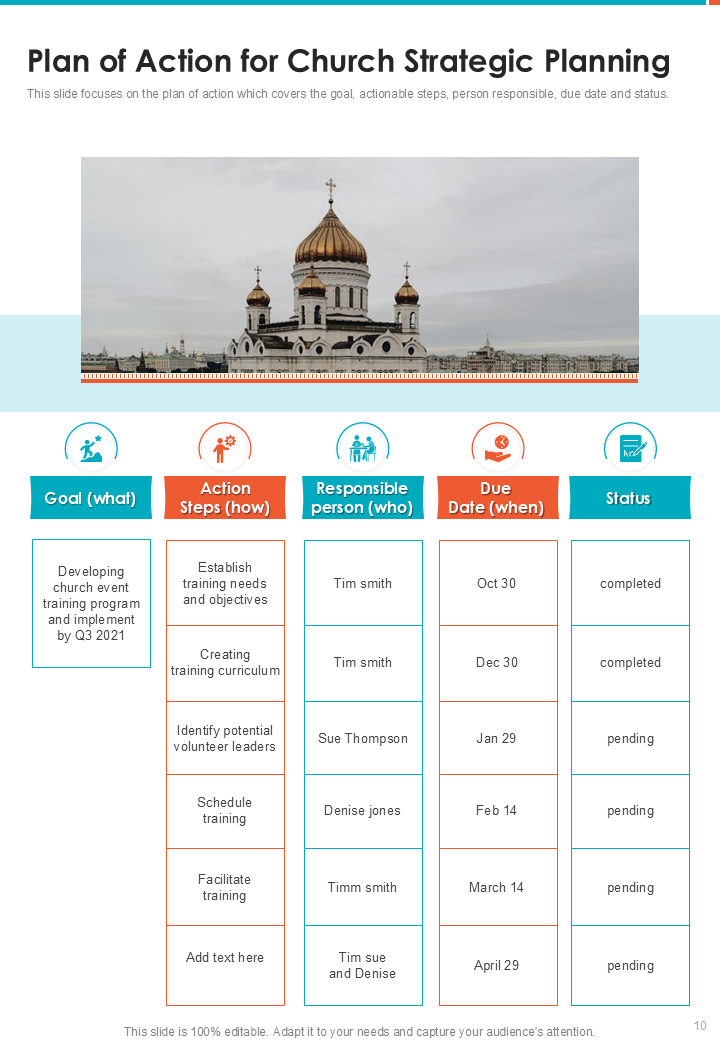
Volunteers are the lifeblood of your campaign, but untrained volunteers can turn a noble effort into a chaotic disaster. Host a pre-campaign training session where you cover everything from safety protocols to customer service (yes, even serving strangers requires etiquette). Role-play scenarios—how to handle a difficult recipient, how to say “no” gracefully if supplies run low. The challenge? Keeping the training engaging. Slide decks and lectures won’t cut it. Use interactive methods: case studies where teams brainstorm solutions to hypothetical problems, or “empathy walks” where volunteers experience the campaign from the recipient’s perspective. Remember, the goal isn’t just to teach skills but to ignite a passion for service that outlasts the campaign.
Step 6: Execute with Military Precision (But Keep It Human)
D-Day for your campaign has arrived. This is where preparation meets reality. Assign clear roles: who’s in charge of supplies? Who’s the point person for emergencies? Use tools like Trello or Asana to track tasks in real-time. But here’s the paradox: while systems keep you organized, human connection keeps the campaign alive. Encourage volunteers to share stories—why they’re serving, what they hope to learn. Create a “gratitude wall” where recipients can leave thank-you notes for volunteers. The challenge? Staying flexible. No plan survives first contact with reality. Be ready to pivot—whether it’s a sudden shortage of volunteers or a weather delay. The mark of a great campaign isn’t perfection; it’s resilience.
Step 7: Reflect, Rejoice, and Recalibrate
The campaign is over, the banners are down, and the leftovers are packed away. Now what? This is where most churches drop the ball. But the real magic happens in the debrief. Gather your team and ask: What worked? What didn’t? What would we do differently next time? Celebrate the wins—even the small ones. Did you serve 50 more people than last year? Did a volunteer discover a new passion for service? Document everything in a “Campaign Playbook” for future reference. The challenge? Avoiding the post-campaign slump. It’s easy to feel deflated after the adrenaline fades. Combat this by immediately planning your next act of service—even if it’s small. Keep the momentum going.
The Ripple Effect: How One Campaign Can Change Everything
A serving campaign isn’t just about the people you help today; it’s about the culture you build tomorrow. When a church commits to serving consistently, it transforms from a Sunday gathering into a 24/7 movement. Volunteers become more engaged. The community starts to see your church not as a building but as a beacon of hope. The challenge? Sustainability. It’s easy to run a campaign once, but how do you make service a habit? Start small—monthly serving opportunities, partnerships with local nonprofits, or even a “Serve Squad” that meets quarterly. The goal isn’t to burn out; it’s to build a legacy of love that outlasts any single campaign.

