

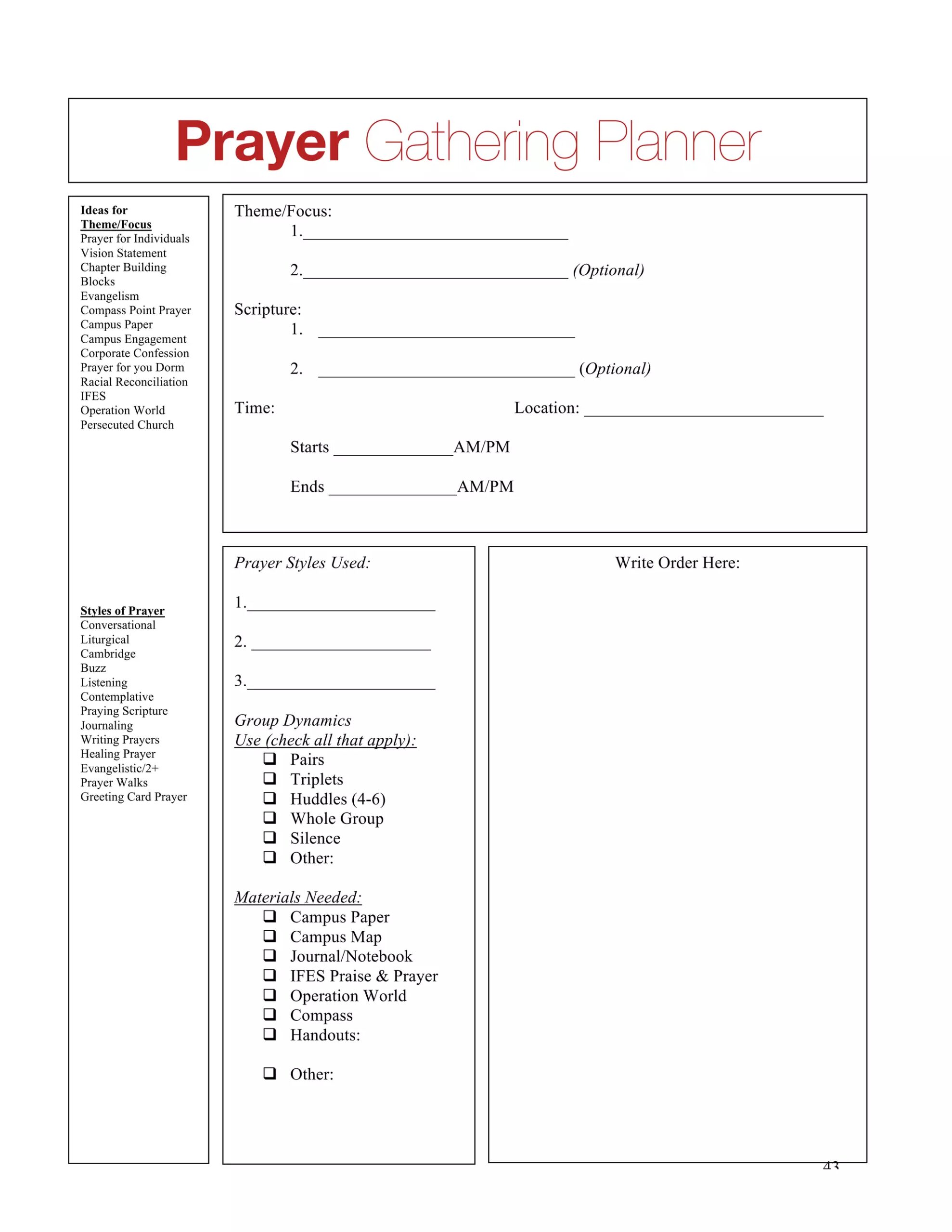
There’s a quiet revolution brewing in the hearts of believers—not one of grand gestures or thunderous declarations, but of whispered petitions rising like incense before the throne of grace. A church prayer meeting isn’t just another event on the calendar; it’s a sacred convergence where eternity bends to meet the temporal, where the ordinary transforms into the extraordinary through the alchemy of collective faith. Yet, organizing such a gathering can feel like navigating a labyrinth of logistics, emotions, and spiritual expectations. What if the key to unlocking its full potential lies not in perfection, but in preparation? What if the shift from chaos to clarity begins with a single, intentional step?
The Sacred Rhythm: Setting the Tone Before the Gathering
Every prayer meeting is a symphony waiting to be composed, and the overture begins long before the first note is played. The tone is set in the silence between the lines of your planning—the quiet moments when you ask yourself: *What do we truly seek?* Is it breakthrough? Unity? A divine interruption in the status quo? The answers to these questions will shape the ambiance of your gathering. Consider the power of thematic anchors: a single scripture, a whispered promise from God’s Word, or even a season of the year can serve as the compass guiding your collective heart. A prayer meeting themed around “Divine Interruptions” might lean into testimonies of unexpected encounters, while one focused on “The Prayer of Agreement” could weave in moments of corporate confession. The tone isn’t just about what you say—it’s about what you *feel* before you ever gather.
The Architecture of Intimacy: Designing the Space for Encounter
Space is never neutral. It either invites or repels, opens or closes, stirs or stifles. The layout of your prayer meeting should feel less like a lecture hall and more like a campfire circle—where the flicker of shared light reveals faces turned toward one another, where the air hums with the unspoken understanding that something sacred is about to unfold. Start with the basics: seating that facilitates eye contact, soft lighting to ease the transition from the busyness of life into the stillness of worship, and a central focal point—whether a cross, an open Bible, or a simple candle—that serves as a visual anchor for the soul. But don’t stop at the physical. The architecture of intimacy extends to the emotional and spiritual layers. Consider incorporating moments of silence so profound they feel like standing on the edge of a cliff, where the only sound is the rush of your own breath—and then, the still, small voice. The goal? To create a sanctuary where the noise of the world fades, and the voice of God becomes undeniable.
The Choreography of Worship: When Music Meets the Mystery
Worship isn’t just a prelude to prayer—it’s the language of the soul before it finds its words. The songs you choose should act as bridges, carrying the congregation from the familiar shores of their daily lives into the uncharted waters of divine encounter. But not all bridges are created equal. A worship set that leans too heavily on familiarity risks lulling hearts into autopilot, while one that’s too obscure can leave worshippers scrambling for footing. The sweet spot lies in a curated blend: hymns that echo through generations, modern anthems that resonate with raw honesty, and spontaneous melodies born in the moment. Pay attention to the ebb and flow—build tension with lyrics that wrestle with doubt, then release it with declarations of faith. And don’t underestimate the power of silence between songs, those sacred pauses where the Holy Spirit can take the baton and lead the worship in ways no human arrangement ever could.
The Alchemy of Participation: Breaking the Silence of Isolation
Prayer meetings often suffer from a paradox: the more people present, the easier it is to feel invisible. The remedy? Intentional participation. This isn’t about filling time with activity for activity’s sake, but about creating pathways for every voice to be heard—whether spoken, sung, or simply held in the atmosphere. Structure matters here. A time of open prayer can feel daunting for the shy or the new, so consider guided prompts: a scripture to meditate on, a question to ponder aloud, or even a moment of corporate repentance where the weight of sin is lifted in unison. For those who struggle to articulate their hearts, provide tangible tools—a journal, a prayer guide, or even a whiteboard where requests can be written and lifted up anonymously. The goal isn’t to manufacture emotion but to dismantle the barriers that keep people from engaging. When participation becomes a dance rather than a performance, the room transforms from a crowd into a family.
The Warfare of Waiting: Embracing the Tension of Unanswered Prayers
No prayer meeting is complete without wrestling with the unanswered. It’s the crucible where faith is tested and refined. But how do you guide a group through the valley of delayed promises without quenching the flicker of hope? First, acknowledge the tension outright. Acknowledge that some prayers will remain unanswered in this season, that some burdens will feel heavier tomorrow than they do today. Then, reframe the narrative. Instead of framing unanswered prayer as a failure, present it as an invitation—to deeper trust, to a revelation of God’s character, or to a shift in perspective that only comes through the crucible of waiting. Share stories of saints who persevered in prayer for decades before seeing breakthrough. Let the room feel the weight of their stories, not as a rebuke, but as a reminder that the God who parted the Red Sea is still in the business of miracles—even if the timing isn’t ours to dictate.
The Ripple Effect: Sending Forth a People Transformed
The true measure of a prayer meeting isn’t found in the minutes spent in the room, but in the hours, days, and weeks that follow. How do you ensure the encounter doesn’t fade like embers in the cold? The answer lies in the send-off. Before dismissing the group, carve out a moment for commissioning—a laying on of hands, a spoken blessing, or even a simple charge to carry the fire into their daily lives. Provide tangible next steps: a prayer journal to continue the dialogue, a list of local ministries to partner with, or a challenge to pray for one another throughout the week. But don’t stop at the practical. Leave them with a promise—a scripture, a prophetic word, or a vision of what God is about to do. The goal isn’t to create a one-time event, but to ignite a movement where every attendee becomes a torchbearer, carrying the light of what they encountered into a world desperate for the same.
The next time you gather your community for prayer, remember: you’re not just organizing a meeting. You’re orchestrating an encounter with the Divine. And in that sacred space, where the heavens and the earth collide, ordinary people become carriers of extraordinary power. The shift in perspective begins with you—one intentional step, one whispered prayer, one moment of surrendered faith at a time.

