

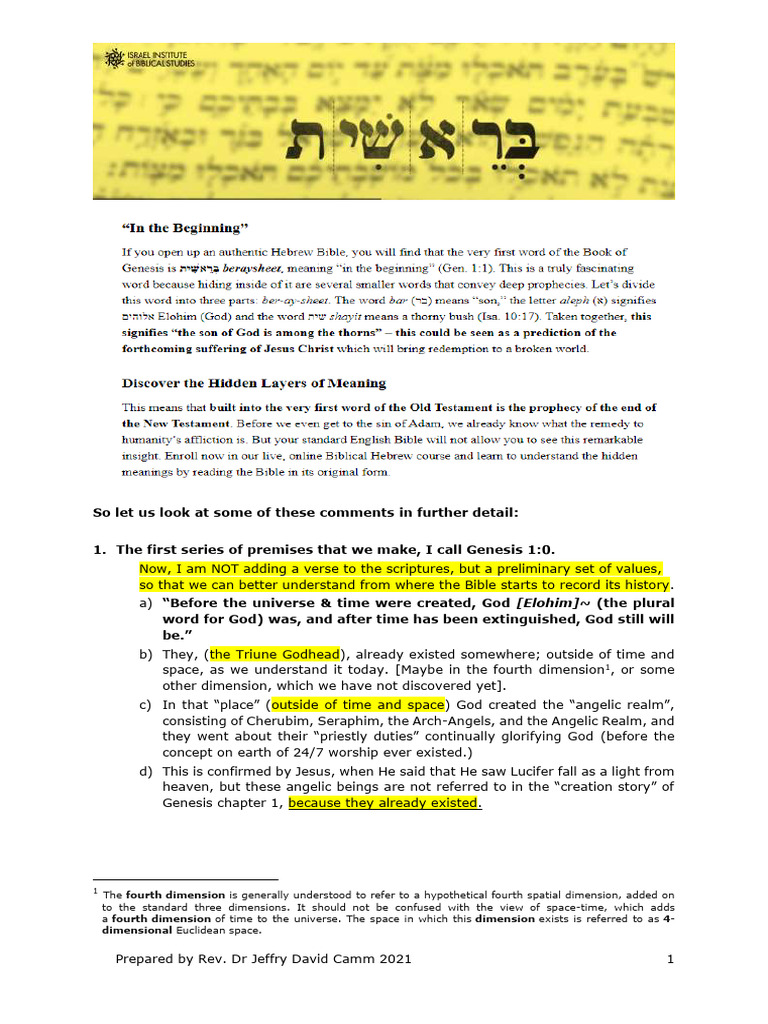
The opening words of the Bible serve as a powerful preamble to a most profound narrative. They are not merely the commencement of a religious text; they encapsulate a cosmic declaration that reverberates through the corridors of history and spirituality. In the very first verse of Genesis, we encounter a profound proclamation: “In the beginning, God created the heavens and the earth.” This initiation invites readers to ponder fundamental questions about existence, purpose, and divinity.
These seminal words not only set the stage for the unfolding drama of creation but also frequently prompt a dramatic shift in perspective. The phrase “In the beginning” intimates a time before time, a paradox that challenges human comprehension. What does it mean to experience a moment untainted by the linear progression of existence? Here, the narrative transcends the mundane; it challenges us to imagine the unfathomable.
Moreover, the declaration of God as the Creator provides a striking contrast to contemporary existential musings. The ancient text postulates an intentional architect behind the universe’s intricate tapestry, inviting a dialogue on the relationship between humanity and the divine, a relationship often lost in modernity’s embrace of materialism. This introduction does not merely assert creation; it champions a creator, invigorating the notion that life is imbued with purpose.
As one delves deeper, the implications of these words unfurl. The creation story that follows is not just a chronological account but rather a vivid tableau of divine creativity. Each act of creation, from the formation of light to the crafting of humankind, underscores a methodical artistry, illustrating not randomness but profound intentionality. This narrative structure compels readers to reflect on their existence within this orchestrated symphony, enhancing the personal significance of life’s moments.
Furthermore, the theological ramifications of the biblical opening extend beyond mere creation. The concept of “the heavens and the earth” evokes a duality that permeates the text. This dualistic harmony between the celestial and terrestrial realms invites contemplation about the interconnectedness of all things—a principle that resonates deeply within various philosophical and spiritual traditions. It encourages individuals to seek their role within this cosmic interplay, fostering a sense of belonging and responsibility.
Curiosity naturally piques at the interplay between creation and the created. What does it mean to be crafted in the image of such a divine artisan? This question invites a moment of introspection. It challenges individuals to reevaluate their identity and existence—their values, aspirations, and the ethical dilemmas they confront. Every result of creation—the lush landscapes, the diverse fauna, and the nuances of human experience—beckons contemplation and appreciation.
Yet, the introductory words and the subsequent narrative also resonate with the perennial theme of renewal and redemption. In the biblical context, creation is not simply an event of the past. Instead, it heralds an unfolding journey where grace and reconciliation seep into the fabric of existence. This concept poses an exciting query: How can one embrace the spirit of creation in their own life? How does the act of creation—be it in art, relationships, or personal growth—reflect the divine spark?
In conclusion, the first words of the Bible beckon readers to transcend the mundane and engage with the extraordinary aspects of existence. They prompt not only a reflection on creation but also an urgent call to explore one’s personal narrative within the vast cosmos. This exploration, nourished by curiosity and the promise of revelation, can yield profound insights, igniting a transformative journey that begins with the very first word: “In the beginning.”

