

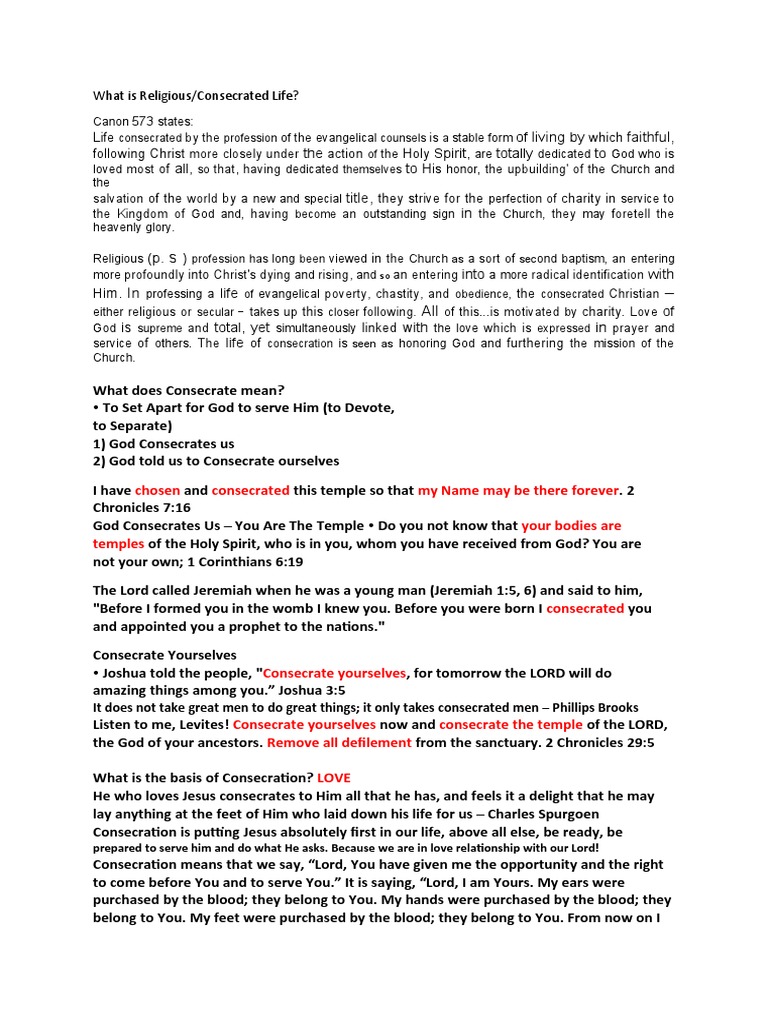
Consecration, a term rooted deeply within the biblical narrative, elicits a profound exploration of its implications and significance. In the scriptural context, to consecrate something is to set it apart for divine purpose or service. This act of dedication underscores the relationship between the sacred and the secular, illuminating a fascinating interplay that resonates across various biblical texts.
The concept of consecration is pervasive throughout the Bible, evidenced in both Old and New Testaments. In its most elemental form, it often involves an act of sanctification where individuals, objects, or places are designated as holy. The Hebrew term for consecrate is “kadesh,” while in Greek, it is “hagiazo,” both conveying the essence of holiness and separation for divine sanction.
One of the principal instances of consecration can be traced to Exodus, where God commands Moses to consecrate the priests. This rite, meticulously detailed in chapters 28 and 29, involves anointing with oil and the offering of sacrifices, symbolizing a transfer of divine authority and the bestowal of spiritual responsibility. Herein lies a key observation: the act of consecration is not merely a one-time event but rather initiates a continuous journey of transformation and commitment to God’s will.
Further, the contrast between the sacred and the profane is pivotal. Consider the consecration of the Temple in Jerusalem, described in 1 Kings 8. This magnificent edifice was set apart as a dwelling place for God, distinguishing it from common structures. The rituals associated with its dedication reveal a profound truth: space can be imbued with divine presence when consecrated, thus serving as a conduit for human interaction with the transcendent.
The New Testament further amplifies the theme of consecration, particularly in the teachings of Jesus and the writings of Paul. In Romans 12:1, believers are urged to present their bodies as living sacrifices, holy and pleasing to God, thereby positioning their entire lives as acts of worship. This reflective call to consecration extends beyond a mere physical state; it demands a holistic submission of one’s heart, intellect, and spirit to divine will.
Another aspect of fascination revolves around the communal implications of consecration. Throughout biblical history, consecrated individuals or objects often carry communal significance, fostering collective identity and spiritual fervor among the faithful. This is beautifully illustrated in the communal observances of the feasts and liturgical practices that elevate the collective understanding of holiness, rooting it in shared experiences and memories.
However, the exploration of consecration also invites contemplation regarding the inherent challenges and responsibilities associated with such dedication. The act of being set apart can lead to feelings of isolation or estrangement from the secular world. The struggle to maintain one’s holiness amid competing societal norms often emerges, emphasizing the necessity of resilience and commitment to a higher calling.
In conclusion, the multifaceted meaning of consecration within the biblical context serves as an invitation to explore the depths of holiness, purpose, and community. It is a powerful reminder that to be consecrated is not simply to be separated but to be intentionally set aside for a grander, divine narrative. This profound engagement with the sacred invites believers into a richer understanding of their identity and mission, creating an enduring allure that continues to captivate hearts and minds throughout generations.

