

The concept of a scepter in the Bible is rich with symbolism and historical significance. What images come to mind when you think of a scepter? Perhaps a glittering symbol of authority held high by a regal figure? Indeed, the scepter represents much more than mere opulence; it embodies power, justice, and divine inheritance. But in a contemporary context, one might ponder: can we equate the scepter’s significance in Biblical times to our own symbols of power today? The answer demands exploration.
To adequately grasp the essence of a scepter in Biblical literature, one must first consider its etymological root. Derived from the Greek word “skeptron,” it implies a staff or rod of authority. Within the pages of the Old Testament, the scepter appears primarily as a token of royal status and governance. It is crucial to examine the contexts in which it features prominently, especially concerning lineage and covenant.
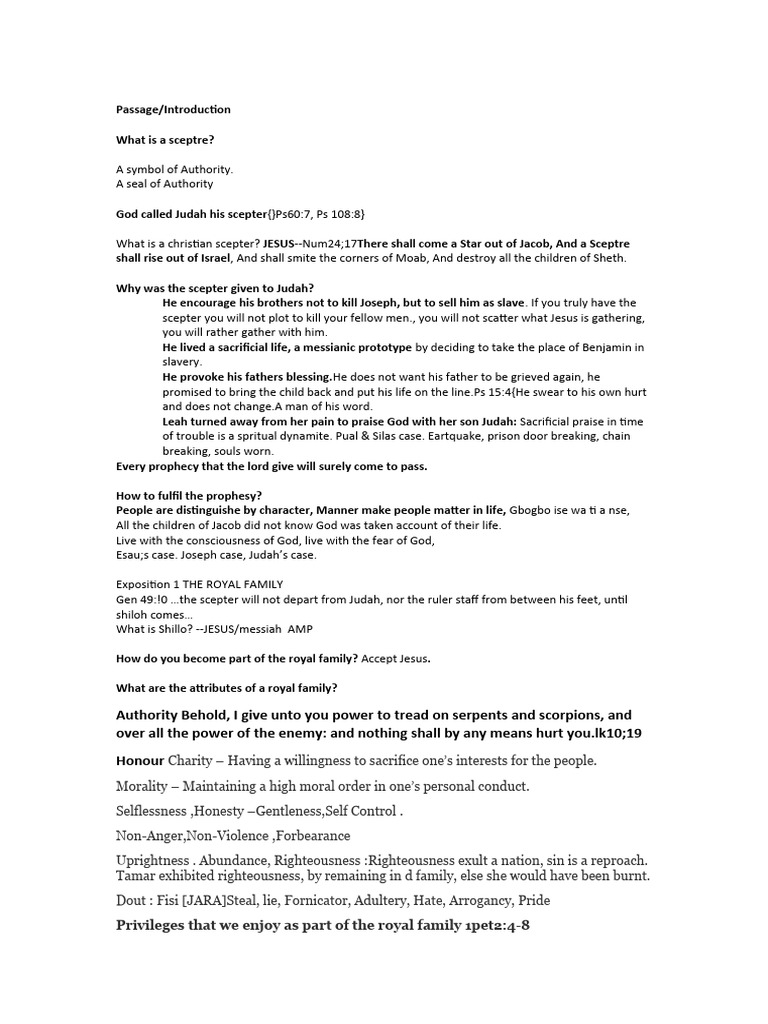
For instance, in the Book of Genesis, Jacob bestows a prophetic blessing upon his sons. Notably, he declares that “the scepter shall not depart from Judah” (Genesis 49:10). Herein lies a fascinating dimension; the scepter signals not only physical rule but also a spiritual mandate. Judah’s lineage becomes synonymous with the future kingship of David and, by extension, Christ himself. How does that legacy resonate with us today?
Transitioning to the world of ancient Near Eastern cultures, the scepter also served as a formidable weapon in battle, signifying the dual role of kings: protector and ruler. In an era where might often equaled right, a king’s scepter was emblematic of his ability to lead his subjects while also safeguarding them from external threats. The implications are far-reaching: to wield a scepter effectively requires both personal fortitude and communal responsibility. Can modern leaders draw parallels from this ancient artifact as they navigate their own realms of influence?
In another notable reference, the Book of Esther presents a ruler’s scepter in a moment of high tension. Queen Esther, daringly approaches King Xerxes without a summoned invitation, risking her life for her people. The king extends his golden scepter, a gesture of acceptance and protection. This vivid account underscores the scepter’s role as a mediator between authority and mercy. It begs the question: are today’s symbols of power able to extend similar gestures of compassion and inclusion, or have they veered too far into tyranny and complacency?
Furthermore, the New Testament views the scepter through the lens of the ultimate authority of Christ. In Hebrews 1:8, it is written, “Your throne, O God, is forever and ever, and the scepter of uprightness is the scepter of your kingdom.” This signifies that Jesus embodies the perfect ruler, demonstrating justice and righteousness sans the flaws of human monarchs. When contemplating the significance of a scepter within the realm of faith, does it lead us to a challenging understanding of our own moral compass as we discern right from wrong?
The scepter in biblical context transcends beyond mere symbolism of royal authority. It embodies ideals of leadership, responsibility, justice, and divine favor. As one delves into this historical artifact, it becomes apparent that the questions raised are not merely academic but deeply personal. Are we prepared to embrace the weight of our own figurative scepters? Each individual carries the potential to influence, just as the ancients did. Such reflections are crucial for understanding power dynamics, both in historical and modern contexts.
In unraveling the complexities surrounding the biblical scepter, one is challenged to consider the legacy of authority and how it manifests in everyday life. Thus, the reflection wanes from the ancient scrolls of scripture to the very essence of our daily choices. Might we, too, hold scepters that reflect justice and compassion in our respective domains?

