

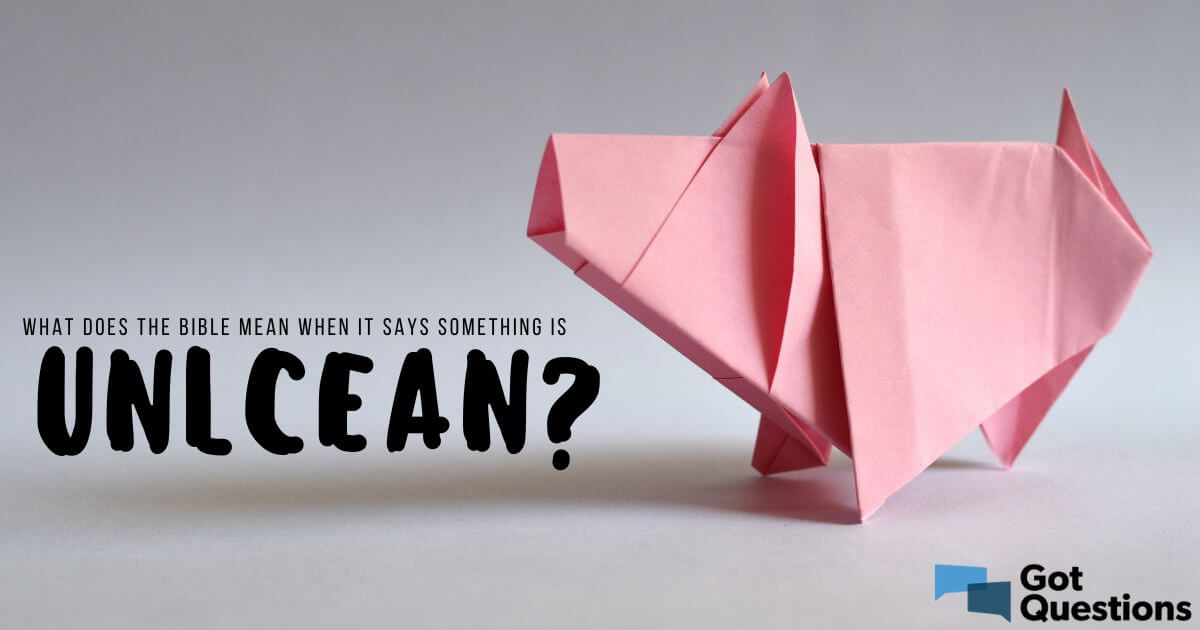
In the hallowed halls of ancient scriptures, the concept of clean and unclean animals emerges with profound significance. But what does it really mean when we refer to an animal as unclean in the context of the Bible? This understanding extends far beyond the surface, delving deep into religious, cultural, and ethical dimensions. Are you ready to venture into this intriguing topic and potentially challenge your perceptions of dietary laws?
To begin, the classification of animals within the biblical narrative is largely derived from the books of Leviticus and Deuteronomy. These texts delineate a range of dietary restrictions that the Israelites were expected to follow. Clean animals, those deemed permissible for consumption, exhibit distinguishable traits such as having split hooves and chewing the cud, like cows and sheep. In stark contrast, unclean animals are those that lack one or more of these characteristics. For instance, pigs, though revered by some cultures for their culinary value, fall under the category of unclean creatures due to their split hooves that do not chew cud.
One might ponder: what implications did these classifications have on the daily lives of the ancient Israelites? These dietary restrictions were not merely arbitrary; they were woven into the fabric of societal identity and spiritual practice. Observing these laws was, in essence, an act of obedience to God, signifying a commitment to holiness and separation from surrounding pagan cultures. Engaging with unclean animals was tantamount to spiritual and communal risk, inviting potential impurities into one’s life.
The philosophical underpinnings of what defines an unclean animal also reveal deeper meanings. It is fascinating to consider the metaphoric associations of these creatures in literature and religious discourse. Unclean animals are often viewed as symbols of moral decay and spiritual corruption. For instance, scavengers like vultures and hyenas, labeled as unclean, evoke notions of death and decay. They serve as poignant reminders of the consequences of sin and the importance of maintaining purity, both physically and spiritually.
But let’s dig even deeper: Could there be a modern interpretation of these age-old classifications? In today’s context, the notion of cleanliness surpasses mere dietary choices. It extends to how individuals cultivate their inner lives and the decisions they make concerning moral and ethical standards. Are there figurative “unclean animals” in our lives that we should avoid? Perhaps we should consider influences that tarnish our integrity or emotional wellbeing, echoing the principles established in biblical texts.
Moreover, one cannot overlook the dynamic discourse surrounding these teachings. Various religious communities interpret the concept of clean and unclean animals differently. For instance, the advent of the New Testament introduces a transformative perspective, particularly in passages where Jesus redefines purity, suggesting that it is not the external observance of laws that sanctifies a person but rather the condition of one’s heart. This shift invites a reexamination of old practices and encourages followers to think critically about the essence of food consumption and spiritual purity.
In closing, the designation of unclean animals in the Bible symbolizes much more than a dietary preference; it represents a comprehensive worldview encompassing ethical living, spiritual vigilance, and cultural identity. Whether one is grappling with archaic laws or modern moral dilemmas, the challenge remains: How will you navigate the unclean animals of your own life? Will you cling to traditional interpretations, or will you forge a new understanding that resonates with contemporary experiences? Your journey into this ancient narrative might just lead you to profound discoveries.

