

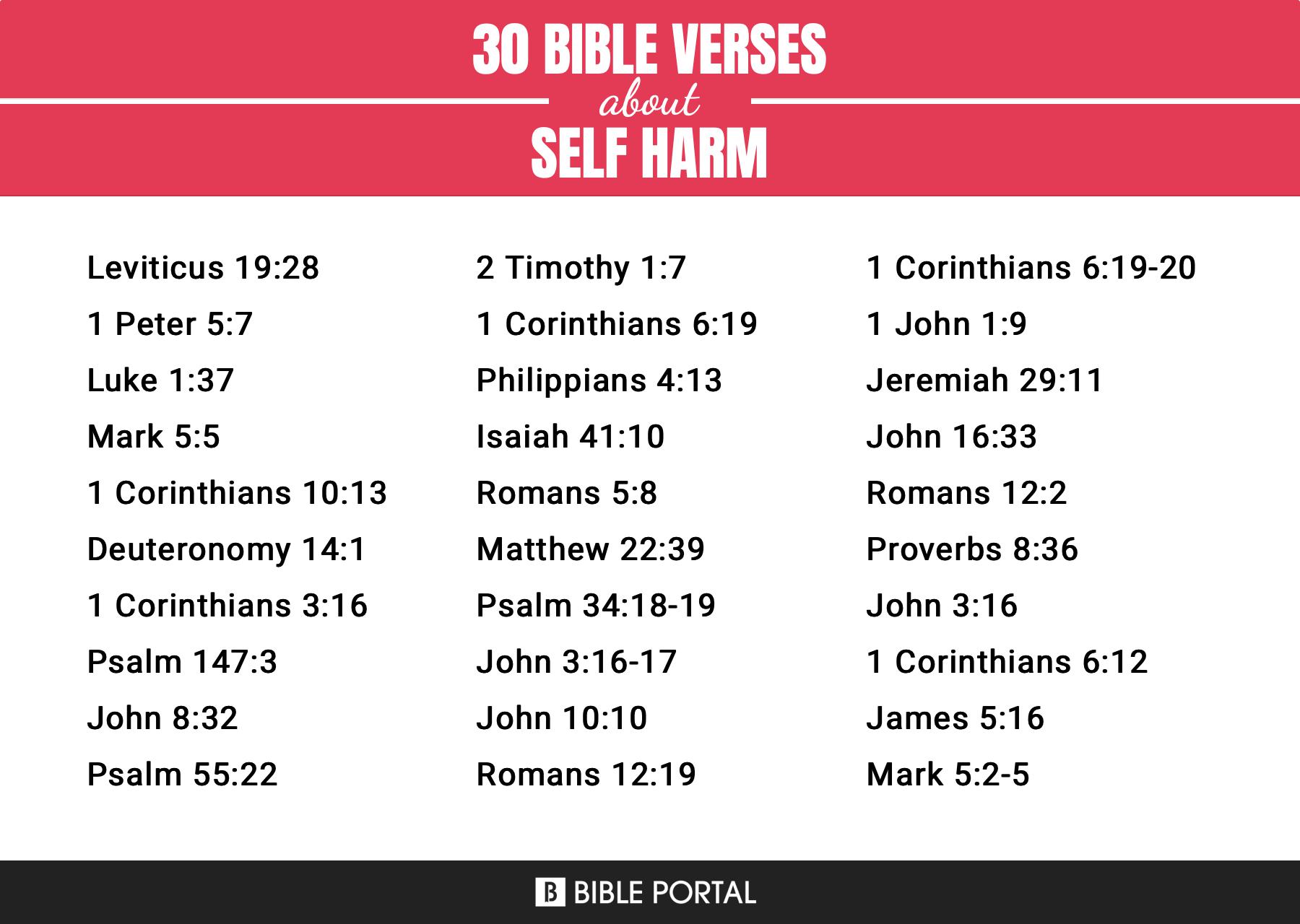
What does the Bible say about self-harm? Have you ever paused amidst a moment of despair and questioned the nature of your struggles? This inquiry emerges not merely in contemplation of pain but also in our search for solace and understanding. Self-harm, often rooted in deep emotional turmoil, invites numerous reflections within biblical texts. As we explore this poignant subject, a potential challenge arises: how can individuals reconcile their experiences of suffering with the teachings of faith?
To initiate our exploration, it is essential to recognize that the Bible offers vast wisdom regarding aspects of suffering and healing. Throughout its pages, there are myriad verses that address not just physical or emotional pain, but also the intrinsic value of our being. The Old and New Testaments both succinctly articulate the concept that every human is created in the image of God, a notion that fundamentally establishes our worth and dignity (Genesis 1:27). In light of this, self-harm directly conflicts with the sacredness of our bodies and spirits, prompting a deeper examination of why individuals might resort to such actions.
When delving into the emotional landscapes that lead to self-harm, one encounters vulnerability, shame, and isolation. These feelings are prevalent throughout Scripture. The book of Psalms is replete with expressions of anguish. Verses like Psalm 34:18 remind us that “the Lord is near to the brokenhearted and saves the crushed in spirit.” Herein lies a beacon of hope: the acknowledgment that pain is part of the human experience, and divine presence is available even in our darkest hours.
Interestingly, the Bible offers not only comfort but also guidance towards healthier coping mechanisms. Instead of turning to self-inflicted pain, scripture encourages believers to seek community support and counsel. Galatians 6:2, for example, instructs us to “bear one another’s burdens,” suggesting that sharing our struggles can foster healing. A crucial aspect of confronting self-harm lies in recognizing the importance of connection and mutual support. Can you imagine embracing vulnerability with those around you, rather than isolating in silence?
Moreover, prayer serves as a powerful tool in combating self-harm. Philippians 4:6-7 exhorts us not to be anxious but to present our requests to God, and in doing so, the peace of God will guard our hearts and minds. This verse articulates a pathway: instead of harming oneself, directing one’s inner turmoil to a higher power can fortify mental resilience. The challenge is to shift focus from self-destruction to seeking divine solace and strength.
Additionally, engaging with scripture directly can facilitate therapeutic reflection. Verses that speak of hope, such as Jeremiah 29:11—where God declares intentions for a future filled with hope—can resonate deeply. These affirmations act as a contrasting narrative to despair, reminding us that our stories are far from over. This prompts another introspective question: what narratives do you nurture within your heart?
To navigate the complex tapestry of emotions tied to self-harm, it is beneficial to consider professional help. While faith provides a foundational support system, therapeutic interventions equipped with psychological insights can address underlying issues. Seeking help is not a sign of weakness, but a courageous step toward healing. Romans 12:2 emphasizes the importance of transformation, urging individuals to renew their minds. This verse brilliantly highlights the interplay between spiritual growth and mental well-being.
In conclusion, the biblical narrative surrounding self-harm is multifaceted. It intertwines themes of recognition, community, prayer, and healing, always urging us back to the notion of hope and worth. Ultimately, addressing self-harm requires a commitment to personal transformation, supported by the understanding that we are not alone in our struggles. So, as you ponder over these reflections, consider: how will you engage with your pain in a manner that honors both your humanity and your faith?

