

Understanding the origins of Roman Catholicism requires a deep dive into history, tradition, and the intricate tapestry of belief that has shaped the faith over centuries. To grasp when Roman Catholicism was founded, one must first recognize that its roots extend far beyond a singular event or date. The Catholic Church views its inception as deeply entwined with the life and teachings of Jesus Christ and the subsequent developments in early Christian communities.
The genesis of Roman Catholicism can be traced explicitly to the first century AD, following the crucifixion of Jesus around 30-33 AD. Jesus’ ministry, as documented in the New Testament, laid the groundwork for a movement that would transition from a small group of followers to a profound and influential world religion. This early period is characterized by the emergence of the apostolic church, where the apostles, particularly Peter and Paul, played pivotal roles in disseminating the teachings of Christ.
Peter, regarded in Catholic doctrine as the first pope, is believed to have founded the church in Rome. His martyrdom in Rome circa 64 AD marks the early sanctification of the city as a central hub for Christian worship and governance. The apostolic authority attributed to Peter and his successors is foundational to the Catholic tradition, emphasizing the Church’s claim to apostolic succession and its authority to interpret scripture and uphold doctrinal teachings.
Throughout the ensuing decades, the establishment of a structured church framework became increasingly necessary as Christianity began to proliferate across diverse cultures and political territories. The Edict of Milan in 313 AD, which granted religious tolerance within the Roman Empire, was a watershed moment for Christianity, allowing it to flourish openly without fear of persecution. This change facilitated the unification of believers under a centralized ecclesiastical authority, consolidating power which would ultimately evolve into the Catholic Church.
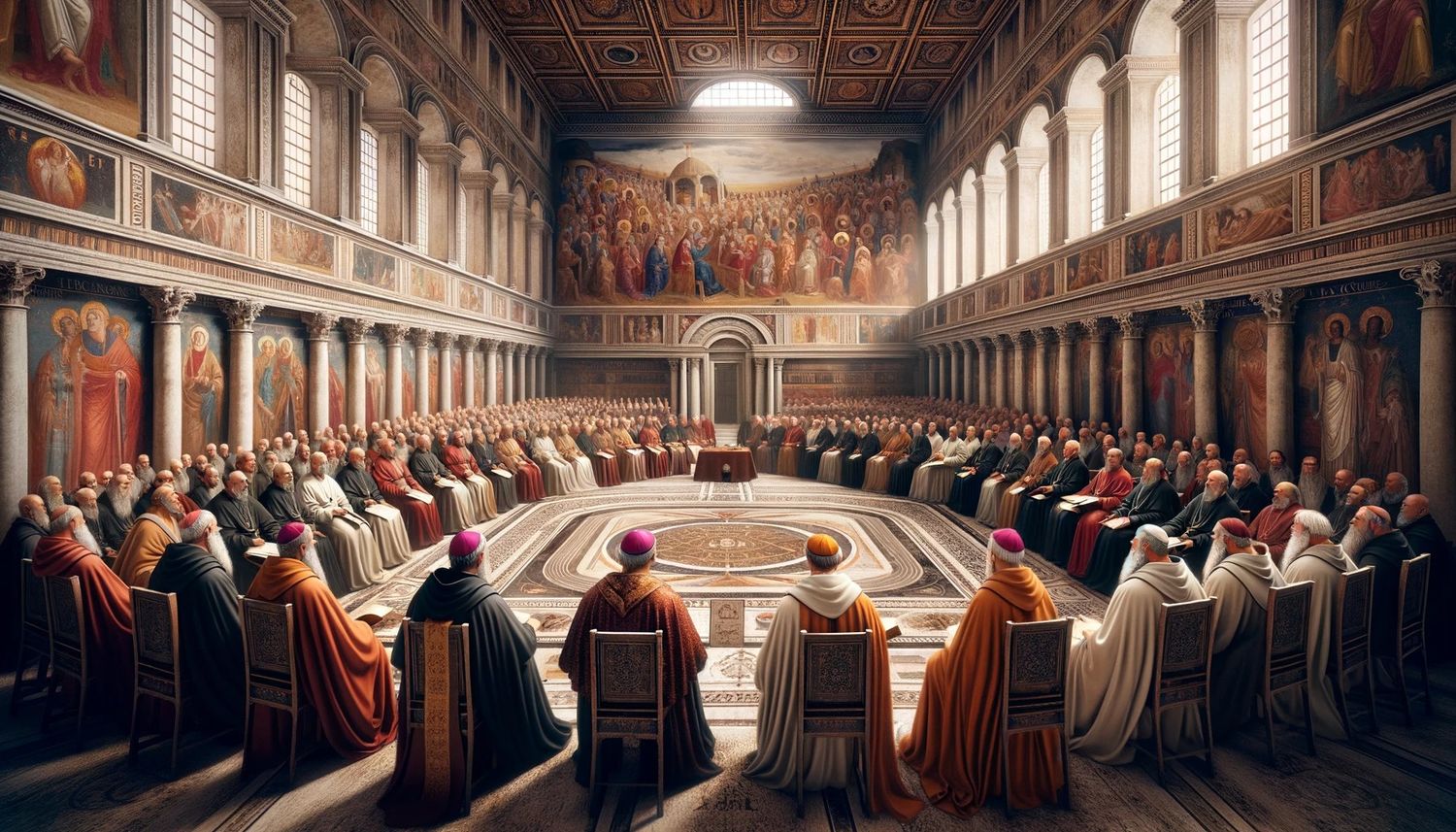
The Council of Nicaea in 325 AD further illustrates the Church’s journey towards organization. This ecumenical council was crucial, as it sought to address the Arian controversy and helped solidify the Nicene Creed, a statement of faith that is still recited in Catholic liturgy today. The council’s decisions propelled the standardization of Christian doctrine and affirmed the authoritative role of bishops, paving the way for a structured hierarchy that would become a defining characteristic of the Church.
As Christianity gained acceptance, factors such as cultural integration and theological dispute shaped the Church’s evolution. The relationship between the Church and the Roman state was particularly complex, as the political powers recognized the socio-political influence of Christianity. This burgeoning relationship culminated in the reign of Emperor Constantine, who not only legalized Christianity but also convened councils to unify the faith’s doctrines. The Church began to acquire considerable political power, which would later contribute to the formation of the Roman Catholic Church’s identity.
By the time of the early Middle Ages, the Catholic Church had established itself as a preeminent institution in Western Europe. The establishment of monastic orders, such as the Benedictines in the 6th century, played a significant role in the preservation of Christian teachings and culture during a time of great upheaval. Monasteries became centers of learning and spiritual piety, further enhancing the Church’s reach and influence over societal norms and practices.
The Great Schism of 1054 stands as a crucial point in the history of Christianity, illustrating the sectarian divisions that would later lead to distinct denominations. The schism between the Eastern Orthodox Church and the Roman Catholic Church stemmed from theological, political, and cultural rifts. This division not only underscored the growing complexity of Christian identity but also solidified the Catholic Church’s claim to be the singular, apostolic faith in the West.
As the centuries progressed, significant events such as the Protestant Reformation in the 16th century compelled Catholicism to confront its beliefs and practices. Figures like Martin Luther ignited debates around indulgences and scriptural authority, leading to the Catholic Counter-Reformation. The Council of Trent (1545-1563) was instrumental in reaffirming Catholic doctrine and addressing the challenges posed by reformation ideologies, thus reviving the Church’s authority and practices.
Despite wrestling with internal challenges, Roman Catholicism has continued to adapt, securing its status as one of the oldest and most influential religious institutions globally. The Vatican, established as a sovereign entity, plays a crucial role in the modern Catholic Church, presiding over billions of adherents worldwide. This evolution reflects a response to contemporary issues while maintaining core tenets rooted in tradition and scripture.
The fascination with when Roman Catholicism was founded taps into a broader inquiry about our quest for understanding origins, authority, and identity. This inquiry is not merely academic; it resonates deeply with countless individuals seeking spiritual foundations in an ever-changing world. The Catholic faith continues to embody a legacy of resilience, adaptation, and unwavering belief in the foundational teachings of Christ across more than two millennia.
In conclusion, the question of when Roman Catholicism was founded cannot be answered with a single date but rather through an exploration of its rich and layered history. From its nascent beginnings in the first century to its establishment as a formidable institution, Roman Catholicism’s foundations are a testament to the enduring nature of faith and community. The Church’s evolution illustrates a complex interplay of theology, politics, and cultural adaptation, painting a comprehensive portrait of a tradition that continues to inspire devotion and curiosity today.

