

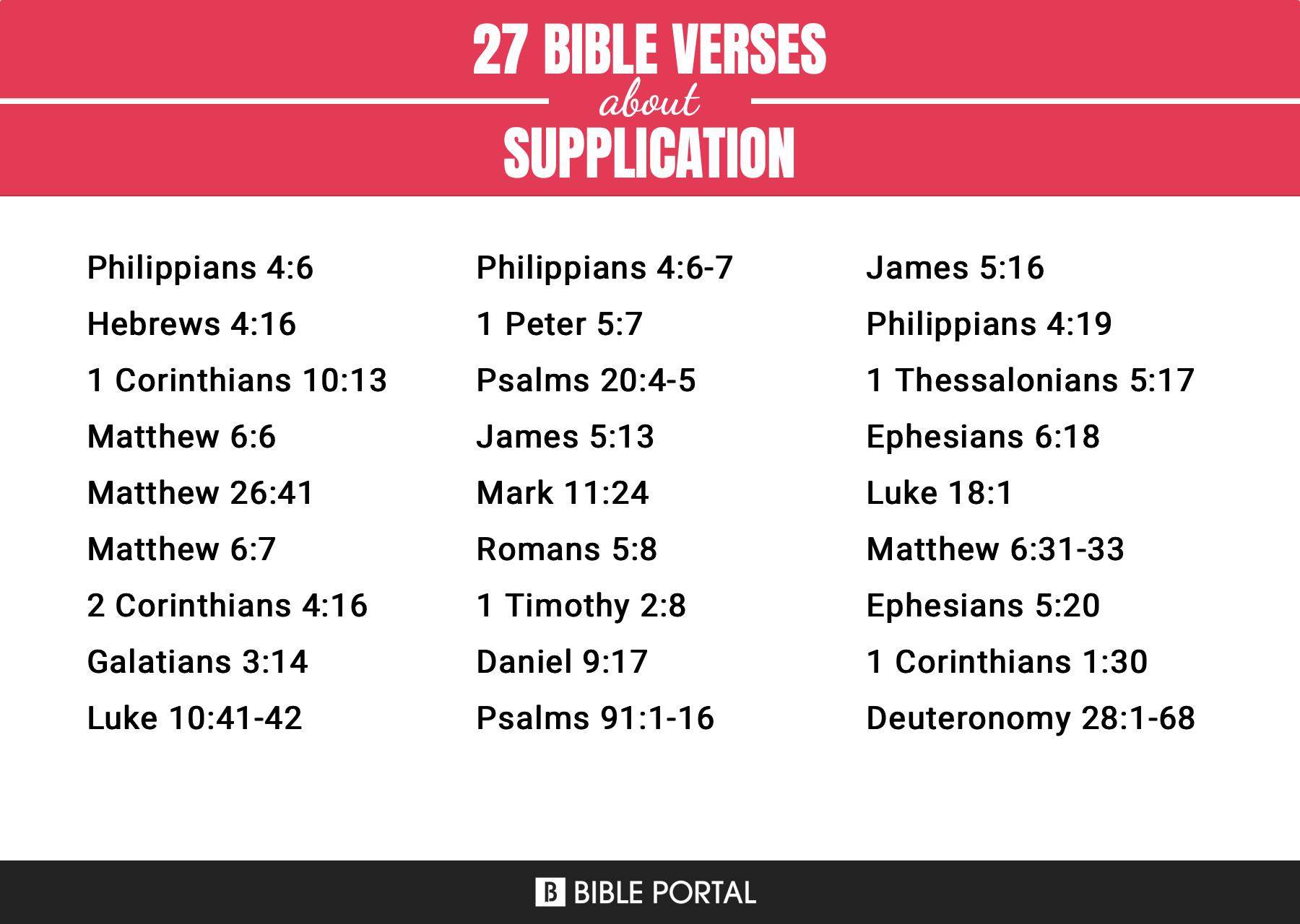
Supplication is a term that reverberates throughout the sacred texts of Christianity, often employed to convey a profound entreaty to the divine. But what does it truly mean to supplicate? Are we merely invoking a higher power, or is it a deeper act of humility and reverence? As we delve into this concept, we must ponder: when was the last time you genuinely supplicated for something? Let’s embark on this exploration to unearth the multifaceted nature of supplication in the biblical context.
At its essence, supplication embodies a heartfelt pleading or earnest request. It is derived from the Latin word “supplicare,” which means to kneel down, signifying a posture of submission and humility. This physical posture is not just a vibrant symbol; it encapsulates the spirit of supplication itself. Throughout the Bible, this act of asking is laden with a sense of urgency and sincerity, revealing an intimate relationship between the supplicant and God.
One cannot examine supplication in isolation; the practice often interlaces with various forms of prayer throughout scriptures. While prayer can encompass myriad ways to communicate with God—be it thanksgiving, confession, or adoration—supplication narrows the focus to earnest requests made in times of necessity. In Philippians 4:6-7, for instance, Paul urges believers to present their requests to God through prayer and supplication, promising a peace that transcends all understanding. This suggests that supplication is not merely about asking; it’s intricately tied with an expectation of receiving divine peace in return.
Historically, supplication manifests prominently within the narrative framework of the Bible. Consider the fervent prayer of Hannah, who is chronicled in 1 Samuel as she earnestly implores God for a child. Her supplication is marked by deep emotional turmoil, as she promises to dedicate her child to the Lord if her request is granted. This poignant moment exemplifies that supplication often emerges from profound desperation, illustrating the human proclivity to seek divine intervention during trying times.
Moreover, the psalms are replete with examples of supplication, echoing humanity’s earnest cries for help. Psalm 51, attributed to David, is a heartfelt appeal for mercy and forgiveness, showcasing that supplication can also embody repentance. The act of turning toward God in a state of brokenness can catalyze spiritual growth. It beckons the supplicant not only to voice their needs but to confront their shortcomings, ultimately drawing them closer to divine grace.
However, the challenge extends beyond mere vocalized requests. What if supplication demands more than articulating our needs? It necessitates a steadfast heart and unwavering belief in the benevolence of the divine. James 1:6 encourages believers to ask in faith, without doubting. This futuristic faith underscores the paradox of supplication—an urgent request emerges from a place of confidence, trusting that God hears and responds to us. Where is that faith in our own supplications?
Understanding supplication necessitates an exploration of its purpose. It is often posited as a bridge, connecting the human realm to the sacred. Through supplication, believers demonstrate dependence on God, acknowledging their limitations while simultaneously affirming His omnipotence. The act of supplicating serves as a spiritual realignment, reminding believers of their need for divine guidance and intervention.
Furthermore, there exists a communal aspect to supplication. In the early church, collective supplication characterized the community’s approach to prayer. Acts 1:14 illustrates how the disciples, in unity, continually devoted themselves to prayer. This suggests that supplication transcends the individual, inviting the corporate body of believers to advocate not only for personal needs but also for the wider community. Could it be that our silent struggles diminish the potency of communal supplication? Are we as vigilant in asking for one another as we are for ourselves?
As we traverse the wisdom entwined within the practice of supplication, it becomes apparent that the act holds transformative potential. It is not merely stating one’s wants or needs but engaging in a dialogue—one that requires introspection and spiritual maturity. The result of true supplication manifests not always in the form of received requests but through a profound transformation of the supplicant’s heart, guiding them toward spiritual enlightenment and deeper faith.
Yet, one must not forget that scripture acknowledges moments when supplication is met with silence. The mystique of God’s response (or lack thereof) can lead to profound discontent. As illustrated in Job’s lamentations, there can be spiritual despondency even when entreating the divine. Therefore, the challenge remains: how do we navigate faith amidst apparent inaction? The journey of supplication may sometimes lead through valleys of despair but it can also emerge as a pathway to deeper understanding and trust in God’s timing.
Ultimately, the act of supplication provides a lens through which believers can view their relationship with the divine. It calls for a posture of humility, a sense of expectancy, and an embrace of community. Will you incorporate supplication into your spiritual practice, acknowledging both the beauty and the struggle it encompasses? Through genuine supplication, one might find not just answers, but a renewed sense of purpose and connection with the divine.

